Delivery from €16,90 per winemaker in Europe (excluding the United Kingdom)


AOC Montlouis-sur-Loire
In the northwest of France, the Loire vineyard extends from the Massif Central to Nantes. It is known for the Chinon, Bourgueil and Pouilly-Fumé appellations among others. The Montlouis-sur-Loire AOC is also found there. The appellation area of this AOC extends in the Touraine vineyard over soils mainly composed of clay, silica and sand. Chenin vines, subject to the temperate climate and oceanic influences of this geographical area, are planted in this appellation and produce dry, semi-dry, sweet and sparkling white wines with good aging potential. The wines of this appellation are lively and fresh and express rich aromas: verbena, bergamot and almond for the dry and semi-dry wines, quince and candied fruits for the sweet wines, apple, dried fruits and brioche for the sparkling wines.
Filtrer
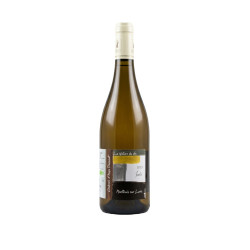

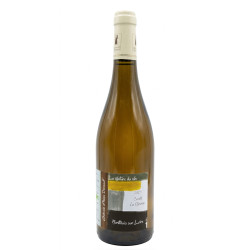
Montlouis-sur-Loire: Separate from Vouvray Since 1938
Montlouis-sur-Loire brings together still and sparkling Chenin Blanc whites from Montlouis-sur-Loire and two of its neighbors in France’s Indre-et-Loire department, Lussault-sur-Loire and Saint-Martin-le-Beau. Just east of Tours, their vines face Vouvray from the left bank of the Loire.
Key figures
- Vineyard area: 440 ha (2019-2023 average)
- Villages: 3
- Grape: Chenin Blanc
- Recognized: 1938
A Tuffeau Promontory Between the Loire and the Cher
The vineyard covers a triangular limestone plateau: the Loire Valley lies to the north, the Cher Valley to the south, and the Amboise forest closes it off to the east. It rises to roughly 55 to 100 m (180 to 330 ft) and ends, to the west and north, in a cliff about 30 m (100 ft) high.
Underneath, Turonian chalk, the local yellow tuffeau, underpins the plateau. It is capped with flinty clay and, above all, with sands left by ancient river terraces, sometimes mixed with windblown sand. Most soils are clay and silica, often with a sandy texture.
Fall weather is sometimes excellent here, a real asset for the sweeter wines. From Roman times to the 20th century, the soft tuffeau was quarried underground, and growers took over the vast old galleries to make, age and store their wines.
From the Port of Montlouis to the 1938 Appellation
According to InterLoire, vines were already here in the 5th century. The port of Montlouis, on a Loire that boats could still navigate, sent wine and tuffeau stone downriver. From the 14th to the 19th century, the whites traveled to Nantes and on to northern Europe.
They were commonly sold as “Vouvray,” a name that then meant the most prized whites from around Tours. In the 1930s, however, several court rulings set these wines apart from the Vouvray appellation.
Growers in the three villages then won recognition for an appellation of their own, on December 6, 1938, under the name “Montlouis.” Since 1938, the two neighbors have been fully separate AOCs; the name became Montlouis-sur-Loire in 2002.
Bubbles from a Single Fermentation
Bubbles come first here: they made up 65% of output on average in 2019-2023, InterLoire figures show. Mousseux and pétillant are made sparkling by a second fermentation in bottle, and mousseux can also be made with a single fermentation.
Fermentation starts in tank or barrel, is halted by cold, then resumes once the wine is bottled, producing all of the gas on its own. For this wine, the appellation bans added yeast, tirage liqueur and dosage, and requires hand harvesting.
Nine months or more after bottling, the wine must be disgorged, and it keeps 5 g of sugar per liter at most. The growers’ association, which brought it into the AOC in 2007, calls it “pétillant originel,” even though the appellation classes it as a mousseux.
Choosing Your Montlouis-sur-Loire
Is Montlouis-sur-Loire a dry or sweet wine?
Still Montlouis-sur-Loire comes in dry, medium dry, medium sweet and sweet styles, and the appellation also makes mousseux and pétillant. A still wine labeled “sec” (dry) holds 5 g of sugar per liter or less. Medium sweet and sweet wines depend on the vintage: they need a fall fine enough to concentrate the grapes on the vine.
What is the difference between Montlouis-sur-Loire and Vouvray?
Montlouis-sur-Loire sits on the left bank of the Loire and Vouvray on the right: two Touraine Chenin Blanc appellations facing each other. Montlouis-sur-Loire sticks to Chenin Blanc alone, while Vouvray allows up to 5% Orbois. Its vineyard is also much smaller: 440 hectares in production versus about 2,200.
What food goes with Montlouis-sur-Loire?
Dry Montlouis-sur-Loire goes well with a pike-perch fillet or marinated raw salmon. Medium dry suits a spiced stuffed chicken or sweet-and-savory dishes; medium sweet calls for poached white peaches or frozen honey nougat. Serve the sparkling wines as an aperitif, or at the table in place of a dry white.
Where can you buy Montlouis-sur-Loire direct from the winemaker?
You can buy Montlouis-sur-Loire direct from the winemaker on Avenue des Vins. Each wine’s page lists the vintage and the bottle size.
See also: AOC Vouvray - AOC Touraine-Chenonceaux - AOC Crémant de Loire