Delivery from €16,90 per winemaker in Europe (excluding the United Kingdom)


AOC Limoux Méthode Ancestrale
In the south of France, the very sunny vineyard of Languedoc-Roussillon extends over more than 240,000 hectares from Nîmes to Leucate (Aude), making it one of the largest vineyards in the world. It notably includes the AOC Limoux méthode ancestrale. The appellation area of this AOC extends over 41 communes 25 km from Carcassonne on some 1,420 hectares of clay-limestone and stony soils. Exclusively Mauzac vines are planted for this designation and produce brut, semi-dry and sweet sparkling wines. These wines are known for their aromas of ripe apple and pear and for their particular production method: the foaming and the end of fermentation take place exclusively in the bottle.
Filtrer


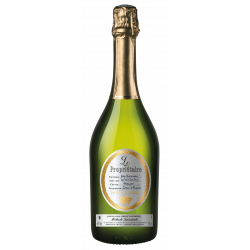


Pressure, Alcohol, Sulfur: Limoux Méthode Ancestrale by the Numbers
Among the sparkling wines of the Aude, Limoux méthode ancestrale stands apart in the way its bubbles form: the wine is never refermented, it completes in the bottle the one fermentation it ever goes through. Limoux producers had mastered this process before they took up second fermentation in the bottle.
A Partly Fermented Must, Bottled with Its Sugar
The Mauzac grapes are picked by hand and go into the press whole, neither crushed nor destemmed. The juice starts fermenting in tank, but the fermentation is held back: chilling, or removing part of the yeast, slows it down so that a good share of the grape sugar remains.
The partly fermented must is then bottled, with or without added yeast. Fermentation slowly resumes, and the carbon dioxide it gives off stays trapped in the glass: this is how the wine gets its fizz. No sugar is added to set it off, since adding a liqueur de tirage is not allowed.
The bottles then rest on their lees in a storage room kept at 68°F (20°C) or below. To remove the sediment, the producer chooses between disgorging and a transfer under pressure followed by filtration. The bottle is finally closed with no dosage, so no sugar goes into the wine at the last minute.
What the Méthode Ancestrale Designation Guarantees
Within the AOC Limoux, the méthode ancestrale designation covers only white sparkling wines made from a single grape, Mauzac. The grapes must carry at least 153 grams of sugar per liter of must, and the wine is never chaptalized: all of its alcohol comes from the grape. No oak chips or other wood may be used.
The wine has at least 6% ABV of actual alcohol. Counting the alcohol the remaining sugar could still produce, its total strength reaches at least 10% ABV. The gap between the two figures reflects the sugar left in the wine.
Once the sediment is removed, the bottle holds at least 3 bar (about 44 psi) of pressure at 68°F (20°C), which makes it a fully sparkling wine rather than a lightly sparkling one. Total sulfur dioxide is capped at 150 milligrams per liter.
Why the Label Now Says “Limoux”
The name méthode ancestrale recalls an old craft. The wine used to be strained through cloth bags to stop its fermentation, filtered again in the depths of winter, then bottled in March. Added yeast, refrigeration and better filtration have since made the process more reliable.
Limoux's sparkling wines gained AOC status as early as 1938. The méthode ancestrale wine long had an appellation of its own, “Blanquette méthode ancestrale,” the name it still carries in official texts from the 2000s.
The decree of December 5, 2011 brought this wine into the AOC Limoux, alongside the still whites and reds. Méthode ancestrale became a designation that completes the appellation name, so the wine is now called Limoux méthode ancestrale. The word blanquette stayed with the other designation, Blanquette de Limoux.
A Few Pointers for Choosing Limoux Méthode Ancestrale
How long does Limoux méthode ancestrale spend in the bottle before release?
Limoux méthode ancestrale spends at least two months in the bottle between bottling and release. Since bottling cannot start before December 1 following the harvest, the first bottles of a vintage reach the market in February at the earliest.
How does Limoux méthode ancestrale differ from Blanquette de Limoux?
Limoux méthode ancestrale comes from a single fermentation, while Blanquette de Limoux goes through a second fermentation in the bottle. Blanquette may add Chardonnay and Chenin Blanc to its Mauzac, and it stays on its lees for more than nine months. It leans toward green apple and honey, méthode ancestrale toward ripe apple.
Which desserts go with Limoux méthode ancestrale?
Limoux méthode ancestrale goes well with a lightly sweet fruit dessert, such as an orange salad, or with madeleines. Its ripe apple aromas and fine bubbles freshen up the end of the meal. It also works as an aperitif, served well chilled.
Where can you buy Limoux méthode ancestrale direct from the winemaker?
You can buy Limoux méthode ancestrale, sold by the producer, on Avenue des Vins. The wine comes to you directly from the producer who made it.
See also: AOC Limoux - AOC Blanquette de Limoux - AOC Gaillac Méthode Ancestrale