Delivery from €16,90 per winemaker in Europe (excluding the United Kingdom)


AOC Gaillac doux
As its name suggests, this vineyard is located in the South-West of France, between the Massif Central and the Pyrenees, and extends over 11 departments (Aveyron, Dordogne, Gers, Haute-Garonne, Hautes-Pyrénées, Lot, Lot-et-Garonne, Tarn, Tarn-et-Garonne, Pyrénées-Atlantiques, Landes). It includes the AOC Gaillac doux. The appellation area of AOC Gaillac extends to the north-east of Toulouse over approximately 3,900 hectares of soils mainly composed of clay and limestone. Muscadelle, Sauvignon and Sémillon vines, among others, are subject to the oceanic and Mediterranean climate of this geographical area, and allow the production of sweet white wines. Pleasant and smooth, these wines reveal a fruity palate with aromas of pear, apple, fig and honey.
Filtrer


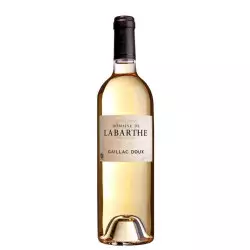
Gaillac Doux: A Wine That Starts in the Vineyard
Gaillac doux is a still white wine from the Tarn, made under AOC Gaillac with the term “doux” (sweet). It holds at least 45 grams of sugar per liter, the level at which EU law calls a wine sweet. That sweetness starts in the vineyard.
Riper Grapes from Lighter-Cropped Vines
Grapes for Gaillac doux are picked richer in sugar than those for a Gaillac white without the term. The must needs at least 204 grams of sugar per liter and a natural alcohol potential of at least 12.5%; a still white without the term needs only 170 grams and 10.5%.
To ripen further, the vines carry less fruit: the average crop is capped at 9,500 kg per hectare (about 8,500 lb per acre), versus 10,500 kg for still whites and sparkling wines without the term. The climate helps. Oceanic in winter and spring, it turns Mediterranean in summer and fall, and that dry heat supports steady ripening.
If the must is enriched, a Gaillac doux tops out at 15% total alcohol, versus 13% for a still white without the term. Vendanges tardives (late harvest) is a separate term within AOC Gaillac: its grapes are even more concentrated and are hand-picked in several passes, later than those for Gaillac doux.
Len de l’El and Mauzac, Two Grapes Born in the Gaillac Area
Gaillac doux comes mainly from the principal grapes for AOC Gaillac whites: Len de l’El, Mauzac (white or pink) and Muscadelle. On each estate, they must cover at least half of the white-wine vineyard, and they make up at least 70% of every blend.
Len de l’El and Mauzac are native to the Gaillac area, and Len de l’El is not recorded in any other vineyard. On well-exposed slopes, Mauzac can reach high sugar levels when overripe.
Supporting grapes include Ondenc, once widely planted across Southwest France and kept in Gaillac for its pleasant flavor and its ability to concentrate on the vine, and Sauvignon Blanc. Sémillon is still allowed on a transitional basis, as a supporting grape, from vines already in place by September 1, 2005, and through the 2027 harvest at the latest.
From Glass to Plate: The Gaillac Doux Style
On the nose, Gaillac doux often brings ripe apple, pear and tropical fruit, with fig, quince or honey in some wines. On the palate, this smooth white stays fruity.
Serve it chilled as an aperitif, with cheese or with dessert. Lemon meringue pie is a good match: the lemon’s tartness meets the wine’s sweetness.
Gaillac Doux FAQ: Muscadelle and Yields
Can Muscadelle make a Gaillac doux on its own?
In a Gaillac doux, Muscadelle is always blended with at least one other principal grape, Len de l’El or Mauzac. It can lead the blend, up to a maximum of 70%.
Does a Gaillac doux vineyard yield as much as one for dry Gaillac white?
A Gaillac doux vineyard yields less: 45 hectoliters per hectare (about 480 US gallons per acre), versus 60 for dry whites. Even in a generous year, it cannot go above 54 hectoliters per hectare, versus 72 for those other wines.
Where can you buy Gaillac doux direct from the winemaker?
You can buy Gaillac doux direct from the winemaker on Avenue des Vins. Each wine’s page lists the vintage and the bottle size.
See also: AOC Gaillac Wine - AOC Gaillac Méthode Ancestrale - White wines from Southwest