Delivery from €16,90 per winemaker in Europe (excluding the United Kingdom)


AOC Beaujolais villages Wine
Beaujolais Villages comes from 38 communes, or villages, in the northern half of the Beaujolais wine region. This part of east-central France lies between the Mâconnais to the north and the Rhône Valley to the south. Most Beaujolais Villages is red wine made from Gamay, and the whites are made from Chardonnay. The soils change from one village to the next, from granite and schist to sandstone and gneiss. Beaujolais Nouveau made the region famous, but Beaujolais Villages is one of the many other wines it produces.
Filtrer


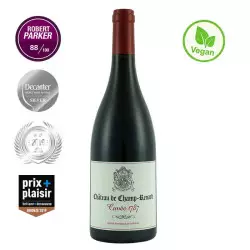


- Without So2
- Vegan


Beaujolais Villages: 31 Communes in 1950, 38 Today
The Villages designation began with growers in the north, whose more powerful wines stood apart from those of the south. In 1943, a list allowed 31 communes to add their own name to Beaujolais. On April 21, 1950, those communes were brought together under a single word: Villages. Today the area covers 38 communes, 8 of them in Saône-et-Loire.
AOC Beaujolais-Villages: Everything You Need to Know About the Wines of This Appellation
History of the AOC Beaujolais-Villages
Recognized since 1950, the AOC Beaujolais-Villages encompasses 38 communes and represents a significant part of the Beaujolais vineyard. It closely resembles the Beaujolais crus due to its sandy-granitic terroir and strict production guidelines. Although primarily renowned for its red wines, the AOC Beaujolais-Villages also produces rare white and rosé wines.
Climate and Terroir of the AOC Beaujolais-Villages
Climate: The appellation enjoys a temperate semi-continental climate moderated by Mediterranean influences, with cold winters and hot summers. This climate is ideal for the optimal development of Gamay, the primary red grape variety of the Beaujolais region.
Soils: The soils of AOC Beaujolais-Villages are predominantly granitic, sandy, and schistose, unlike the clay-limestone soils of southern Beaujolais.
Gamay and Chardonnay: The Essential Grape Varieties of AOC Beaujolais-Villages
Wines from the AOC Beaujolais-Villages are crafted from Gamay for reds and rosés, and Chardonnay for whites. Gamay, the emblematic grape of Beaujolais, imparts fruity and approachable qualities to the red wines of the AOC Beaujolais-Villages, which are also known for their body and structure.
Style of AOC Beaujolais-Villages Wines
White: The rare white wines exhibit a pale yellow color and reveal aromas of white-fleshed fruits, citrus, and white flowers. The palate is tender and fresh.
Rosé: The rosé wines display a pale pink hue and a nose of small red fruits (strawberries, raspberries, red currants) and citrus. On the palate, they are fresh, supple, and delightful.
Red: The red wines of AOC Beaujolais-Villages showcase a cherry-red color with violet highlights. The nose suggests notes of red and black fruits (blackcurrant, wild strawberry, raspberry), flowers (violet), and English candy. On the palate, they are generally pleasant, fruity, with soft and fine tannins.
Best Food Pairings with a Wine from AOC Beaujolais-Villages
Here are some food pairing ideas to complement a wine from a château or estate in AOC Beaujolais-Villages, whether it be white, red, or rosé:
White:
- Fish in sauce
- Ham and endive gratin
Rosé:
- Appetizers
- Mixed salads
Red:
- Charcuterie
- Roast poultry
- Andouillette (tripe sausage)
- Pork carbonade
Granite, Porphyry, Schist: Acidic Soils Behind the Villages Name
On the label, “Villages” follows the name of AOC Beaujolais. The appellation rules reserve it for vines planted on acidic soils in the northern half of Beaujolais. According to Inter Beaujolais, these steep vineyards face east and southeast at 650 to 1,650 feet (200 to 500 m) and surround the ten crus.
Those soils come from the oldest rock in the region, formed during the Hercynian uplift of the Paleozoic era: granite, porphyry, schist and volcanic-sedimentary rock. As it weathers, this rock turns into sandy or clay soils with an acidic reaction. Younger deposits worn from it, at the foot of the slopes, qualify too.
In the south, the subsoil switches to Mesozoic limestone, with deeper soils that hold more clay, and those vineyards make AOC Beaujolais. In the north, the rules describe wines that lean powerful and deeply colored. They credit the sands formed from crystalline rock with balanced wines and a long aromatic finish.
Single Vineyards, Alcohol, Growers: Beaujolais Villages Questions
Can a Beaujolais Villages name a single vineyard?
A Beaujolais Villages can show the name of a registered lieu-dit, or named vineyard site, as long as that site appears on the harvest declaration. The name goes right after the appellation, in letters no more than half as tall and half as wide.
How strong is Beaujolais Villages?
Beaujolais Villages red or rosé tops out at 13% ABV if the must has been enriched, and white at 13.5% ABV. At harvest, the grapes must already carry a potential of at least 10.5% ABV for reds and rosés, and 11% for whites.
How many growers make Beaujolais Villages?
More than 1,000 growers make Beaujolais Villages, according to Inter Beaujolais, the region's wine trade body. Half of them turn their own grapes into wine at their own estate, known in French as a cave particulière.
Where can you buy Beaujolais Villages direct from the winemaker?
You can buy Beaujolais Villages direct from the winemaker on Avenue des Vins. The producer packs and ships your order directly.
See also: AOC Beaujolais - AOC Beaujolais Villages Nouveau - AOC Brouilly