Delivery from €16,90 per winemaker in Europe (excluding the United Kingdom)

Unbeatable !
What is natural wine?
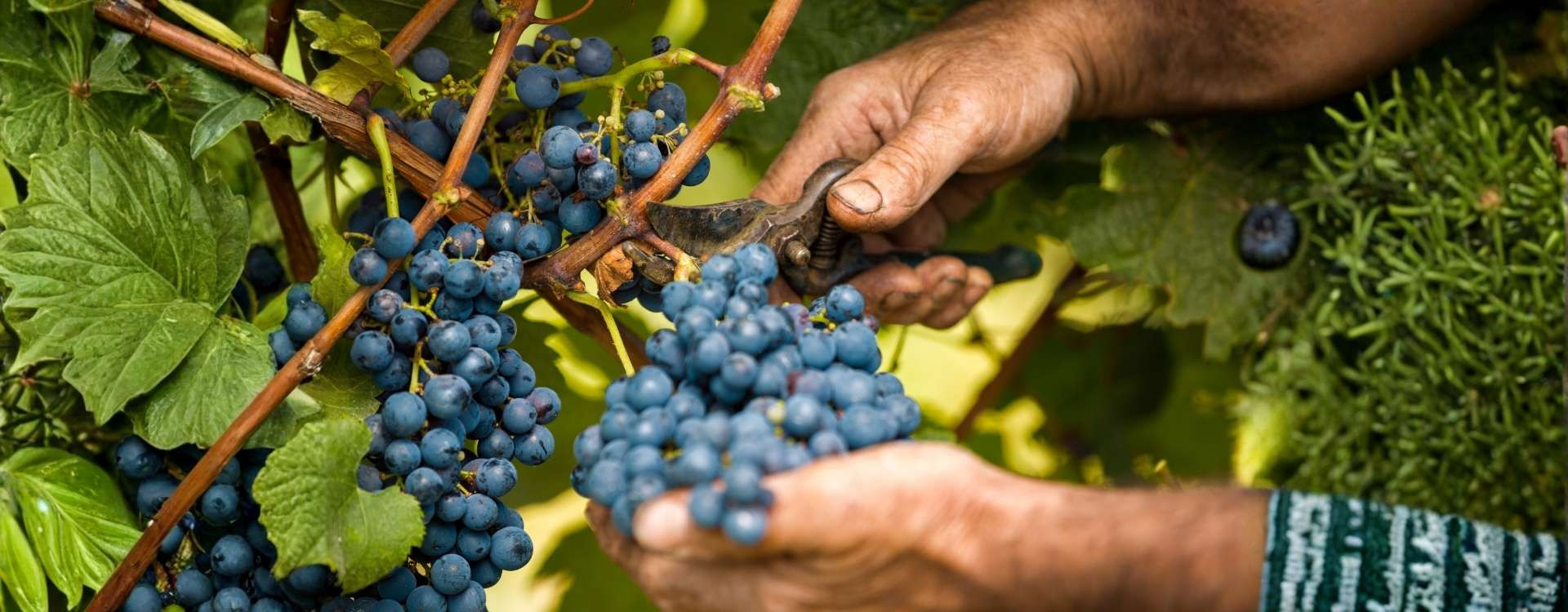
We all know by now that chemical products have a negative impact on the vine, the soil, and the men and women who cultivate it. We also know that many new farming techniques have emerged to move away from conventional viticulture and return to a more reasoned approach. Yet few people truly understand what natural wine actually is. A genuine philosophy about how, and how not, to intervene in winemaking, natural viticulture is often associated with Biodynamic farming or organic agriculture. While they belong to the same movement, they differ on several key points.
How is natural wine made ?
To understand natural wine properly, it is important to distinguish between the viticulture phase and the winemaking phase. The first covers the care of the vines through to harvest; the second covers the transformation of grapes into wine from pressing onwards. A natural wine is a wine that has received no inputs during its vinification. It is therefore a designation that certifies the absence of additives during winemaking, ageing, fining and filtration. No commercial yeasts or added sugars are used during vinification. During ageing, none of the fifty or so chemical products permitted under conventional winemaking are added. In some cases, the addition of small doses of sulphites is tolerated in natural wines. A natural wine is, in essence, a wine created with the lowest possible intervention from the winemaker, with the aim of letting the grape express itself naturally.
Differences with organic wine
Organic and biodynamic wine designations are certifications whose specifications also cover the cultivation and harvesting of grapes. Winemakers who work and harvest their vines organically use no phytosanitary products such as pesticides. Only natural fertilisers are used to help the vine defend itself and flourish, preserving the richness of the soil and terroir. In biodynamic farming, growers aim for a symbiosis with nature by cultivating according to permaculture principles and in harmony with lunar cycles. Organic winegrowers also harvest by hand, to avoid stressing the vines.
The confusion often arises from the fact that organic and biodynamic labels also cover vinification, that is, the post-harvest process. Organic wines are not only grown organically but also vinified organically, meaning the grapes come from organic viticulture and inputs such as yeasts are limited during fermentation. The difference is that a natural wine is usually made from grapes grown organically or biodynamically, but accepts no inputs whatsoever (except sulphur in some cases) during transformation. Natural wines therefore often come from estates where growers cultivate the vine organically or biodynamically, or according to a reasoned approach, but push the philosophy of naturalness further than organic and biodynamic labels during vinification.
Natural wine, vin nature, vins naturels… What are the differences ?
The production of natural wine is rooted in a committed viticulture that seeks to preserve soils, ecosystems and the health of growers. This translates into the exclusive use of practices drawn from organic or biodynamic farming, often reinforced by an agroecological or permacultural approach. Certain regions such as the Rhône Valley and the Languedoc have seen the emergence of grower collectives championing this responsible viticulture.
In everyday language, the terms "natural wine", "vins naturels" and "vin nature" are often used interchangeably. However, some professionals draw distinctions. "Natural wine" generally refers to the original movement, centred on minimal intervention and the free expression of the grape. "Vin nature" is sometimes used to describe the most radical cuvées, with no added sulphites, even at bottling. "Vins naturels" tends to encompass all practices close to the living world, including organic and, more often, biodynamic farming. All these terms converge on a shared vision: wine that is more respectful of its natural environment and of the consumer's health.
Natural wine: a regulated philosophy, but still blurry
Contrary to what one might assume, natural wine is not officially recognised by European regulation in the same way as EU-certified organic wine. This sometimes creates confusion for the consumer. However, since 2020, a collective of winemakers has established the Vin Méthode Nature label. This label imposes a strict set of specifications based on transparency and respect for the living world. Among the requirements: hand-harvesting is mandatory; only indigenous yeasts naturally present on the grape skins may be used (no commercial yeasts); vinification must take place without oenological inputs and without heavy filtration. Only a very small dose of sulphur may be authorised under specific conditions.
Cuvées labelled Vin Méthode Nature carry a clear mention on the label to allow straightforward identification and guarantee a 100% natural wine. Associations such as the Swiss Natural Wine Association and the Association des Vins Naturels also advocate for the institutional recognition of this approach, promoting natural wines among consumers and professionals alike.
Our Natural & Sulphite-free Wines : Our natural, no-added-sulphite wines at producer prices, shipped straight from the winemaker. See the selection →
How to identify a natural wine on a label ?
One of the current challenges with natural wine is identification. Unlike organic wines, which carry an official logo (the AB label or the EU organic leaf), natural wines do not yet benefit from a Vin Nature regulation recognised by European authorities. That said, several clues can guide you:
- Wines labelled Vin Méthode Nature are validated by the association of the same name, which certifies strict compliance with the specifications.
- Transparency on the label about the absence of oenological inputs.
- Emphasis on the use of indigenous yeasts and organic viticulture.
- The "Vin de France" designation, often chosen for free-range cuvées outside the strict AOC framework, is frequently used for natural wines, though it is an indicator, not a guarantee.
- Increasingly, producers use artistic or committed label designs that reflect the singular spirit of these living wines.
Best practices for tasting and storage
A natural wine bottle will contain fewer additives and more natural sediment. As a result, natural wine must be stored and handled with the care that all fine wines deserve, to allow them to express their aromas at their best. Additives in conventional wines help stabilise them, natural wines have none of these stabilisers. It is therefore important to maintain ideal storage conditions: a temperature of around 12-13°C for red wines and slightly cooler for whites, a humidity level of at least 70%, darkness, and a horizontal position. It is also essential to ensure these conditions remain constant and to avoid sudden changes in environment. In terms of ageing potential, natural wines vary by grape variety and region, just as conventional wines do. When it comes to tasting, natural wines behave much like conventional bottles: consider decanting them one to two hours before opening, to allow any sediment to settle and the wine to open up.
Natural wines are not a passing trend. They embody a desire to rethink winemaking, with less intervention, more sincerity and a deep respect for the living world. Whether it is a natural red, a natural white or even an orange wine, these free-spirited wines are rewriting the codes, while winning over a growing number of enthusiasts. Explore our selection of natural wines on Avenue des Vins and discover our hidden gems at the best value for money.
Is natural wine better for your health?
This is one of the most frequently asked questions among natural wine enthusiasts. While no scientific study has conclusively proven that natural wine is systematically healthier, several factors speak in its favour: the absence of pesticides in viticulture, a drastic reduction in oenological additives, and, in sulphite-free versions, an extremely low sulphur content. For people who are sensitive to sulphites, natural wines often represent a gentler alternative. They align with a more conscious approach to consumption, in keeping with lifestyles oriented towards fewer chemicals.
Which grape varieties are used in natural wine ?
Natural wine is not tied to a single grape variety: it can be made from any variety, as long as the philosophy of minimal intervention is respected. In France, certain wine regions stand out for their high concentration of natural producers: the Loire Valley with Chenin Blanc and Cabernet Franc, Beaujolais with Gamay, the Rhône Valley with Syrah and Grenache, as well as the Ardèche and the Languedoc. What matters most is the winemaker's approach, not the grape variety itself.
Why buy your natural wine direct ?
The natural wines available on our marketplace are offered at producer prices, the price set directly at the cellar, with no intermediary. Buying via direct supply means financing the work of winemakers committed to organic or biodynamic farming, while benefiting from full traceability from vine to table. It also means accessing confidential cuvées that simply do not appear on supermarket shelves.
Our Natural & Sulphite-free Wines : Our natural, no-added-sulphite wines at producer prices, shipped straight from the winemaker. See the selection →
FAQ about natural wine
What exactly is natural wine ?
Natural wine is a wine made without oenological inputs during vinification: no commercial yeasts, no added sugar, no stabilising additives. It is generally produced from grapes grown using organic or biodynamic farming methods, and vinified with the lowest possible intervention from the winemaker, with the aim of letting the grape express itself naturally. Some natural wines may contain very small doses of sulphur added at bottling.
What is the difference between natural wine and organic wine ?
Organic wine (certified by the AB label or the EU Organic Leaf) covers both grape cultivation and vinification, limiting inputs throughout. Natural wine goes further: it requires a total absence of additives during vinification, including commercial yeasts. In short, natural wine often comes from organic viticulture, but not every organic wine is natural. Natural wine is a philosophy of minimal intervention; organic wine is a regulated certification.
Does natural wine contain sulphites ?
Most natural wines contain very few added sulphites, or none at all. Under the Vin Méthode Nature label, a very small dose of sulphur may be permitted under specific conditions, only at bottling. Wines labelled "no added sulphites" contain none that have been added, although wine naturally produces very small quantities of sulphur during fermentation. For people who are sensitive to sulphites, natural wines are generally a gentler option.
How do you identify a natural wine in a shop or online ?
Several clues help identify a natural wine: the mention "Vin Méthode Nature" on the label (official label since 2020), the "Vin de France" designation often used for free-range cuvées, an artistic or committed label design, and transparency about the absence of oenological inputs. On Avenue des Vins, our Natural Wines category brings together certified or natural-approach cuvées, selected directly from the winemakers.
Where can you buy quality natural wine in France ?
With Avenue des Vins,. Every bottle is shipped directly from the winemaker's cellar, no middlemen, full vintage traceability and fair prices. Our selection covers the major natural wine regions of France: the Loire, Beaujolais, Languedoc, Rhône and Burgundy.
With an increasingly committed range of cuvées crafted with care, everyone can find a natural wine that matches their tastes and values. Explore our selection of natural wines, and discover our bottles shipped directly from the winemaker's cellar.


