Delivery from €16,90 per winemaker in Europe (excluding the United Kingdom)

Unbeatable !
The Jura, a wine-growing region covering 2000 hectares
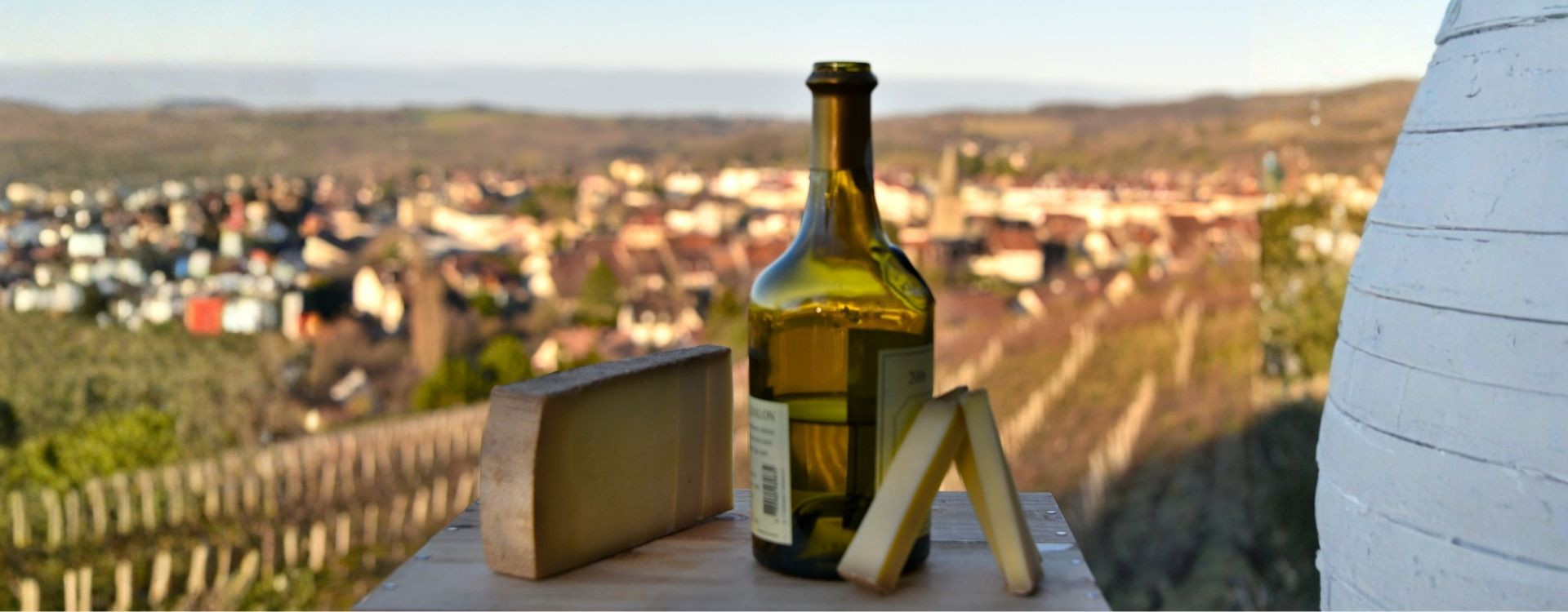
Discover the Jura Vineyard: A Hidden Gem of Terroirs and Varieties
Introduction to the Jura Vineyard
The Jura vineyard is a rich tapestry of terroirs, grape varieties, and expertise that deserves more recognition. Stretching along the Revermont, its vines thrive on diverse soils, offering unique flavors found only in Jura. From notes of spices and marmalades to fresh and candied fruits, and even floral and biscuit nuances, the Jura vineyard is distinctively expressive. While the Yellow wine is iconic, Jura produces a variety of wines: sparkling, still, white, red, rosé, and uniquely, straw wines, yellow wines, Macvin, and other regional specialties.
The Vineyards and Terroir
Covering two thousand hectares, the Jura vineyards span eighty kilometers. With rich soils and varied climates, five grape varieties coexist, providing a wide array of aromatic profiles.
Terroir Presentation: Geography, Soils, and Climate
The Revermont comprises hills and steep slopes along the edge of the first Jura plateau, known as the "Lédonien fold." Surrounding this geologically unique region are the crest region (high plateaus) and the plateau region (two plateaus).
The Jura's unique geology emerged from the tectonic movement of the Alps, resulting in the Jura overlapping the Bresse. The revealed soils consist of Triassic and Jurassic sediments along the hillsides. Vines grow on various soils: Triassic clays and variegated marls, Liassic gray marls and limestones, and Jurassic yellowish limestones. Steep terrains also feature limestone, clay, and chaille debris. These soil types include:
- Predominantly Triassic soils (black or wine-colored clays and variegated marls)
- Marl soils (gray)
- Formations covered with brown, rocky limestone debris
The topography is naturally varied and hilly, providing diverse vineyard exposures. The climate is relatively homogeneous, semi-continental with cold winters and warm, dry summers and autumns.
The Main Grape Varieties
Key Grape Varieties
Five grape varieties are authorized in Jura. Three are native: Poulsard (or Ploussard, both names refer to the same variety), Savagnin, and Trousseau. Two are from neighboring Burgundy: Chardonnay and Pinot Noir.
Savagnin, the most famous (sometimes called "naturé" in Jura dialect), is renowned for producing yellow wine. It has a distinctive aromatic profile of walnuts, hazelnuts, flowers, honey, and green apples. Savagnin and Chardonnay are the only white varieties in the region. Chardonnay is the most common grape in Jura, used for making white wines, sometimes under the names Melon d’Arbois or Gamay blanc.
For red wines, there are three black-skinned, white-juiced varieties. Poulsard and Pinot Noir produce delicate, light, and elegant wines. Poulsard offers fragrant wines, while Pinot Noir yields structured wines and is also used for sparkling wines. Trousseau is more colored and tannic, with good aging potential.
The Principal Wines
Main Wine Categories
This kaleidoscopic terroir is divided into seven appellations of controlled origin. Four are geographical appellations, and three are product appellations. The region is categorized into four AOCs:
- AOC Arbois: A historic communal appellation around the town of the same name. It produces all types of Jura wines: reds, whites, rosés, sparkling wines, yellow wines, straw wines, and Macvin du Jura.
- AOC L’Étoile: Surrounding the town of L’Étoile, named for the star-shaped pattern formed by the five surrounding hills or the numerous star-shaped fossils found there. This appellation produces excellent white wines, yellow wines, and straw wines.
- AOC Château-Chalon: Dedicated to yellow wine, where Savagnin reigns supreme, producing some of Jura's finest yellow wines.
- AOC Côtes du Jura: The regional appellation encompassing all Jura wine types.
In addition to these regional recognitions, three additional AOCs highlight the region's specific heritage: Macvin du Jura, Crémant du Jura, and Marc du Jura.
These appellations frame the rich production of the region. Jura winemakers express themselves through traditional reds, rosés, whites, and sparkling wines as well as unique bottles like yellow wines, straw wines, Macvin du Jura, and Marc du Jura.
Each drop of Jura wine tells a story, offering original flavors. This region invites rediscovery and culinary pairings for its many surprises and unique characteristics.
Our Jura Selection : Savagnin, yellow wine or straw wine: taste the whole Jura straight from the growers, at estate prices. See the selection →
FAQ - Jura vineyard
How many grape varieties are grown in the Jura vineyard?
The Jura allows five grape varieties. Three are native to the region: Poulsard (or Ploussard), Savagnin and Trousseau. The other two, Chardonnay and Pinot Noir, come from neighbouring Burgundy.
Which grape produces Jura's yellow wine?
Yellow wine (vin jaune) is made from Savagnin, the iconic white grape of the Jura, sometimes called 'naturé'. The AOC Château-Chalon is entirely dedicated to it and yields some of the region's finest yellow wines.
What are the appellations of the Jura vineyard?
The region has seven AOCs. Four are geographical: Arbois, L'Étoile, Château-Chalon and Côtes du Jura. Three are product appellations: Macvin du Jura, Crémant du Jura and Marc du Jura.
How large is the Jura vineyard?
The Jura vineyard covers about 2000 hectares. Its vines stretch for eighty kilometres along the Revermont, over varied soils and climates that shape a wide aromatic range.
Which typical wines come from the Jura?
Beyond reds, whites, rosés and sparkling wines, the Jura stands out for its distinctive bottles: yellow wine, straw wine (vin de paille), Macvin du Jura and Marc du Jura.


