Delivery from €16,90 per winemaker in Europe (excluding the United Kingdom)

Portraits of winemakers
Domaine de Brunet, pioneering winegrowers in Languedoc
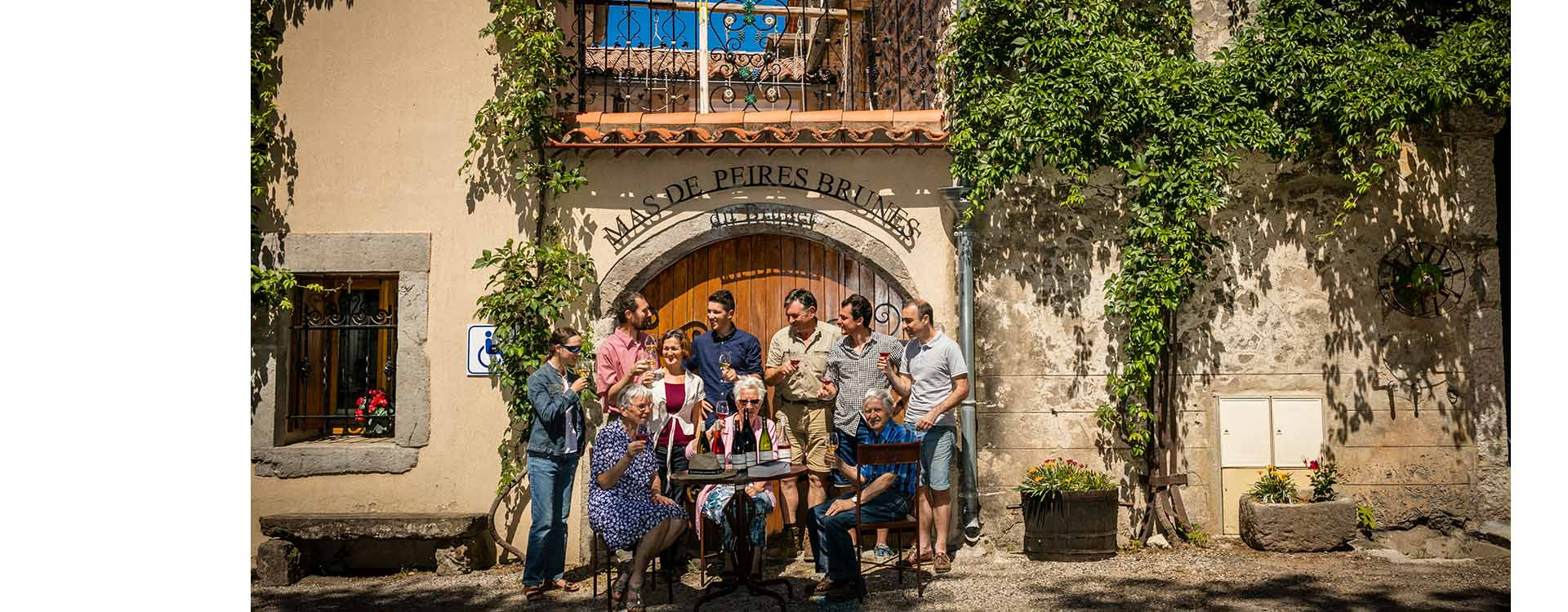
The history of Domaine de Brunet is one of a daring gamble that might have seemed insane at the time.
How did the estate get started?
A bold gamble in 1973
In 1973, when the region was still relatively unknown and there were no local winemakers, the family's grandfather decided to stop cooperative winemaking and shift to direct sales. Despite the geographical isolation, this move turned out to be a success. The estate's motto became, “If the wine is good, people will come.” The estate quickly found itself out of stock.
Domaine Brunet is the first independent estate in the Languedoc region. To this day, it remains the only estate in the Causse-de-la-Selle area, located between Pic Saint-Loup and the Buèges Valley. It produces both red and white wines under the AOC Languedoc designation.
What makes the terroir and the wines distinctive?
The Larzac terraces and the estate's cuvées
Nestled between the Serrane Mountain and Pic Saint-Loup, the Causse-de-la-Selle terrace is a true refuge from the heat of Languedoc. This terroir, known for its dolomitic, porous soils and typical red clay, is particularly suited to viticulture and has been cultivated since the 10th century.
The most traditional red grape varieties here are Mourvèdre, Grenache Noir, and Syrah. These are blended in the estate’s "Cuvée Tradition," which faithfully reflects the terroir. It combines gourmand aromas of red fruits with lightly roasted notes, finishing with a fresh, airy blend of spices, vanilla, licorice, and menthol. This wine captures the richness of Languedoc and the refreshing character of this unique terroir.
For white wines, the "Cuvée Traditionnelle" is made from Vermentino (also known as Rolle Blanc), Roussanne, and Viognier. It inherits a roundness, richness, and great mouthfeel from the southern sun, with fresh and fruity notes of apricot, peach, and vanilla.
Beyond traditional offerings, the estate features a total of eleven cuvées that express the diverse subtleties of the region.
What are the winemakers committed to today?
Organic conversion and wine tourism
Serge and Marc nurture their exceptional connection to the terroir through new projects. Passionate about the nature surrounding them, their region, and its picturesque villages, they demonstrate a daily commitment to promoting and protecting their extraordinary living environment.
Since 2019, they have embarked on converting their estate to organic farming. This commitment signifies a deep-seated symbiosis with their environment, which has long been in place. For decades, their garrigue hectares have been used by a neighboring shepherd family’s sheep in exchange for manure for their vines. The shift to organic farming is a further pledge by these young winemakers to the nature that surrounds and inspires them daily.
In recent years, they have also focused on showcasing their region through wine tourism. They contribute to the development of tourism through wine and open the doors to the typical villages of Saint-Guilhem-le-Désert and Saint de Buèges.
Frequently asked questions about Domaine de Brunet
Where is Domaine de Brunet located?
The estate lies in the village of Causse-de-la-Selle, in the Languedoc backcountry, across the Larzac terraces. Its secluded setting between Pic Saint-Loup and the Buèges valley makes it the only vineyard in the area.
Which grapes go into the red Cuvée Tradition?
The reds are built on Mourvèdre, Grenache Noir and Syrah, three signature southern varieties. The blend delivers ripe red-fruit aromas lifted by spice and licorice notes.
What defines the estate's white wines?
The white cuvée brings together Vermentino, also known as Rolle, along with Roussanne and Viognier. It stands out for its roundness and stone-fruit aromas of apricot and peach shaped by the southern climate.
Is Domaine de Brunet farmed organically?
Serge and Marc began converting the estate to organic farming in 2019. The move extends a long-standing arrangement with a neighboring shepherd, whose sheep graze the garrigue in exchange for manure for the vines.
Why is it called a pioneering estate?
Back in 1973, the grandfather left the cooperative to sell the wine directly, an unusual step at the time. That decision made it the first independent estate in the Languedoc, on a terroir farmed since the 10th century.
Our nuggets


Côté Mas Cru Pezenas - Terroir Fusionnel
Château Paul Mas - Domaines Paul Mas
Languedoc Roussillon
€12.00




Commanderie Saint Pierre La Garrigue - Cru d'Exception Rosé
Domaine de Marmorières
Languedoc Roussillon
€16.00