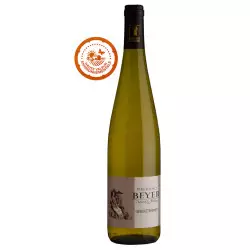
Delivery from €16,90 per winemaker in Europe (excluding the United Kingdom)

Portraits of winemakers
Domaine Beyer, a land of tradition
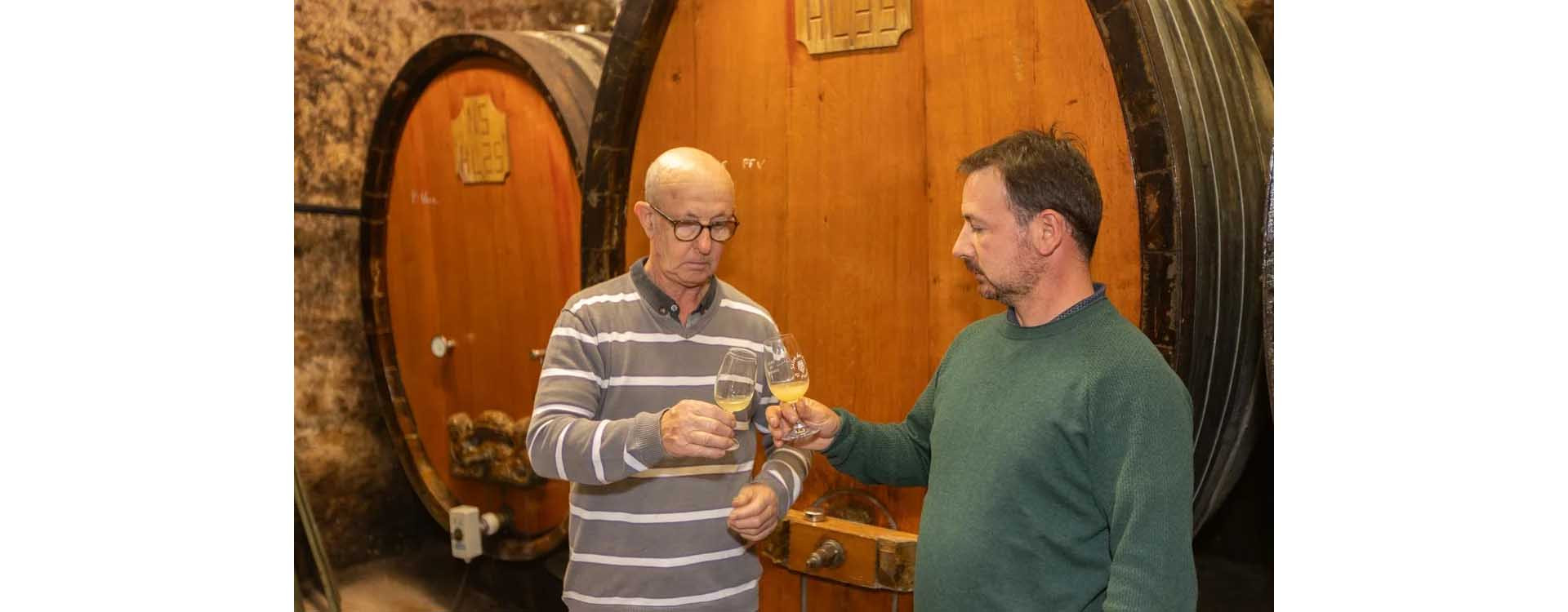
Nestled in the heart of the Alsace vineyard, between the Vosges Mountains and the Rhine Plain, lies the estate of the Beyer family.
Available directly from the estate on Avenue des Vins.
Who runs the estate and what makes it special?
A family estate in the heart of Alsace
Managed by father (Patrick) and son (Mathieu), this nine-hectare estate is situated precisely between the famous towns of Barr and Dambach-la-Ville. On these nine hectares, no less than seven grape varieties are cultivated. This concentration of flavors and possibilities is made possible by the exceptional Alsace climate and the unique terroir known as the Pflanzer. This terroir, along with those surrounding it, allows the Beyer family to express their viticultural convictions, blending manual labor, family values, and environmental principles. A beautiful way to explore Alsace.
What makes the Pflanzer terroir so favorable?
The Pflanzer Terroir: A Prime Location
The family estate extends around five nearby towns: Epfig, Dambach-la-Ville, Itterswiller, Eichoffen, and Bernardvillé. It is in Epfig that the estate’s prized terroir is located. Pflanzer is a lieu-dit situated on a slope, ideally oriented to the south. It benefits from maximum sunshine, which is absorbed by its stony soil during the day and reflected at night, allowing for optimal berry ripening. This provides another advantage: a stony, sloped soil ensures good filtration of precipitation. The vineyard remains healthy and naturally irrigated without the risk of water accumulation. Additionally, there is an underground aquifer that provides irrigation to the vines regardless of the vintage conditions. To enhance this natural fruit, the Beyer family harvests only by hand, selecting only the finest grapes. Their philosophy is to always closely tend to the vineyard and prioritize quality. This admiration for the vine is naturally reflected in their certification. The estate has been certified Haute Valeur Environnementale and is in organic conversion since 2019.
How do the seven grape varieties express themselves?
The Expression of the Estate's Seven Grape Varieties
The seven grape varieties at the estate cover a wide range of wine styles: red, white, sweet, and sparkling wines. True to Alsatian tradition, the estate’s bottles feature a single grape variety, with the exception of their Crémants. The red wine is made from Pinot Noir, which is light and elegant, with soft red fruit flavors and slightly woody aromas due to barrel aging. Each white wine then expresses the personality of its grape variety. Sylvaner is subtle and floral. Pinot Blanc is tender, supple, and fruitier, while still maintaining floral notes. Riesling is more distinguished and assertive, fruity with a bouquet of citrus, flowers, and mineral notes, an ideal gastronomic wine. Pinot Gris is the estate’s opulent variety, full-bodied and long on the palate, offering a complex array of fruity aromas and a long finish. Muscat d’Alsace, distinct from its southern counterparts, is dry and fruity, a refreshingly ideal aperitif wine. Finally, Gewurztraminer is by far the most expressive, with a bouquet of fruits, flowers, and spices. Full-bodied and exuberant, it never fails to make an impression.
This variety was even named a favorite in the Guide Hachette in 2018 for its Gewurztraminer 2015 Prestige. Will you be tempted?
Why buy directly from the winemaker? The wines of Domaine Beyer are shipped straight from the estate: estate price with no middleman, full vintage traceability, and your support for an independent winegrowing family.
Discover the wines of Domaine Beyer directly from the estate, at the estate price, in a short supply chain on Avenue des Vins.
Frequently asked questions about Domaine Beyer
Where is Domaine Beyer located in Alsace?
The family vineyard spreads across five villages near Epfig, including Itterswiller and Bernardvillé, in the area between Barr and Dambach-la-Ville. It covers nine hectares run by Patrick and his son Mathieu.
What makes the Pflanzer terroir special?
It is the estate's favourite lieu-dit at Epfig. South-facing and sloped, its stony ground stores the daytime heat and releases it overnight, which helps the grapes ripen evenly and keeps rainfall well drained.
Which grape varieties does Domaine Beyer grow?
Seven varieties are farmed here across white, red, sweet and sparkling styles: Riesling, Pinot Gris, Gewurztraminer, Sylvaner, Pinot Blanc, Muscat d'Alsace and Pinot Noir. Each bottle is single-varietal, apart from the Crémants.
Is Domaine Beyer organic?
The estate holds the Haute Valeur Environnementale label and has been in organic conversion since 2019. Harvesting is done entirely by hand so that only the finest bunches are kept.
Which Beyer wine should you try first?
The Gewurztraminer is the most expressive, showing fruit, flowers and spice. Its 2015 Prestige cuvée was named a favourite by the Guide Hachette in 2018. For a more mineral start, the Riesling makes a fine food-pairing wine.