Delivery from €16,90 per winemaker in Europe (excluding the United Kingdom)

Our current favorites
8 creative ideas for recycling your corks
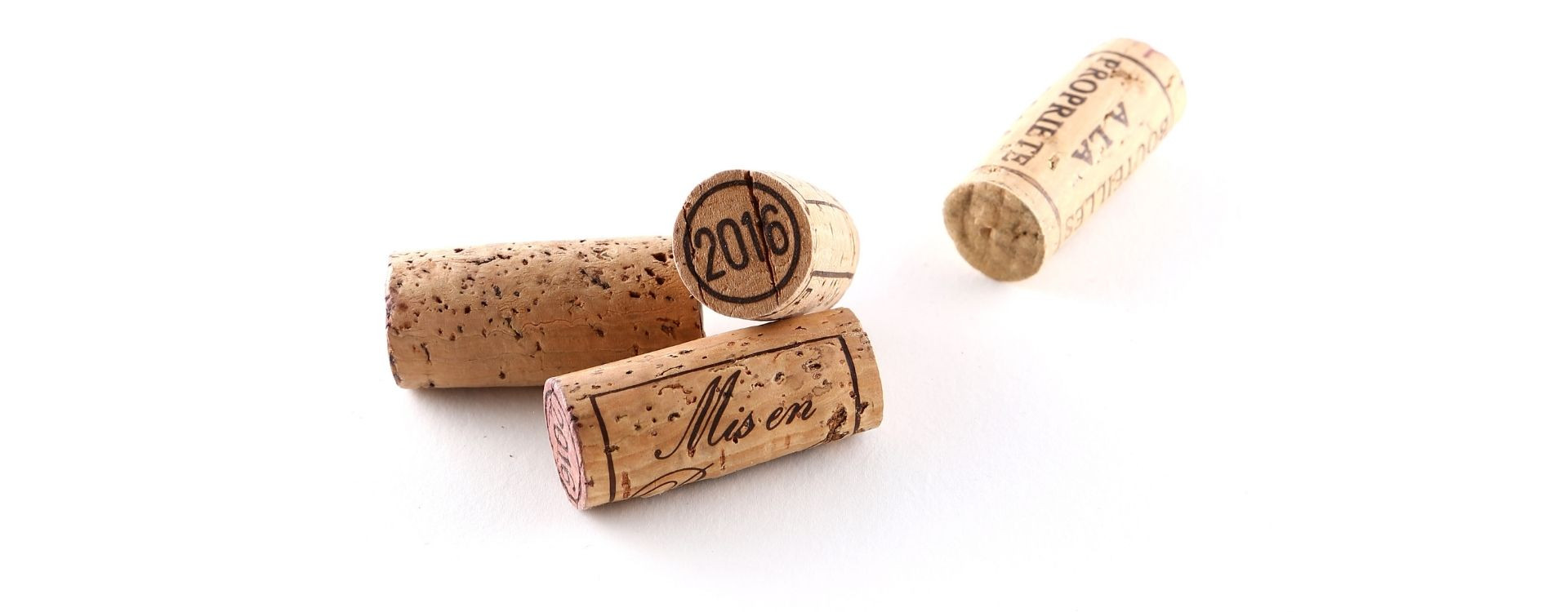
Transform Your Wine Cork Collection into Creative Projects
After hosting a party at home and opening several bottles of wine, you might have realized that with all the corks left over, you could start a genuine collection! Alternatively, you can unleash your creativity with ideas we've found online just for you…
1) For Those Who Want to Delight Their Kids
2) For Those Who Have a Garden
3) For Those Who Are in Love
4) For Those Who Want to Play Interior Designer
5) For Those Who Need a Little Light
6) For Those Who Have a Green Thumb
7) For Those Who Enjoy Playing "Guess Who"!
8) For Those Who Swear by Cats
1) For the kids: little cork sailing boats
Wine cork crafts for children start with a sailing boat: three corks, two rubber bands, a toothpick, a square of paper.
Band the corks side by side for the hull. A paper triangle pierced twice and slid onto the toothpick makes the sail. Ten minutes, then race in the bath. Toothpicks are sharp: an adult plants the mast in the middle cork.
2) For the garden: cork mulch for your pots
Chopped up, your corks make a clean mulch for terrace pots: the layer slows evaporation and stops soil splashing out when you water.
Allow fifteen corks for a 20 cm pot. Slice them into one-centimetre pieces and spread a one-centimetre layer on the soil, clear of the stem. Fifteen minutes of cutting per pot; when you repot, mix the pieces in.
3) For couples: two coasters with your initials
One coaster each, with the other's initial: a couple's gift that takes one evening. Eight corks, two 10 cm cardboard discs, strong glue, a permanent marker.
Slice the corks into one-centimetre rounds, glue them tight on the discs, dry overnight. Write the initial on the centre round, or burn it in with a pyrography pen, a heated stylus, away from children. In a gift box with a bottle chosen together, they celebrate the anniversary of their first meeting.
4) For interior decorating: a cork pin board
A pin board is the most useful cork craft here, and the slowest: an old frame, thick cardboard, about thirty corks for A4, a hot glue gun.
Halve each cork lengthways, flat side down. Glue the halves row by row, packed tight. An hour to set, then back into the frame. Craft knife and hot glue stay away from children: this step is yours.
Our Favourites Wines Selection : Fresh favourites straight from our independent winemakers, at estate prices. See the selection →
5) For a little light: a cork lantern
A cork lantern takes fifteen minutes around a glass jar: twelve to fifteen corks, a wide rubber band, string and an LED tea light.
Stand the corks upright around the jar, held by the band, and tie the string over it. Nothing to glue, it comes apart, and light filters between the corks. An LED candle rather than a flame, no fire against cork.
6) For green thumbs: cork plant labels
Cork takes damp without warping: the right material for labelling seedlings and herbs. A cork, a wooden skewer, a permanent marker, and the label is ready in two minutes.
Write the plant's name along the cork. An adult pushes the skewer's point into one end; the blunt end goes into the soil at the pot's edge. In seed trays, stand the cork upright, no skewer. Children write, adults handle the skewer.
7) For "Guess Who" fans: painted cork characters
Twelve painted corks make a portrait guessing game. Each upright cork is a character: a marker face plus one detail that sets it apart, hat, glasses, moustache or beard.
Paint a light acrylic base, let it dry, then draw. One player secretly picks a character, the other asks yes-or-no questions to find it. Two identical sets, and each hides theirs behind a book. An hour's work, drying included.
8) For cat lovers: a champagne cork toy
A champagne cork makes a cat toy that costs nothing: its wide head rolls off-centre, stops, sets off again.
Tie a metre of string under the head, double knot, and fasten the other end to a stick. Run it across the floor, always under your eye; without the string, it is a ball. No bell or glued feather, nothing that comes loose and gets swallowed. Put the rod away afterwards.
Where to find wine corks to recycle, and which to use?
Your bottles first: a box in the kitchen, red wines and whites alike, and the supply builds itself. For a pin board, the local wine shop or restaurant collect far more.
Choose natural cork over agglomerated, less clean to cut, and over synthetic, which the FAQ below tells apart. Before gluing, rinse the corks in clean water, no soap, as its film would hamper the glue. Two days flat to dry: damp, they glue badly.
Our Favourites Wines Selection : Fresh favourites straight from our independent winemakers, at estate prices. See the selection →
FAQ - Recycling wine corks
Can wine corks be recycled?
Yes, cork is a natural, lightweight and recyclable material. Rather than throwing them away, you can give corks a second life in home décor, in the garden or in craft projects, as our 8 ideas show.
What can you make with used wine corks?
They lend themselves to plenty of DIY uses: trivets, pin boards, place cards, small toys for children, pots for seedlings or decorative objects. A little glue and creativity are all you need.
How do you cut a cork without breaking it?
Use a sharp knife or a craft blade and slightly dampen the cork first to soften it. Cut slowly while rolling the cork, which keeps it from crumbling.
Are wine corks compostable?
Natural cork is biodegradable and can go into your compost once crumbled. Just make sure it is genuine cork and not a synthetic plastic stopper.
How can you tell a natural cork from a synthetic one?
Natural cork is soft, irregular and slightly porous, while a synthetic stopper is made of plastic, smoother and more uniform. For your projects, choose natural cork, which is easier to cut and glue.


