Delivery from €16,90 per winemaker in Europe (excluding the United Kingdom)

Domaine Lafont des Odes
Domaine Lafont des Odes: organic red wine direct from a 2.5 ha estate in the Gard, France...
Lire plus


Discover Domaine Lafont des Odes in photos


Domaine Lafont des Odes, the wines of Nicolas Ducros in Fontarèches, in the Gard
Domaine Lafont des Odes
A small 2.5-hectare family estate in Fontarèches, in the Gard, with plots in the neighbouring village of La Bruguière. Nicolas Ducros, a cellar master for seventeen years before creating his estate, makes three single-plot red cuvees in certified organic farming: Marguey, Les Bosquets and Vialade.
Seventeen years making other people's wine, then, one 1st of January, his own cellar keys. Nicolas Ducros took over the vines that came from his paternal grandmother, on the hillsides of Fontarèches and La Bruguière, between 260 and 280 metres altitude, on the edge of the garrigue. Three plots, three cuvees, tiny yields, neither fining nor filtration: the wines of the Domaine Lafont des Odes are to discover direct from the winegrower.
Seventeen years in the cellar before creating his own estate
Nicolas Ducros first wanted to be a farmer. A technical degree at Nimes-Rodilhan, harvests from the very start of September, the first smells of fermentation: the vocation was found. Then came seventeen years as a cellar master, in various estates, up to a premium Costieres de Nimes property where he was responsible for the estate and trade wines, some 1.8 million bottles. In 2020, he took over the family estate and began the organic conversion; at the end of 2023, he left his job; on 1 January 2024, the Domaine Lafont des Odes came into being for good. The land itself comes from further back: from his paternal grandmother, née Lafont, who ran the estate with her husband Rene Ducros. Today, the grapes no longer leave the house: they are vinified and bottled at the estate.
Nicolas Ducros, winegrower of the Domaine Lafont des Odes
September, start of classes, harvests, first step in a winemaking cellar! The smells, the fermentation aromas, the cellar work, that's it for sure, that's what I want to do!
|
||
|
||
|
||
|
Two Gard villages, hillsides and a lot of limestone
The estate is shared between two neighbouring villages: Fontarèches, where the family cradle lies, and La Bruguière, where Nicolas Ducros bought plots on a very limestone terroir, on the edge of the garrigue. It is there, on a locality called La Fond des Odes, that he found the name of his estate. The vines are planted on hillsides, between 260 and 280 metres altitude, all facing south, on soils that change from one plot to the next: Cretaceous limestone sandstone, ferruginous red sands, clay-limestone. This height and these soils give wines that keep freshness, with pH between 3.5 and 3.65 and measured degrees (12 to 13% vol.), on grapes nonetheless harvested at full ripeness. Four grapes are planted: cinsault, syrah, grenache and carignan.
Certified organic, late harvests, neither fined nor filtered
The organic certification covers the harvests since 2023 and concerns all the plots. The training adapts to each plot: the oldest as bush vines, the historic pruning of the Languedoc; the syrah, younger, on Royat cordon. Yields stay low everywhere, from 20 to 25 hectolitres per hectare. The harvest begins late, from the end of September, entirely by hand, with sorting directly in the vineyard. In the cellar, extraction is gentle (pump-overs on 30% of the volume, twice a day), with a maceration time specific to each cuvee: ten days for the cinsault, fifteen for the syrah, twenty-five for the grenache-carignan blend. None of the three cuvees is fined or filtered: the wine goes into bottle just as it is, with the matter it has.
Marguey, Les Bosquets, Vialade: the estate's three cuvees
The cuvee names are not marketing inventions: they are the cadastral names of the plots. One plot, one cuvee, one grape or one blend, the three wines are reds vinified separately. Marguey (grenache and carignan, limestone sandstone, 270 m) is the most structured; Les Bosquets (100% syrah, ferruginous red sands, 280 m) the most precise and fragrant; Vialade (100% old-vine cinsault, clay-limestone) the most supple and immediate. All three are vinified, aged and bottled at the estate, without fining or filtration: a light natural deposit is therefore normal. White wine is in preparation, on the very limestone terroir of La Bruguière.
Marguey
Vin de France, red - Grenache & Carignan
The estate's most structured cuvee: half a hectare of young bush vines, on Cretaceous limestone sandstone, at 270 metres. Grenache and carignan in equal parts, 25 days of maceration and a very gentle extraction, for matter without harshness (20 hl/ha). With a rib of Aubrac beef, small game or a Beaufort cheese.
Les Bosquets
Vin de France, red - 100% Syrah
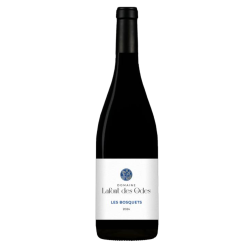
The highest plot, at 280 metres, on ferruginous red sands: a pure syrah trained on Royat cordon. Half a hectare, quarter-century-old vines, 15 days of maceration (25 hl/ha): the house's most precise and fragrant red. With charcuterie, duck breast or a Laguiole cheese.
Vialade
Vin de France, red - 100% Cinsault, old vines
The largest of the three plots: 1.2 hectare of cinsault planted over half a century ago, still in bush form, on clay-limestone. Just ten days of maceration (20 hl/ha) for the estate's most supple, immediate wine. With grills, white meats and soft cheeses.
A hillside terroir in the Gard
Fontarèches & La Bruguière, 260 to 280 metres
The estate is shared between two neighbouring villages: Fontarèches, the family cradle, and La Bruguière, a very limestone terroir on the edge of the garrigue. The vines, all facing south, grow on three different soils (limestone sandstone, ferruginous red sands, clay-limestone), which keep freshness: pH from 3.5 to 3.65, measured degrees (12 to 13% vol.).
Certified organic, low yields, no artifice
Neither fined nor filtered
Certified organic farming since the 2023 harvest, across all the plots. Deliberately low yields (20 to 25 hl/ha), hand harvesting with sorting in the vineyard, gentle extraction (pump-overs on 30% of the volume), macerations set cuvee by cuvee. None of the three cuvees is fined or filtered: the wine goes into bottle with its matter.
Nicolas Ducros, an estate born in 2024
17 years as a cellar master, the family vines
After a technical degree at Nimes-Rodilhan and seventeen years as a cellar master (up to 1.8 million bottles a year in a premium Costieres de Nimes estate), Nicolas Ducros took over in 2020 the vines of his paternal grandmother, née Lafont. On 1 January 2024, the Domaine Lafont des Odes came into being for good.
Direct from the winegrower - three organic single-plot reds of the Gard
Why choose the wines of the Domaine Lafont des Odes?
A winegrower who learned his trade elsewhere. Nicolas Ducros, a cellar master for seventeen years before creating his estate.
Three single-plot cuvees, not a range. Marguey, Les Bosquets and Vialade: one plot, one soil, one grape, one maceration.
Certified organic, no talk. Certified organic farming, wines neither fined nor filtered.
Confidential volumes. 2.5 hectares, 20 to 25 hl/ha: a few thousand bottles, not tens of thousands.
Frequently asked questions about the Domaine Lafont des Odes
Where is the Domaine Lafont des Odes located?
The Domaine Lafont des Odes is located in Fontarèches, in the Gard, and also farms plots in the neighbouring village of La Bruguière. The vines are planted on hillsides, between 260 and 280 metres altitude, on the edge of the garrigue, all facing south.
Who is Nicolas Ducros, the estate's winegrower?
Nicolas Ducros is the founder and winegrower of the estate. After a technical degree at Nimes-Rodilhan and seventeen years as a cellar master (including a premium Costieres de Nimes estate, up to 1.8 million bottles a year), he took over the family vines in 2020, began the organic conversion, then founded his estate on 1 January 2024.
Where does the name Lafont des Odes come from?
The name comes from a cadastral locality of La Bruguière, La Fond des Odes, where the winegrower bought plots on a very limestone terroir. He turned it into Lafont des Odes, Lafont being the maiden name of his paternal grandmother, the one through whom the estate came into the family. The name links the estate's two villages, Fontarèches and La Bruguière.
What wines does the Domaine Lafont des Odes produce?
The estate produces only red wines, sold as Vin de France, in three single-plot cuvees: Marguey, Les Bosquets and Vialade. White wine is in preparation, with plantings planned on the limestone terroir of La Bruguière.
What are the estate's three cuvees?
Marguey blends grenache and carignan in equal parts on limestone sandstone; Les Bosquets is a pure syrah born of ferruginous red sands; Vialade is an old-vine cinsault on clay-limestone. Each name is that of the plot on the land registry: one plot, one soil, one cuvee.
Which grapes are grown at the estate?
Four grapes are planted: cinsault, syrah, grenache and carignan. The oldest vines, in cinsault, are over half a century old and trained as bush vines, the historic pruning of the Languedoc; the syrah, younger, is trained on Royat cordon with careful trellising.
Are the Domaine Lafont des Odes wines organic?
Yes: the estate has been certified organic since the 2023 harvest, across all its plots. The conversion had begun as soon as Nicolas Ducros took over the vines, even before the official creation of the estate.
What is a single-plot cuvee?
A single-plot cuvee is a wine from one single vineyard plot, vinified separately. Here, each of the three plots has its soil, its grape, the age of its vines and its own maceration time. The wines are not blended together, which makes the terroir differences directly perceptible in the glass.
What does a wine 'neither fined nor filtered' mean?
It means the wine has undergone neither of the two most common clarification steps before bottling. Fining draws the suspended particles to the bottom of the tank; filtration holds them on a filter. The three cuvees do without both, which can leave a light natural deposit at the bottom of the bottle.
What dishes to serve with the three cuvees?
Marguey (grenache-carignan), the most structured, calls for a rib of Aubrac beef, small game or mountain cheeses (Beaufort, Abondance). Les Bosquets (syrah) goes with charcuterie, duck breast and matured cheeses (Laguiole, Salers). Vialade (cinsault), more supple, is served with grills, white meats and soft cheeses.
Does the Domaine Lafont des Odes produce white wine?
Not yet, but it is planned. Nicolas Ducros has bought plots on the very limestone terroir of La Bruguière to plant vines gradually, including white. Today, the estate offers only its three red cuvees, in confidential volumes (2.5 hectares, 20 to 25 hl/ha).
Can the Domaine Lafont des Odes wines be bought directly?
Yes: the estate's wines are bought direct from the winegrower, with shipping across France and the European countries eligible for delivery. You receive the bottles just as Nicolas Ducros made them, with no extra middleman between his cellar and your table.
Three certified-organic single-plot cuvees, direct from the estate
Domaine Lafont des Odes: a small 2.5-hectare family estate in Fontarèches and La Bruguière, in the Gard, created on 1 January 2024 by Nicolas Ducros (a cellar master for seventeen years, notably in a premium Costieres de Nimes estate). Vines on hillsides, between 260 and 280 metres altitude, on the edge of the garrigue, on limestone sandstone, ferruginous red sands and clay-limestone. Certified organic farming since the 2023 harvest, yields of 20 to 25 hl/ha, hand harvesting, neither fining nor filtration. Grapes: cinsault, syrah, grenache and carignan.
Cuvees (Vin de France, red): Marguey (grenache-carignan), Les Bosquets (syrah) and Vialade (cinsault, old vines) - three single-plot cuvees vinified and bottled at the estate. A white is in preparation