Delivery from €16,90 per winemaker in Europe (excluding the United Kingdom)

Portraits of winemakers
Domaine Jean-Baptiste Adam: between traditional Alsatian viticulture and biodynamics
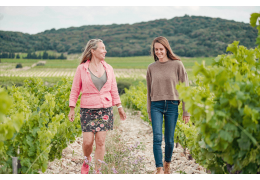
Domaine Jean-Baptiste Adam is the epitome of a traditional Alsatian vineyard: it offers a wide range of wines and is passed down through generations. For the past five years, Jean-Baptiste Adam and his daughter Laure have worked together to manage the estate and produce wine hand in hand.
Who works the estate today?
A father-daughter partnership
My father is the fourteenth Adam to vinify at the estate. Currently, we are the two full-time winemakers in the family working at the estate, but we regularly receive help from my mother and grandfather,
explains Laure.
Why does Riesling matter so much here?
The king of Alsatian grape varieties
Specializing in the production of white wines (though they also produce red wines made from Pinot Noir), Domaine Jean-Baptiste Adam prides itself on cultivating Riesling, which they consider "the king of Alsatian grape varieties, as it perfectly expresses the richness of the terroir."
We plant Riesling grapes in different terroirs to create several ranges of Riesling. When grown on a granite soil, it produces very mineral wines with a vibrant and pure taste, while on a clay-limestone soil, it yields a wine with pronounced citrus notes,
say Laure and Jean-Baptiste.
How do you look after the vines?
Homeopathy in the vines
Covering an area of 20 hectares, the vineyard of Domaine Jean-Baptiste Adam is certified organic.
The quality of a wine is first and foremost determined by the vine. So if the vine is doing well, the wine should be good too,
believes Laure. Jean-Baptiste and Laure adhere strictly to this credo, which includes treating all the estate's plots with biodynamic methods.
We use classical homeopathy methods administered to the vines to make them more resistant to diseases: herbal teas, decoctions, natural products…
What makes your winemaking different?
Ancestral methods, modern pressing
One of Domaine Jean-Baptiste Adam's specialties is vinifying using traditional ancestral methods. However, Jean-Baptiste and Laure are at the forefront of technology when it comes to pneumatic pressing.
We have invested in a fairly modern pneumatic press, which allows us to obtain high-quality grape juice. For example, Riesling has a thinner skin than Gewürztraminer. Therefore, a different pressing method is required. Our machines allow us to control the time and intensity of pressing and adapt it to our grape varieties. We do not use a centrifuge for settling, which is the removal of solid particles. Instead, we let them rest in casks, without adding yeast, for between six months and a year,
the winemakers elaborate.
How do you share the estate with visitors?
Partnership with the Alsace Tourist Office
Highly involved in oenotourism, Jean-Baptiste and Laure make their tasting room available to visitors seven days a week. The winemakers also participate in numerous events in partnership with the Alsace Tourist Office. The latest event: La Parenthèse Vigneronne, a stay in the Kaysersberg Valley offering wine enthusiasts the chance to meet regional winemakers and taste Alsace Grand Cru
Frequently asked questions about Domaine Jean-Baptiste Adam
Who runs Domaine Jean-Baptiste Adam?
Jean-Baptiste Adam and his daughter Laure have led this Alsatian family estate together for the past five years. He is the fourteenth generation of the family to make wine on site, with occasional help from Laure's mother and grandfather.
Why is riesling so central to the estate?
The estate treats it as Alsace's leading grape, able to mirror each plot of soil. Grown on granite it yields lively, mineral whites, while clay and limestone bring out citrus-tinged flavours.
Does Domaine Jean-Baptiste Adam farm biodynamically?
Yes. Its 20 hectares are certified organic and every parcel is worked biodynamically. The vines are cared for with homeopathy-inspired plant preparations to build up their resistance to disease.
How are the wines made?
Traditional know-how sits alongside a modern pneumatic press adjusted to each grape's skin thickness. The juice then rests in large wooden casks, with no added yeast, for six months to a year.
Can you visit the estate in Alsace?
Its tasting room welcomes visitors seven days a week. The estate is also active in regional wine tourism, with events around the Kaysersberg valley.