Delivery from €16,90 per winemaker in Europe (excluding the United Kingdom)

Portraits of winemakers
Domaine Fourrey
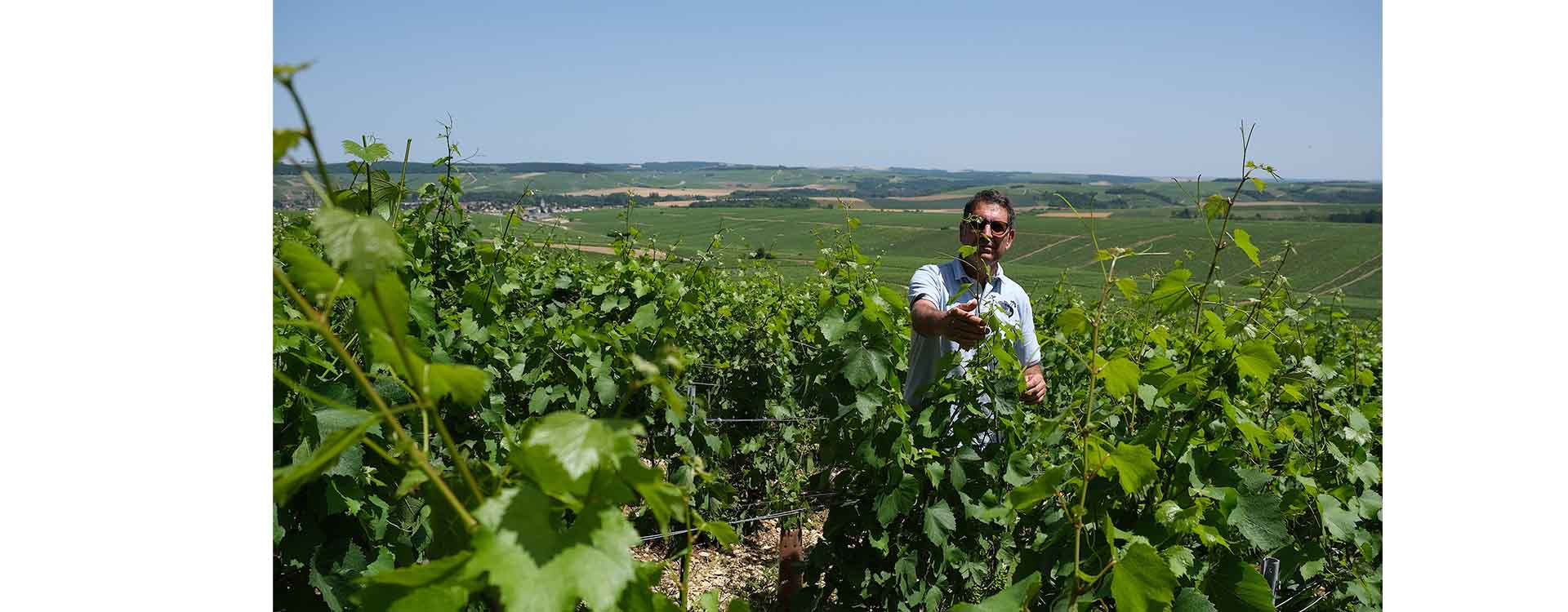
Domaine Fourrey is part of a long family history rooted in the heart of the Chablis vineyards, in Milly, just a few kilometers from Chablis. Passed down from generation to generation, Domaine Fourrey has existed for four generations and reflects an intimate relationship with the vine and the terroir. Today, at the head of the estate’s 25 hectares of vineyards, Jean-Luc Fourrey continues the work of his forebears with particular attention paid to the terroirs and the quality of the cuvées. The vines are spread across a wide variety of climats, in the Chablis, Petit Chablis and Chablis Grand Cru appellations, not forgetting a Bourgogne Pinot Noir.
Available directly from the estate on Avenue des Vins.
What is the story behind the estate?
Four generations in Chablis
The beauty of the terroirs, the satisfaction of tasting fine cuvées
are the first images that come to the winemaker’s mind when he speaks of his estate.
This story is also one of a deeply rooted personal heritage. Born into a line of winemakers, Jean-Luc Fourrey defines himself simply: “I was born a winemaker.” His most vivid memories go back to his first harvest alongside his grandfather, a moment filled with emotion. Trained at the Beaune wine school, Jean-Luc took over the estate in 1992 with the ambition of developing bottling, whereas until then the wines had largely been destined for négociants. Today, surrounded by a team of seven collaborators, Domaine Fourrey has become a human-sized estate firmly oriented toward responsible viticulture.
Respect for living things
sums up the estate’s guiding principle.
How does the estate work its vines?
Viticulture focused on the future
Domaine Fourrey’s philosophy is based on vineyard management that is as respectful as possible of natural balances. The estate is currently in its final year of conversion to organic farming, an important milestone that is part of a deeper approach undertaken for several years. Already certified HVE level 3 since the 2017 vintage, the vineyard has gradually evolved its practices to meet environmental and climatic challenges. Encouraging biodiversity, thoughtful grass cover management, eliminating herbicides and reducing inputs are all actions implemented at the estate.
We manage the estate in the most respectful way possible for living things: people, vines and consumers,
the winemaker emphasizes.
Faced with increasingly frequent climatic extremes, the estate is also adapting its methods. Later pruning to limit frost damage, mechanical weeding, trials with cover crops, and even the use of UV panels to stimulate the vine’s natural defenses all demonstrate a constant drive for progress. Soil work remains precise and measured, with shallow ploughing and organic inputs designed to preserve microbial life. This pragmatic approach is paired with close observation of each plot and a willingness to question practices vintage after vintage.
The desire to prepare a new vintage that will delight the taste buds
remains Jean-Luc Fourrey’s main motivation.
What do the wines express?
Wines faithful to the vintage and the family history
In the cellar, the work continues in the same spirit as in the vineyard. Each plot is harvested at the right moment, after careful monitoring of ripeness and berry tastings. The Grand Crus and young vines are harvested by hand, while the rest of the vineyard is machine-harvested using high-performance equipment designed to respect the integrity of the grapes. This precision helps preserve the quality of the juices and express as faithfully as possible the identity of the Chablis terroir.
My wines reflect each vintage,
says the winemaker, committed to ensuring his wines remain true to their terroir and their vintage.
Among the cuvées, Chablis Héritage holds a special place. Dedicated to his son, it is made from vines planted in the year of his birth and aged for 18 months on lees. This cuvée embodies both the family bond and the estate’s long-term commitment.
I put a lot of love into this bottle,
Jean-Luc Fourrey confides about this emblematic cuvée.
Domaine Fourrey now welcomes visitors who sometimes come from very far away, like those American customers who discovered a Chablis 2023 in New York before making the trip to the estate! A symbolic recognition, but one that reveals the emotion inspired by Domaine Fourrey’s wines.
Why buy directly from the winemaker? The wines of Domaine Fourrey are shipped straight from the estate: estate price with no middleman, full vintage traceability, and your support for an independent winegrowing family.
Discover the wines of Domaine Fourrey directly from the estate, at the estate price, in a short supply chain on Avenue des Vins.
Frequently asked questions about Domaine Fourrey
Where is Domaine Fourrey located?
The estate sits in Milly, a village a few kilometers from Chablis, within the Burgundy vineyards.
Which appellations does the estate produce?
Its 25 hectares span Chablis, Petit Chablis and Chablis Grand Cru, along with a red Bourgogne Pinot Noir.
Are Jean-Luc Fourrey's wines organic?
The vineyard is finishing its final year of conversion to organic farming. It has held HVE level 3 certification since the 2017 vintage.
What is the Chablis Héritage cuvée?
This bottling is dedicated to the winemaker's son. It comes from vines planted the year he was born and rests 18 months on lees.
How does the estate respond to climate change?
The estate prunes later to limit frost, weeds mechanically, trials cover crops and uses UV panels to strengthen the vine's natural defenses.


