Delivery from €16,90 per winemaker in Europe (excluding the United Kingdom)

Portraits of winemakers
Domaine de la Royère: history, terroir and wines

Amidst the garrigue and olive trees, Domaine de la Royère proudly embraces an identity rooted in nature, ecology, and respect for the land. Owned by the Hugues family, the estate was established in 1988, the same year the Luberon AOP designation was created.
Available directly from the estate on Avenue des Vins.
What is the philosophy behind the estate?
Vision, history and commitments
The winemaker, in place since 2018, focuses on minimal intervention both in the vineyard and the cellar, taking advantage of a climate well-suited to organic viticulture. The soils are lightly worked, with controlled permanent natural grass cover, promoting a symbiotic relationship with nature.
In the Luberon (recognized as a ‘satellite’ appellation of the Rhône Valley), we manage to craft exceptional wines without additives in the cellar, whether for wines meant to be enjoyed young, within 5 years, or those built for aging, capable of resting in the cellar for 15 to 20 years.
Versatility within the team is essential: everyone understands what they do, what they produce, and what they sell, whether it’s wine, olive oil, or spirits.
Domaine de la Royère continues to evolve: a still was installed in 1995 to distill pomace, the winery was completely renovated in 2014, the conversion to organic farming began in 2017, and certification was obtained in 2020.
What makes the Luberon terroir and your winemaking distinctive?
Luberon terroir and winemaking expertise
Passionate since his teenage years, the winemaker draws motivation from the beauty of the landscape, the freedom of the craft, and the joy of sharing a glass of wine.
This unique terroir (between scrubland and olive trees) is mostly sandy with scattered pebbles, encouraging natural drainage. It is home to goblet-pruned and double cordon-trained vines, with some plots now over a century old.
The estate favors limited yields around 30 hl/ha, with nearly 60% of the harvest done by hand. The goal: living vines, preserved biodiversity, and well-balanced grapes.
In the cellar, white and rosé wines undergo gentle pneumatic pressing of destemmed grapes, followed by fermentation in temperature-controlled tanks to preserve aromatics. Red grapes, destemmed and crushed, are macerated longer with daily pump-overs to extract structure while maintaining elegant tannins. Depending on the vintage, some cuvées are aged in barrels for 4 to 24 months.
Beyond the wines, what else can visitors discover at the estate?
Wines, olive oils and wine tourism at La Royère
Domaine de la Royère spans 40 hectares of certified organic vineyards, farmed without herbicides or chemical fertilizers. The wines highlight iconic Rhône Valley grape varieties under AOP Luberon, IGP Méditerranée, and IGP Vaucluse designations.
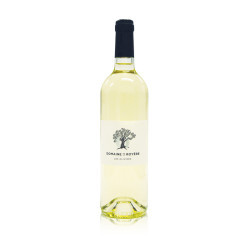
Syrah and Grenache are the foundation of the reds and rosés, while the whites are primarily crafted from Grenache Blanc and Vermentino. The style? Clean, expressive, and easy-drinking wines.
A barrel-aged red wine, a little rough around the edges at first, but softens beautifully with time!
Beyond wine, the estate also produces fortified wine, Marc de Provence, Fine de Muscat, and even an olive-based eau-de-vie. A lavender honey from the family property adds a sweet touch to the experience.
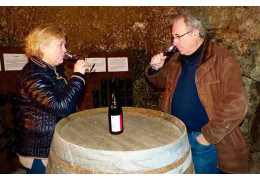
Wine tourism is central to the estate’s mission, with a dedicated olive oil museum, on-site boutique, and new tasting room welcoming visitors year-round.
Why buy directly from the winemaker? The wines of Domaine de la Royère are shipped straight from the estate: estate price with no middleman, full vintage traceability, and your support for an independent winegrowing family.
Discover the wines of Domaine de la Royère directly from the estate, at the estate price, in a short supply chain on Avenue des Vins.
Frequently asked questions about Domaine de la Royère
Where is Domaine de la Royère located?
The estate lies in the Luberon AOP, a satellite appellation of the Rhône Valley. Its 40 hectares stretch between scrubland and olive groves, on sandy soils scattered with pebbles that drain well.
Which grape varieties does Domaine de la Royère grow?
Syrah and Grenache anchor the reds and rosés, while the whites rely on Grenache Blanc and Vermentino. These classic Rhône varieties are bottled under the AOP Luberon, IGP Méditerranée and IGP Vaucluse labels.
Are the wines certified organic?
Yes. The property began its organic conversion in 2017 and earned certification in 2020. The vineyards are farmed without herbicides or chemical fertilisers, with a managed natural grass cover between the rows.
What style of wine does the estate make?
The winemaker aims for clean, easy-drinking bottles with no heaviness. Modest yields near 30 hectolitres per hectare and a large share of hand-picking feed that balance, while barrel ageing runs from four to twenty-four months depending on the year.
How long can Domaine de la Royère wines age?
It varies by cuvée. Some are made to enjoy within five years, others are built to rest for fifteen to twenty. Working without additives during winemaking is what lets the estate hit both targets.