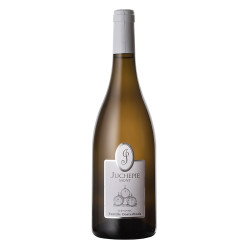
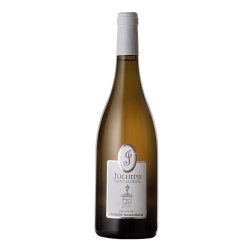
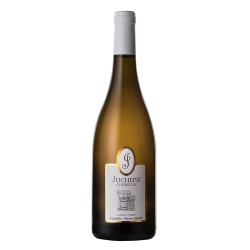
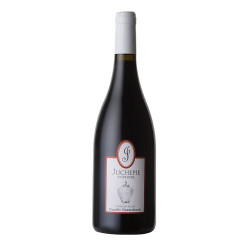
Delivery from €16,90 per winemaker in Europe (excluding the United Kingdom)

Portraits of winemakers
Domaine de Juchepie, Coteaux du Layon Faye: the hardware trade left behind for Chenin in 2001
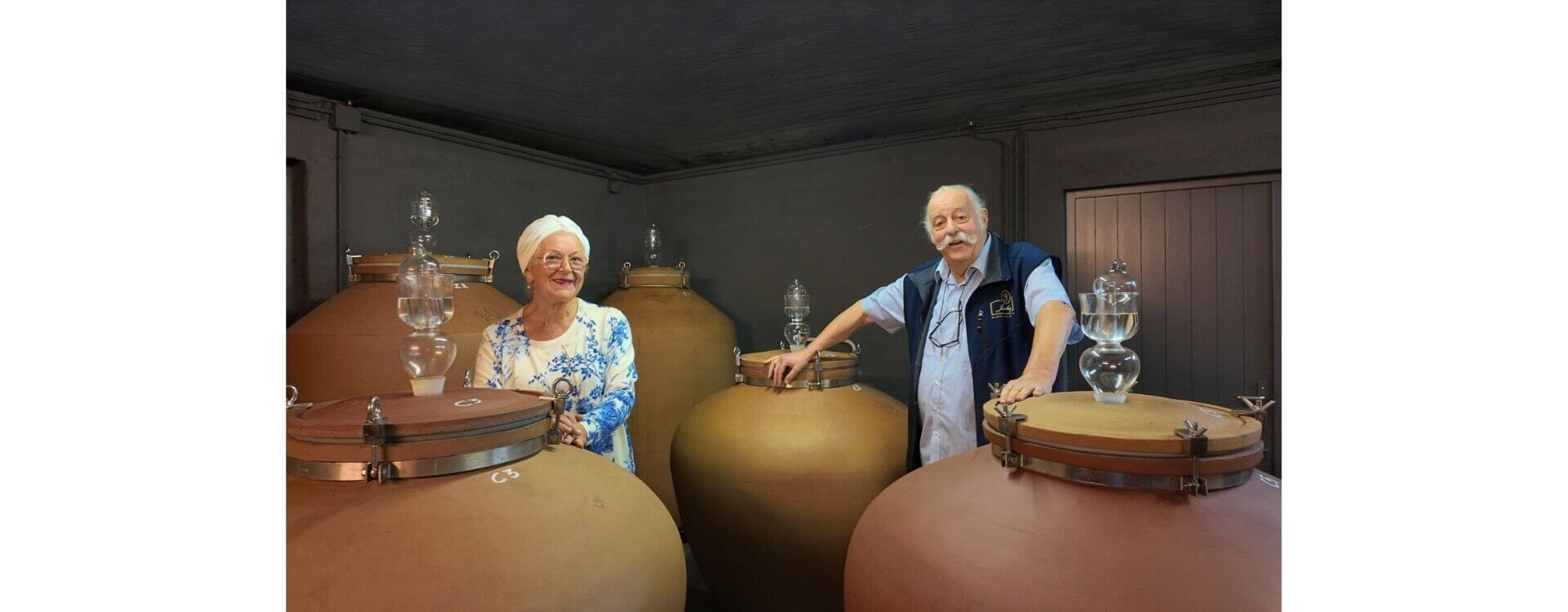
On a hilltop at Faye-d'Anjou, in the Coteaux du Layon, Domaine de Juchepie grew out of a farmhouse found in 1985 with 0.35 hectare of old vines. Eddy and Mileine Oosterlinck moved in for good on 1 October 2001. The vineyard then covered six hectares.
How would you describe Domaine de Juchepie?
A farmhouse with no winery and 0.35 hectare of vines
In 1985 a couple looking for a holiday base in Anjou found a farmhouse above old vines, with no winery and a plot of 0.35 hectare attached to it.
The fruit went to grower friends nearby, who made a pleasant little wine, and Eddy Oosterlinck, who signs the questionnaire, tells the rest without dressing it up.
“Never buy a holiday house in the middle of the vines. It is the dumbest thing a wine lover can do. It sets off something you can no longer stop, and no longer want to stop. That is what happened to us.”
That momentum carried the business as far as the place name, Juchepie, a knoll in the Layon, and the estate carries the signature of Eddy and Mileine Oosterlinck.
When did you catch the wine bug?
Love at first sight, then fifteen years of groundwork
The bug was not caught on this slope, it came years earlier, from a shift of view. The day a bottle stops being a drink, the rest follows.
“One day I fell in love, when I realised that wine could be far more than a good drink. That set everything off.”
The decision dates from those years and it carries a firm deadline from the outset: change trade at fifty, which meant 2001, leave the hardware business and become a grower in France. Fifteen years went into building the holding and the means to farm it.
On 1 October 2001 the move became permanent, and the vineyard the couple came to farm covered six hectares, against a third of a hectare at the outset.
What philosophy guides your work in the vineyard and in the cellar?
The plant first, organic since 1994, biodynamic since 2007
The order of priorities is plain: the plant comes first, and its well-being outranks the rest.
“only a vine that feels good in its own skin can give us fruit able to make naturally balanced wines”
The vines have been farmed organically since 1994, the estate states on its website, and from 2007 it added preparations of cow manure, silica and plants at what it calls “homeopathic doses”.
Treatments are then timed to the lunar calendar, following the principles of Rudolf Steiner, an Austrian philosopher. The estate reads this as a way to know its vines, not a label argument.
Which wine best represents your estate?
A Coteaux du Layon Faye Chenin Blanc, picked over several passes
The estate places its sweet wines in Coteaux du Layon followed by Faye, and that name counts. In its December 2025 version, the appellation rules allow Chenin Blanc alone and call for picking by hand, in successive passes, on fruit left to ripen well beyond its full maturity.
Adding a village name tightens the thresholds. It then takes 255 grams of sugar per litre of must instead of 238, a minimum natural strength of 15% instead of 14%, and the yield drops from 35 to 30 hectolitres per hectare.
The estate goes well past that floor. Across its four Coteaux du Layon Faye wines it publishes average yields of five to fifteen hectolitres per hectare, a half to a sixth of what the appellation allows.
“Character and personality are the qualities that interest me most in our wines. I hope I have as much of them as they do.”
The appellation rules also note that wines born of the south-facing slopes of Beaulieu-sur-Layon, Faye-d'Anjou and Saint-Aubin-de-Luigné frequently carry notes of noble rot. That botrytis shrivels the berry on the vine.
What are your ambitions for the years ahead?
Two hectares of slopes under way, and ten more as potential
The current project is not new ground, but replanting slopes abandoned more than fifty years ago. Two hectares are under way. Ten more hectares could follow.
“Feeling that I am nature's closest colleague, in its work of lifting the grape higher.”
A slope does not return to the vine in one season.
The rules grant the appellation to young vines only from the second year after the one in which they were planted, and a hillside vine takes far longer still to speak.
Why follow Domaine de Juchepie?
A Layon slope, a couple from elsewhere, a trade picked at fifty
Juchepie is not a family succession, but a mid-life conversion decided fifteen years ahead, and the house and its slope have been in the same hands since 1985. The vineyard grows backwards, onto slopes given up well before the couple arrived there, and this is the image the estate reaches for when asked about itself.
“Sunset over the vines, seen from our terrace, with a glass of Juchepie in hand.”
That is the answer of someone who lives there rather than a press office. It says what a slope is worth once you choose to live on it, not what a bottle costs.
Why buy direct from the winegrower? Domaine de Juchepie wines are shipped straight from the estate: property prices with no middleman, vintage traceability and support for a couple of growers committed to their land.
Discover the cuvées of Domaine de Juchepie direct from the estate, at the estate price, on Avenue des Vins.
Frequently asked questions about Domaine de Juchepie
Who runs Domaine de Juchepie?
Domaine de Juchepie is run by Eddy and Mileine Oosterlinck, under the company name SCEA Domaine de Juchepie. Eddy Oosterlinck left the hardware trade at fifty to become a grower in France.
Which commune is Domaine de Juchepie in?
Domaine de Juchepie stands at Faye-d'Anjou, in the commune of Bellevigne-en-Layon, in Maine-et-Loire. It occupies the top of a slope above the Layon river valley.
What does the name Juchepie refer to?
Juchepie is first a place name: a knoll in the Coteaux du Layon that the estate took as its own. The landform precedes the business.
Why do some Layon bottles say Faye?
Faye is the name of a commune of origin that the Coteaux du Layon appellation allows after its own name. The rules write it Faye-d'Anjou or Faye, and admit delegated communes.
What thresholds must a Coteaux du Layon Faye meet?
A Coteaux du Layon carrying a village name meets higher thresholds: 255 grams of sugar per litre of must against 238, 15% natural strength against 14%, and 30 hectolitres against 35.