Delivery from €16,90 per winemaker in Europe (excluding the United Kingdom)

Let's eat !
Turkey and capon: choosing the right wine for Christmas
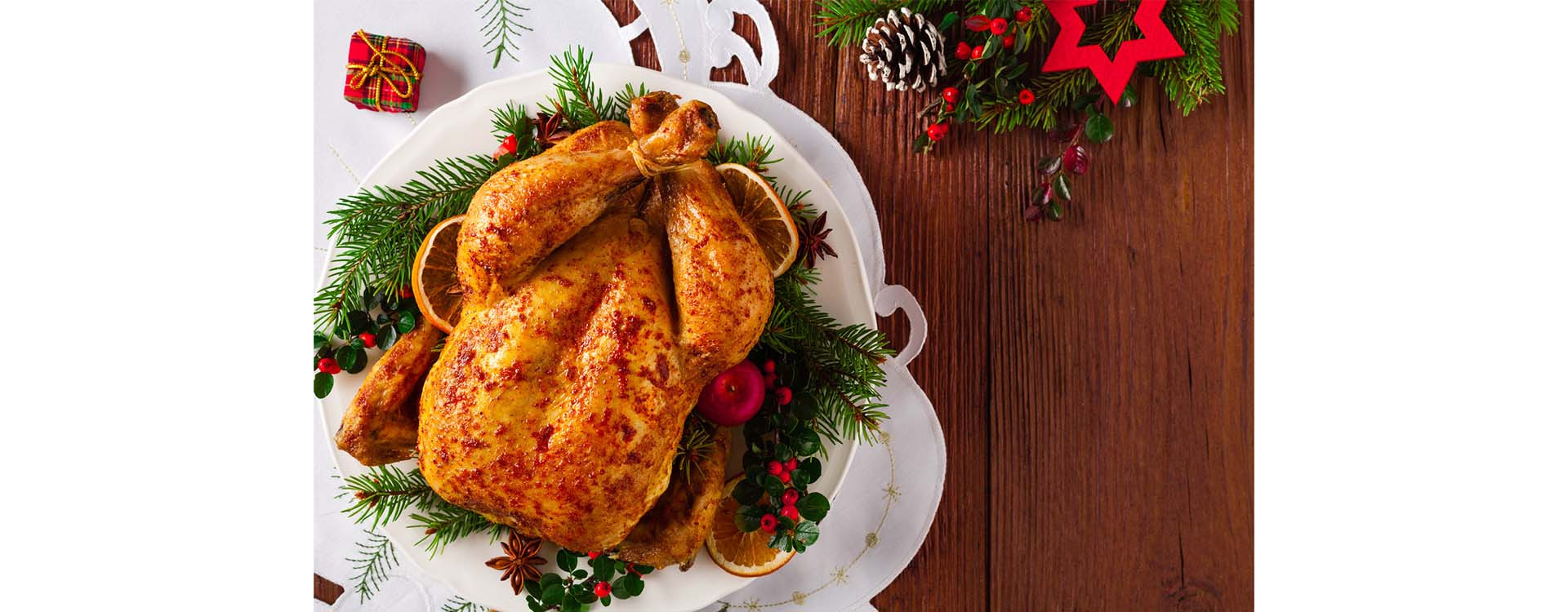
Turkey and Capon: What Wine to Choose for Christmas
Poultry has long been a dish associated with the holiday season, and it is highly likely that you have planned to serve it for your Christmas meal. But did you know that this dish was a tradition long before Christmas? In fact, December 25th was celebrated in many cultures before the advent of Christianity.
In ancient Rome, December 25th marked the “Dies Natalis Solis Invicti,” or the “day of the birth of the unconquered sun.” This date coincided with the winter solstice, when the sun stops descending and begins to rise again visibly. The days start getting longer, signaling that the sun has not been defeated and will ensure another harvest.
It was during this festival that poultry began to be consumed, initially with the goose representing the sun bird. Later, the capon replaced the goose when the Romans discovered that a castrated rooster gained weight more easily, and then the turkey after its discovery in the Americas by the Spanish.
Understanding Wine Pairings with Capon
A capon is a castrated rooster. The tradition of the capon began during a period of frugality when the Roman senator Caius Fannius Strabo passed a law to limit the luxurious consumption of fattened pullets, which were costly in terms of grain.
Unable to give up their luxury, the Romans discovered that a castrated rooster developed much more mass and tender flesh. Another characteristic: the capon’s skin is thin and lustrous.
Today in France, the capon is often served with a stuffing of chestnuts and finely chopped mushrooms (mainly morels). The Bresse capon is probably the most renowned.
The wine pairing will depend on the tender flesh and the flavors of the stuffing. While the tender flesh might suggest a red wine, it could also intensify tannins that are too young.
On the other hand, a well-chosen white wine can be an excellent match for this dish, complementing the flavors of the mushrooms and chestnuts.
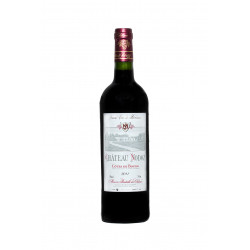
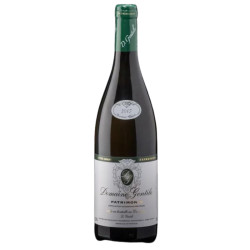
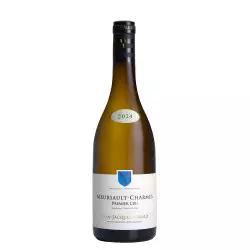
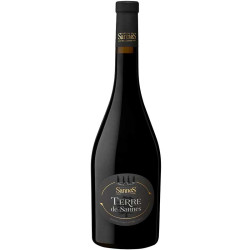
Our Selection Wines for Turkey and Capon : the right pairing, direct from the winemaker. See the wines →
Understanding Wine Pairings with Turkey
The turkey owes its name to a colonial misunderstanding by the conquistadors. Originally, it was brought to Europe from the Americas under the name “Poule d’Inde” (Indian Hen).
Quickly recognized for its taste and still rare at the time, it became a prestigious dish and was raised in poultry yards as early as the 1500s. Unlike the capon, turkey has firmer flesh that can dry out the mouth.
This characteristic will be crucial in preparing and pairing a turkey dish. It can be counterbalanced with a suitable wine or complemented with a stuffing.
Why do turkey and capon require a precise food-and-wine pairing?
Serving turkey or capon at Christmas is one of the great French culinary traditions. These festive birds, enjoyed long before the emergence of Christian Christmas, require a carefully considered food-and-wine pairing to reveal their full flavour potential. Capon has tender, slightly fatty meat, often served with a rich stuffing made with chestnuts and mushrooms (especially morels). Turkey, on the other hand, has firmer meat, which can become dry if not accompanied by sufficient sauce or garnish. These differences directly influence whether to choose a full-bodied white wine or a smooth, mellow red wine.
Our Selection Wines for Turkey and Capon : wines from independent winemakers, at the estate price. See the selection →
Which white wines should you choose to pair with turkey or capon at Christmas?
When discussing white wines for Christmas poultry, several major families stand out. Lovers of refined pairings often turn to AOP Côte de Beaune or Chablis Grand Cru, historic references in Burgundy whites. These Chardonnay-based wines offer ample texture, lovely length, and buttery or lightly brioche-like aromas that pair perfectly with tender poultry. They are an excellent match for stuffed capon, especially when the stuffing contains mushrooms or chestnuts. These wines also shine with creamy sauces or oven-roasted preparations.
Further north, Alsace Grand Cru wines made from Riesling or Pinot Gris offer notes of exotic fruit, saline tension, and remarkable precision, especially when produced from organic farming. This brings freshness and balance to the firmness of turkey. In the Jura region, an AOC Côtes du Jura vin jaune is well suited to more adventurous preparations, particularly when choosing a richly mushroom-based stuffing. For a more accessible alternative, a white wine from Savoie or a dry Loire Valley wine made from Chenin Blanc provides an elegant pairing with roasted poultry or gently poached preparations.
Which red wines should you choose to pair with turkey or capon at Christmas?
Although Christmas poultry is often paired with white wines, red wines can create splendid matches when carefully selected. The main criterion is tannin finesse. The delicate meat of capon can clash with overly powerful tannins, so it is important to choose a smooth, mellow red wine, ideally from terroirs such as the Côte de Chalonnaise or other Burgundy appellations made from Pinot Noir. This naturally delicate grape variety provides silky structure and red-fruit aromas perfectly suited to these dishes. The best pairings balance structure, freshness, and a soft, melted texture.
Those who enjoy southern wines can turn to the Côtes du Rhône, particularly when the wines have undergone a few years of ageing. Their aromatic palette of black fruit and gentle spices pairs beautifully with capon stuffed with pork sausage. Prestigious Bordeaux wines can also work wonders once their tannins have softened after several years of cellaring. Pomerol AOC wines, made from Merlot, Cabernet Franc, and Cabernet Sauvignon and softened with age, are excellent with roasted poultry served with a reduced jus and a truffle-based stuffing.
Classic Pairings
For Capon:
The best pairing for capon is a white wine. To elegantly complement the tender flesh of the capon and echo its winter flavors, the wine should have some years of aging.
Choose an aromatic variety that ages well in the bottle. Notable examples include Alsace Grand Cru Rieslings or Chenin Blancs from the Loire, such as Anjou Blancs.
For Turkey:
The classic pairing for turkey is also a white wine. The wine should tenderize the meat and offer a pleasing fullness and velvety texture balanced by refreshing acidity. Suitable options include Chenin Blanc-based wines (such as Jasnières from the Loire), Jura Savagnins, or Savoie Altesse.
For a stuffed turkey, complex wines are preferable, such as aged Burgundy whites or aged Northern Rhône whites.
More Unusual Pairings
For Capon:
You can explore pairing capon with an aged, mellow red wine. This combination contrasts the tender meat with the velvety tannins of a red wine, and the autumnal flavors of the wine will complement the dish’s flavors.
It is crucial to select a wine with several years of aging (around ten years, depending on the appellation) to avoid harsh tannins. Consider Bordeaux crus, Burgundy communal appellations, or a good Côtes-du-Rhône village.
If choosing Bordeaux, look for wines older than ten years. In contrast, a Côtes-du-Rhône village can accompany a capon from around seven to eight years of age.
For Turkey:
An unconventional pairing of turkey with red wine is possible but more risky. The strength and presence of tannins might clash with the firm texture of the turkey in an unpleasant way. Opt for a red wine low in tannins and relatively young to provide refreshing acidity that lightens the dish. This description points to Burgundian wines aged from three to five years.
To elevate turkey or capon at Christmas, the choice of wine, white or red, plays a central role. On Avenue des Vins, we highlight cuvées from renowned terroirs, perfect for pairing with your festive poultry. Whether you are looking for an elegant white wine for a stuffed capon, a velvety Saumur Champigny for oven-roasted turkey, or a Rhône Valley red for a bolder pairing, you will certainly find the bottle that will enhance your Christmas meal. Enjoy our selection delivered directly from the estate of your choice to make your holiday menu truly memorable!
Our Selection Wines for Turkey and Capon : cuvées chosen from the winemakers, with no middleman. See the selection →
FAQ - Wine and turkey
White or red wine with turkey or capon?
White is the safe choice: its freshness balances the meat and carries the flavours of the stuffing. Red also works, provided you pick supple tannins that won't clash with the poultry.
Which white wine goes with a chestnut-stuffed capon?
A full-bodied, slightly aged white suits it well, such as a Chardonnay-based Burgundy or an Alsace Riesling. Its buttery notes and length echo the chestnuts and mushrooms in the stuffing.
Can you drink red wine with a Christmas turkey?
Yes, though the match is trickier because the firm meat can harden assertive tannins. Go for a young, low-tannin red, a three to five year old Burgundy for instance, to keep things fresh.
What wine pairs with a stuffed turkey?
A rich stuffing calls for a more complex wine. An aged white Burgundy or a mature Northern Rhône white stands up to the stuffing's flavours without overpowering the bird.
At what temperature should you serve wine with festive poultry?
Serve a white around 10 to 12 °C to keep its liveliness, and a mellow red between 15 and 16 °C. A room that is too warm would push the alcohol forward and mask the aromas.