Delivery from €16,90 per winemaker in Europe (excluding the United Kingdom)

Portraits of winemakers
Didier Gioria, Champagne Gioria Latizeau: lively, fruity Champagnes
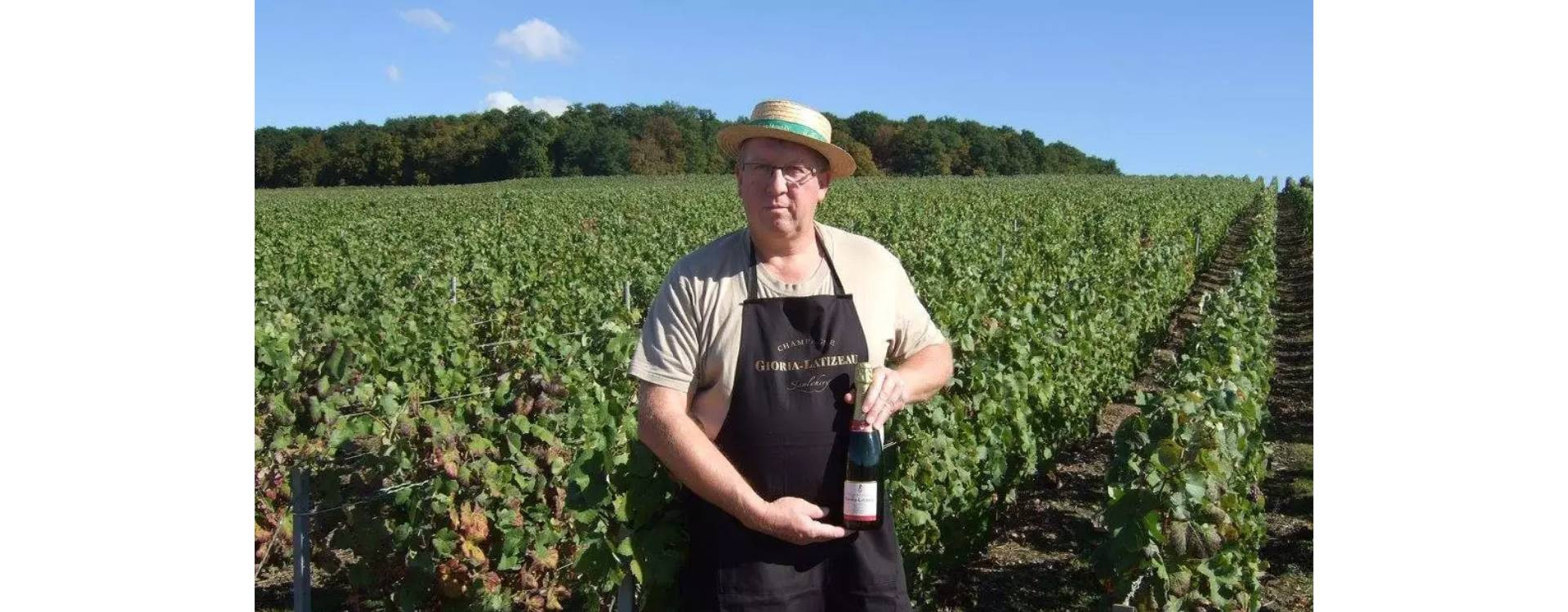
For Didier, champagne is almost like a second skin. The son of a winemaker, he did his first harvests as a teenager and joined the vineyards full-time right after high school.
Available directly from the estate on Avenue des Vins.
How did you learn the trade?
From father to son
I learned the trade of winemaking alongside my father. A few years later, I had the opportunity to take over the family estate,
Didier shares.
What does the estate look like?
Champagnes aged for a minimum of 18 months
Spanning 9 hectares of vineyards, Champagne Gioria Latizeau’s estate consists of 1.80 hectares of owned vines and 8 additional hectares rented. As a cooperant-grower in Saulchery, Didier aims to impart a unique spirit to his champagnes.
His entry-level champagne, priced at 20 euros per bottle, undergoes a 30-month aging process, nearly double the minimum time required by the appellation’s specifications (15 months).
Favoring lively and fruity champagnes without excessive sugar, the winemaker cultivates the three main Champagne grape varieties: Pinot Noir, Pinot Meunier, and Chardonnay.
How do you work the vines?
Vines managed with sustainable practices
Committed to sustainable viticulture, Didier uses very few chemical inputs to treat his vines, aiming for optimal grape quality. The climatic challenges of Champagne and the workload don’t deter him:
It’s not easy every day, but at least our champagnes come from environmentally respectful cultivation, which is an essential criterion for me.
What recognition have you earned?
Gold medal for the Blanc de Blanc cuvée
This year, Didier proudly received his very first award, as his “Blanc de Blanc” champagne was honored with a gold medal at the 2017 Challenge International du Vin.
It was the first time I participated in a wine competition. I don’t regret it!
What comes next?
Visits and a new cuvée
Open year-round, 7 days a week, Didier happily welcomes wine enthusiasts traveling along the wine route to discover his champagnes. The winemaker is also planning to introduce a new addition to his range: a Blanc de Noirs cuvée, made from a blend of Pinot Noir and Pinot Meunier.
The cuvée was showcased at Vinexpo Bordeaux 2017. Initial feedback has been quite positive, but Didier remains cautious as it is still a bit early to make a final judgment.
Why buy directly from the winemaker? The wines of Champagne Gioria Latizeau are shipped straight from the estate: estate price with no middleman, full vintage traceability, and your support for an independent winegrowing family.
Discover the wines of Champagne Gioria Latizeau directly from the estate, at the estate price, in a short supply chain on Avenue des Vins.
Frequently asked questions about Champagne Gioria Latizeau
Where is Didier Gioria's estate located?
The winemaker is based in Saulchery, on the slopes of the Marne valley in Champagne. He farms around nine hectares, a small share owned and the rest leased.
Which grape varieties does Didier Gioria grow?
He grows the region's three classic varieties: Pinot Noir, Pinot Meunier and Chardonnay. Together they give wines that are both structured and fresh.
How long are his champagnes aged before release?
His entry-level cuvée rests for around thirty months, close to double the minimum set by the appellation. This extended ageing builds finesse and complexity.
What defines the style of the Gioria Latizeau cuvées?
Didier Gioria aims for lively, fruity champagnes with little added sugar. The goal is to keep the fruit fresh rather than hide the wine behind heavy dosage.
Are the vines farmed organically?
The estate is not certified organic, but it follows sustainable viticulture with very few chemical inputs. The grower favours an environmentally respectful approach to protect grape quality.