Delivery from €16,90 per winemaker in Europe (excluding the United Kingdom)

Portraits of winemakers
Château La Sauvageonne, a land of fire
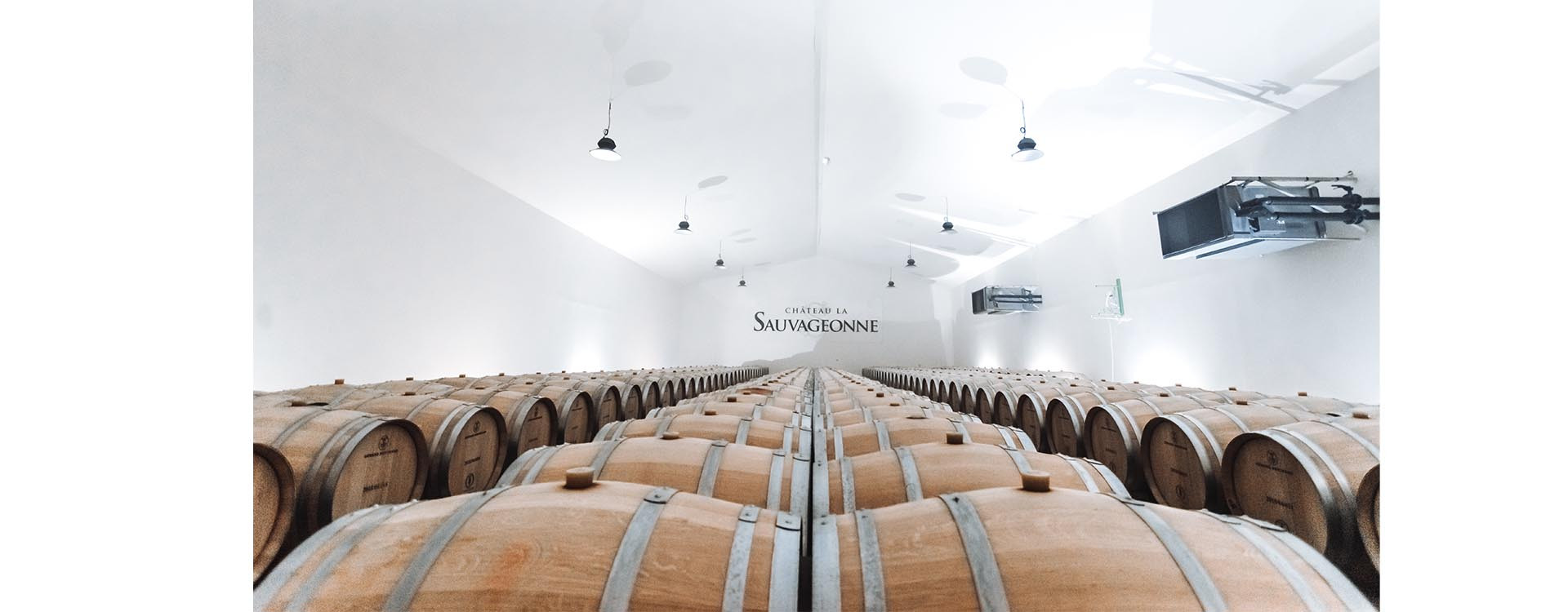
Located in the heart of the Terrasse du Larzac appellation, near the Salagou Lake, Château La Sauvageonne benefits from a unique terroir. Reflecting the fiery temperament of its former owner, the volcanic past of these lands imparts a truly telluric character to the wines of Château La Sauvageonne! The vineyards, divided among sandstone, phonolitic schist, and ruffes (famous red earth), enjoy a subsoil that retains rainwater and prevents water stress, even during the hot summer days. With an extreme climate, heated by the sun during the day and cooled by the high-altitude nights, everything is in place for optimal grape maturation.
What makes this terroir so distinctive?
A land of fire and biodiversity
This land of fire, ideal for vine cultivation, also hosts extraordinary biodiversity, where wild boars reign supreme and olive trees produce their finest fruits. For Gérard Bertrand, preserving this environment with sustainable and nature-respecting viticulture is a given. That is why, after acquiring the estate in 2011, Château La Sauvageonne was converted to biodynamic practices the following year, achieving DEMETER certification in 2015.
Who is Gérard Bertrand, the man behind the estate?
An extraordinary story
Originally a professional rugby player, Gérard Bertrand had to take over the family estate at Château de Villemajou following his father's accidental death in 1987. However, this was not his first vintage. Indeed, he began participating in the harvest with his father at the age of ten. For eight years, he managed to balance his sporting and winemaking careers with unwavering determination! In 1995, Gérard Bertrand chose to focus on his vineyards and expand his range.
A deep love for his terroir and heritage, from Cathar castles to Cistercian abbeys, runs through his veins. From Montpellier to Perpignan, from the Mediterranean to the Pyrenees, Gérard Bertrand discovers gems with the mission of making the wines of the South shine both in France and abroad. This passion, inherited from his father, is now passed on to his children Emma and Mathias.
What can we expect from the wines?
Wines of character
Each grape variety at Château La Sauvageonne is planted in the soil best suited to its finest expression, whether white or red. The blending process then highlights the volcanic essence of the soil where the grapes were born. Château La Sauvageonne thus offers a cuvée in each color to reflect the full complexity of this exceptional terroir.
The Grand Vin Rouge, a blend of predominantly Grenache, Syrah, Mourvèdre, and Carignan, surprises with its both wild and elegant temperament. The Grand Vin Blanc, a marriage of Grenache Blanc, Vermentino, Viognier, and Roussanne, astonishes with its amplitude and balance between flowers and yellow fruits. The rosé "La Villa," an original blend resulting from the co-fermentation of black and white grape varieties, Grenache, Viognier, Vermentino, and Mourvèdre, is recognized as the Best Rosé in the World by The Drinks Business in 2016 and 2017!
Frequently asked questions about Château La Sauvageonne
Where is Château La Sauvageonne located?
The estate lies in the Languedoc, within the Terrasses du Larzac appellation, close to Salagou Lake. Its plots rest on old volcanic flows, a geological setting that shapes the wines directly.
What makes its terroir so distinctive?
The subsoil blends sandstone, phonolitic schist and ruffes, the local red earth. It stores rainwater and eases the vine's summer thirst, while cool high-altitude nights keep the grapes balanced.
Is Château La Sauvageonne farmed biodynamically?
Yes. Bought by Gérard Bertrand in 2011, the estate switched to biodynamics in 2012 and earned Demeter certification in 2015. The work protects the soils and the local wildlife, among olive trees and open scrubland.
What wines does Château La Sauvageonne produce?
One cuvée in each colour. The red leans mainly on Grenache, with Syrah, Mourvèdre and Carignan; the white marries Grenache Blanc, Vermentino, Viognier and Roussanne. The La Villa rosé, from a co-fermentation of black and white varieties, was named Best Rosé in the World by The Drinks Business in 2016 and 2017.
Who is Gérard Bertrand, the estate's owner?
A former rugby player, he took over the family vineyard in 1987 and turned fully to wine in 1995. Today he brings together several estates across the South, La Sauvageonne among them, to raise the profile of the region's wines.