Delivery from €16,90 per winemaker in Europe (excluding the United Kingdom)

Portraits of winemakers
Pierre Meyer, Domaine des Nymphes: a winemaker in the village of Rasteau
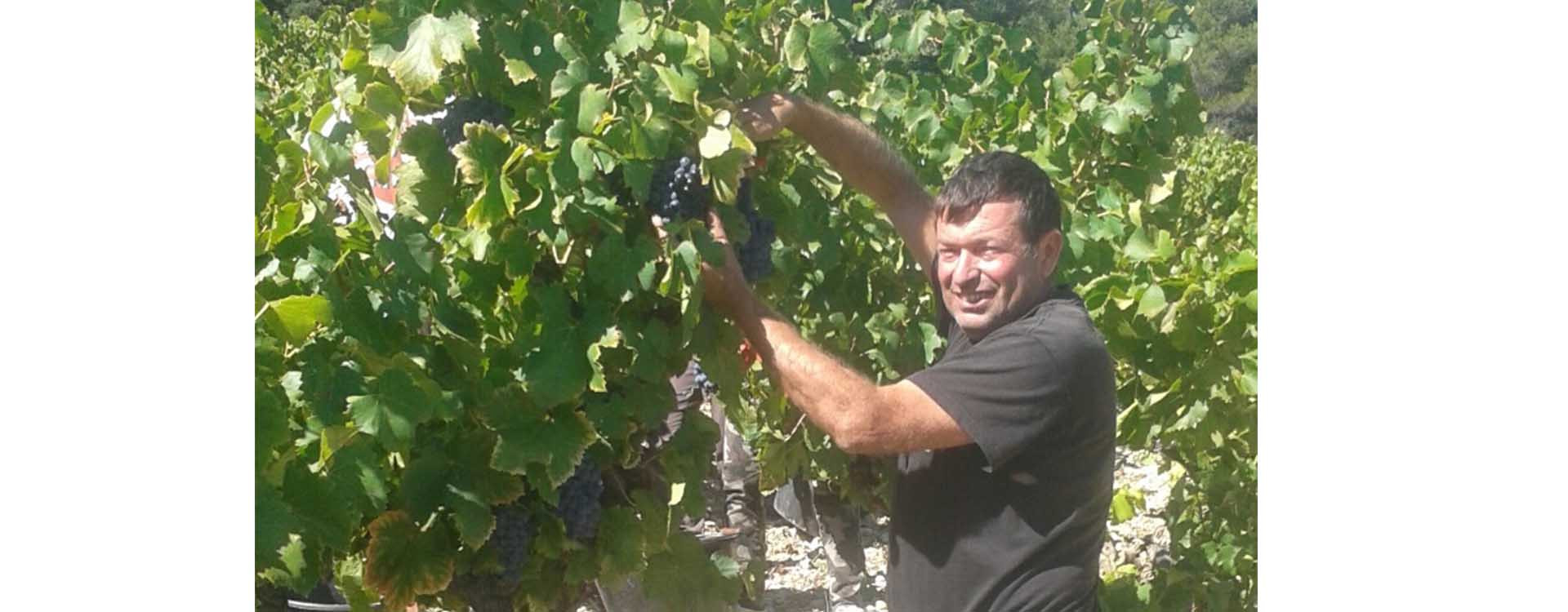
Pierre Meyer's journey at Domaine des Nymphes began in 1984 when he joined his parents at the estate.
How did your story with the estate begin?
The beginning of a legacy
At the time, I was studying oenology, but my parents wanted to have all three of their children under the same roof. So, I returned to the estate to help them out,
says Pierre, who has never left Domaine des Nymphes since.
Where does the name Domaine des Nymphes come from?
A name with divine origins
The Meyer family chose to name the vineyard in reference to an ancient altar dedicated to the worship of Nymphs, which was located on the site of their cellar. This Roman-era relic now resides at the Calvet Museum in Avignon.
We liked the reference to the Nymphs but found that the term 'altar' was too closely associated with religion. So, we kept the part that interested us and became Domaine des Nymphes,
Pierre explains. This choice has proven fruitful, as many visitors have told Pierre and his sister Nadine that they came to the estate simply because the name piqued their curiosity.
What does the estate produce and how do you work the vines?
A champion of Vin Doux Naturel
Covering 17 hectares of vineyards, with 6 hectares under the Rasteau appellation, Domaine des Nymphes produces red, rosé, and white wines under the Rasteau and Côtes-du-Rhône appellations.
We cultivate our vines with the utmost respect for nature, and our methods are close to those of organic viticulture,
explains Pierre, who believes that the estate's geographical location and the region's very favorable climate greatly contribute to the quality of their wines.
Frequently asked questions about Domaine des Nymphes
Where is Domaine des Nymphes located?
The estate lies in the village of Rasteau, in the Vaucluse, in the southern Rhône valley. Its vineyard covers 17 hectares, of which 6 are classified under the Rasteau appellation.
Where does the name Domaine des Nymphes come from?
The name recalls an ancient Roman altar dedicated to the worship of Nymphs, uncovered on the estate's site. That relic is now kept at the Calvet Museum in Avignon. The Meyer family kept the reference to the Nymphs but dropped the word altar, which felt too religious.
What wines does Pierre Meyer make?
The estate produces reds, rosés and whites across the Rasteau and Côtes-du-Rhône appellations. Pierre Meyer also champions vin doux naturel, a fortified sweet wine that is a historic speciality of Rasteau.
Does Domaine des Nymphes farm organically?
Pierre Meyer tends his vines with respect for nature, using practices he describes as close to organic viticulture. He credits the quality of his wines to the estate's setting and to Rasteau's favourable climate.
How long has Pierre Meyer run the estate?
He joined his parents on the property in 1984, while studying oenology, and has stayed ever since. Today he runs Domaine des Nymphes alongside his sister Nadine.