Delivery from €16,90 per winemaker in Europe (excluding the United Kingdom)

Portraits of winemakers
Château de l'Éclair, Liergues: the Beaujolais research estate and its experimental winery

Château de l'Éclair is the Beaujolais research estate: twenty hectares of vines at Liergues, in the Pierres Dorées, owned by SICAREX Beaujolais. Its experimental winery tries out, in tiny volumes, what the region will be doing in its cellars tomorrow.
How would you describe Château de l'Éclair?
Twenty hectares of Gamay, Chardonnay, Muscat and Gamaret in the Pierres Dorées
The vineyard covers twenty hectares spread over several villages, among them Rivolet, Chénas, Saint-Étienne-la-Varenne and Porte des Pierres Dorées. Gamay and Chardonnay dominate, while Muscat blanc à petits grains and Gamaret make up the rest, the estate's less usual grapes.
“Château de l'Éclair is the experimental estate of Beaujolais, set at the heart of the Pierres Dorées.”
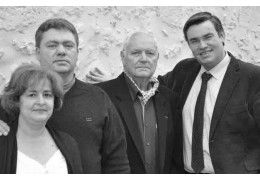
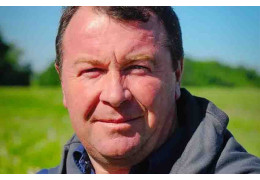
SICAREX Beaujolais, which runs the research work of the regional wine board, owns the place, so this portrait has no owning family to tell. Michaël Larras has run the estate since 2018 and its winemaking since 2017, heading a team that answers with one voice.
“For some of us, that passion started in childhood, growing up among the vines.”
Backgrounds vary, and that spread decides what anyone thinks of trying.
What does the name Château de l'Éclair refer to?
An 1888 sprayer, and a death only the estate ties to the name
The château is older than Vermorel himself. The Guinon family, Lyon chemists, completed the building in 1871, under the name of Château du Convert. Victor Vermorel, an industrialist and an inventor, bought it in 1891, after the phylloxera crisis, and renamed it after the Éclair, his knapsack sprayer shown to the public in 1888.
The estate's own timeline adds a second motive, and it is the only source that mentions it.
“He renamed it Château de l’Éclair, after his invention, a back mounted sprayer called Éclair (created in 1888) and his daughter, Victorine, who was electrocuted in a bath at the château.”
The dates rule that out as the origin of the name. The sprayer dates from 1888, the purchase from 1891, and this account places Victorine's death in the château's own bath, so after the Vermorel family had moved into the house.
No source gives her age or the year. Neither the Wikipedia entry on the château nor the biography published by the Institut Vermorel mentions this death, and the estate's own page tells the story of the renaming elsewhere without her.
The estate brings the two together, but the chronology says the name belongs to a machine.
What philosophy guides your work in the vines and in the cellar?
Thirty per cent fewer spray passes since 2011
The Optipulvé method cut spray passes by a third in 2011, Terra Vitis certification arrived in 2014, and High Environmental Value in 2019.
“We try to work with respect for our environment, with particular attention paid to adapting to climate change and limiting it.”
Inputs stay low, the rows are grassed over to hold the soil, and biocontrol replaces part of the spraying. The rest is a method rather than a creed, and it comes to three words: try, watch, decide.
Which memory at the estate has stayed with you most?
Vats of twenty to forty litres, to taste before deciding
The experimental winery works in vats of twenty to forty litres, with a sensory analysis room next door. Engineers from SICAREX Beaujolais make wine there with those of the French Institute of Vines and Wine.
“Tasting a wine from a new trial, when you see that the line explored works and that it can genuinely find its place in our practices, is always a particular moment.”
A trial is measured in the laboratory but settled in the glass, and what holds up in the glass can then travel out to growers across the whole of Beaujolais. Daily motivation comes down to that: never repeat yourself.
Which wine best represents your estate?
A 100% Chardonnay Beaujolais blanc, born of a dare in 1985
The estate picks its Beaujolais Blanc Pierres Dorées. Its story starts in 1985, when two Paris merchants dared the château to vinify with no added sugar. The first cuvée, 100% Chardonnay, arrived about ten years later.
“It is a wine that represents our terroir well, but also our wish to offer modern, precise and accessible wines.”
On food, the estate speaks in the first person, just once.
“It is a wine I particularly enjoy as an aperitif, but it also goes very well with a meal.”
Fish, shellfish and cheese follow. The favourite grape is still Gamay.
Why follow Château de l'Éclair?
Three stars and a coup de cœur in the 2026 Guide Hachette for Le Bucher 2022
A research estate is still judged on its bottles. The 2026 Guide Hachette des Vins picked Le Bucher 2022, a Chénas, with three stars and a coup de cœur.
“To keep our role as an experimental estate alive and to turn experiments into concrete solutions for winegrowing.”
That leaves the word the estate keeps for itself.
“Resilient”
The choice makes sense. This vineyard changed hands several times before returning to research. It now works on whatever Beaujolais will have to live through next.
Why buy directly from the winemaker? The wines of Château de l'Éclair are shipped straight from the estate: estate prices with no middleman, vintage traceability and support for the Beaujolais research estate.
Explore the wines of Château de l'Éclair straight from the estate, at estate prices, through the short supply chain on Avenue des Vins.
Frequently asked questions about Château de l'Éclair
Who owns Château de l'Éclair?
SICAREX Beaujolais has owned Château de l'Éclair since the early 1980s, vines, winery and registered trademark included. Growers were behind the creation of that company.
What is an experimental estate for in winegrowing?
An experimental estate exists to test in real conditions what a laboratory cannot settle: plant material, vine management, winemaking. Promising lines then move out to working farms.
Did Victorine Vermorel give the château its name?
No: Château de l'Éclair is named after the Éclair sprayer, shown in 1888, three years before the property was bought. Only the estate also ties the name to the death of Vermorel's daughter.
Do the trials at Château de l'Éclair serve other vineyards?
The trials run at Liergues reach beyond Beaujolais and also serve Burgundy, the Jura and Savoie. The Villefranche unit even leads on some national subjects.
How long has the estate been Terra Vitis certified?
The estate has been Terra Vitis certified since 2014, and High Environmental Value certified since 2019. Its manager also carries the approach within the regional association.