Delivery from €16,90 per winemaker in Europe (excluding the United Kingdom)


AOC Cognac
Cognac, the treasure of the Charente region, offers refined flavours and incomparable quality. This exceptional spirit, the product of time-honoured expertise, will enhance your tastings. Explore its unique notes, a symbol of French elegance. This grape brandy comes mostly from the Charente-Maritime and Charente departments, from a white wine that goes through two distillations in copper pot stills. It then ages at least two years in oak barrels before it is sold to consumers.
Filtrer
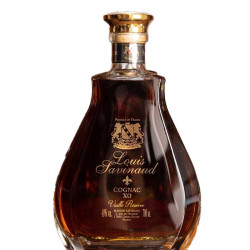


Acidic Ugni Blanc Wine at the Source of Cognac
Cognac is a brandy, but it all starts with a white wine. Made mostly from Ugni Blanc, that wine runs 7 to 12% ABV: its acidity keeps it sound until distillation, and its low alcohol concentrates the aromas. It ferments with no enrichment and no added sulfur dioxide.
Cognac’s Crus and Their Soils
In the mid-19th century, geologist Henri Coquand toured the region with a taster and ranked its land by the quality of the brandy it could produce. That ranking shaped the map of the crus, which the decree of January 13, 1938, set commune by commune. Their names may appear on the label as complementary geographical designations.
In Grande and Petite Champagne, vines grow on shallow clay-limestone soils over soft, chalky Cretaceous limestone. Grande Champagne yields brandies of great finesse that mature slowly in the barrel; those from Petite Champagne share that character and reach maturity sooner.
On their flinty clays, the Borderies give round brandies with a scent of violet. The Fins Bois, the largest vineyard of all the crus, lie mostly on groies, red and very stony clay-limestone soils, and their fruity bouquet recalls freshly pressed grapes.
The Bois (Bons Bois, Bois Ordinaires or Bois à Terroirs) rest partly on sand along the coast, in some valleys and across the whole south of the area. Their brandies age quickly.
History of the AOC Cognac Appellation
AOC Cognac, located in southwest France, is world-renowned for producing the most famous grape-based brandy: Cognac. The viticultural history of this region is closely tied to distillation, a practice dating back to the Middle Ages. Over the centuries, Cognac has become synonymous with quality and excellence in spirits, thanks to its precise double distillation in the famous "charentais" copper pot still and meticulous aging process.
Climate and Terroir of the AOC Cognac
- Climate: The temperate maritime climate of the region is ideal for the cultivation of grape varieties used in Cognac production, notably Ugni Blanc.
- Soils: Soil diversity, including the limestone soils of Grande Champagne and Petite Champagne, plays a crucial role in grape quality.
Ugni Blanc and Other Emblematic Grape Varieties of the AOC Cognac
The primary grape variety used for Cognac is undoubtedly Ugni Blanc, a white grape known for its high acidity and low alcohol content, making it ideal for distillation. Other varieties such as Folle Blanche and Colombard are also used and can contribute to blends or, very rarely, be used alone.
Style of AOC Cognac Spirits
Cognac is a grape-based spirit distilled from wine and aged in oak barrels. It is characterized by its complexity and aromatic richness and is divided mainly into 3 types based on aging:
- Young Cognac (VS): Fresh fruit aromas with floral notes and a hint of woodiness. Ideal for cocktails.
- Cognac VSOP (Very Superior Old Pale): Rounder and more complex, with aromas of ripe fruit, vanilla, and oak, indicating longer aging.
- Cognac XO (Extra Old): A rich and complex bouquet with spicy notes, dried fruits, and depth from extended barrel aging. Best enjoyed neat to fully appreciate its finesse.
Serving Temperature and Tasting: Cognac is typically enjoyed at room temperature to fully appreciate its aromatic richness.
Aging Potential: Cognac does not age once bottled, but its aging in barrels imparts qualities that improve with time.
Best Pairings with Cognac
While Cognac is often enjoyed as an aperitif or digestif, it can also accompany flavorful dishes such as:
- 80% dark chocolate
- Goose foie gras
- Cigars
- Pecan pie
AOC Cognac: Frequently Asked Questions
What is Esprit de Cognac?
Esprit de Cognac is a Cognac brandy distilled a third time, from the second heating, up to 80 to 85% ABV. It is not aged. The appellation reserves it for making sparkling wines, and it is not meant to be drunk on its own.
Can the color of a Cognac be adjusted?
The color of a Cognac can be adjusted with plain caramel (E150a), a finishing method the appellation allows. Sweetening and oak-chip infusion are also permitted, as long as their combined effect on obscuration stays at or below 4% ABV. The rest of the color, from pale yellow to mahogany, comes from the barrel.
Where does the word brandy come from?
The word brandy, the English name for wine spirits such as Cognac, comes from the Dutch brandewijn, meaning “burnt wine.” Dutch merchants who bought Charente wines used that name for the wine they distilled so it would keep better.
Where can you buy Cognac direct from the winemaker?
You can buy Cognac, sold by the producer, on Avenue des Vins. Each bottle is shipped by the producer who made it, with no middleman.
See also: Cognac-Armagnac - Pineau des Charentes - Whisky