Delivery from €16,90 per winemaker in Europe (excluding the United Kingdom)


IGP Ile de Beauté
IGP Île de Beauté is the Corsican wine label that covers the whole island, across both Haute-Corse and Corse-du-Sud. Its name borrows Corsica’s nickname, the “Isle of Beauty.” IGP stands for Indication Géographique Protégée, known in English as PGI (Protected Geographical Indication). Pale, aromatic rosé makes up the largest share. Reds come mostly from Nielluccio and Sciaccarello, the island’s signature red grapes, and whites mainly from Vermentino. The rules are broader than those of an AOC such as AOC Ajaccio, with more than 40 permitted grape varieties.
Filtrer


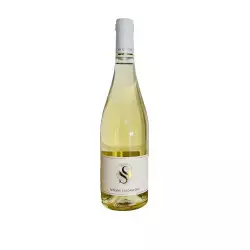


Ile de Beauté: Corsica’s Island Grapes
History of the IGP Île de Beauté Appellation
The IGP Île de Beauté is an appellation located in Corsica, an island with a rich winemaking and historical heritage. Known since antiquity for the quality of its wines, Corsica has developed over the centuries a unique vineyard that highlights its terroir and indigenous grape varieties. The IGP Île de Beauté encompasses wines produced across the entire island, allowing Corsican winemakers to express the diversity of the island’s terroirs with great freedom.
Climate and Terroir of the IGP Île de Beauté Appellation
Climate: The Corsican vineyard enjoys a Mediterranean climate with maritime influences, characterized by hot, dry summers and mild winters.
Soils: Varied terroirs composed of schist, granite, and clay-limestone soils.
Grape Varieties of IGP Île de Beauté
The IGP Île de Beauté allows the use of many grape varieties, including some that are typically Corsican. For red and rosé wines, the main varieties are Niellucciu, Sciaccarellu, Grenache, Syrah, Minustellu, and Carcajolo. The white wines are often made from Vermentino, a flagship grape of the region, but also from varieties like Chardonnay and Biancu Gentile.
Style of IGP Île de Beauté Wines
Red wine: Garnet red color. On the nose, IGP Île de Beauté red wines present aromas of red and black fruits, accompanied by notes of spices, licorice, and sometimes herbal (menthol). On the palate, these wines are powerful, with well-structured but silky tannins, and a great aromatic persistence.
White wine: Pale straw color with golden highlights. The nose is expressive, with aromas of white flowers (acacia), white-fleshed fruits, and vanilla. On the palate, they range from fresh and mineral to rich and opulent, depending on the winery and vintage.
Rosé wine: Pale pink color. IGP Île de Beauté rosé wines offer a delicate bouquet of red berries, white peaches, and a floral touch. On the palate, they are light and lively.
Best Food and Wine Pairings with IGP Île de Beauté Wine
Discover the best food and wine pairings with a bottle of red, white, or rosé wine from a domain or château in IGP Île de Beauté:
White wine: Scallop risotto, coconut milk chicken, grilled prawns
Rosé wine: Grilled tuna steak, pizza
Red wine: Corsican charcuterie (lonzu, figatellu, coppa), Corsican wild boar stew (civet)
Nielluccio, Sciaccarello and Vermentino: What Each Corsican Grape Brings
Nielluccio (Niellucciu in Corsican) rules the north of the island, around Patrimonio. It’s a close relative of Tuscany’s Sangiovese. It makes deeply colored red wines with firm tannins that often benefit from a few years of aging. The Patrimonio AOC requires at least 90% Nielluccio in its reds, while under IGP Île de Beauté it can be bottled on its own or blended, with Syrah for example.
Sciaccarello (Sciaccarellu in Corsican) is the island’s other leading red grape. Its role can be summed up this way: Sciaccarello is to Ajaccio what Nielluccio is to Patrimonio. Lighter in color, it often makes light-bodied reds with red fruit and peppery notes, along with floral rosés. On their own or together, these two grapes are behind many red wines from Corsica.
Vermentino, also called Malvoisie de Corse, makes most of the island’s white wines. They are credited with floral notes; depending on winemaking, they range from crisp whites aged in tanks to fuller ones aged in barrels or clay jars. In Provence, the same grape goes by the name Rolle. Muscat Blanc à Petits Grains, also permitted, can make sweet whites.
Corsican Wine From IGP Île de Beauté: Common Questions
What’s the difference between IGP Île de Beauté and a Corsican AOC?
IGP Île de Beauté covers all of Corsica, allows more than 40 grape varieties and caps yields at 120 hectoliters per hectare. A Corsican AOC such as Patrimonio or Ajaccio is limited to a set area and imposes its grapes: a red Patrimonio must contain at least 90% Nielluccio.
What can an IGP Île de Beauté wine label show?
An IGP Île de Beauté wine label can name one or more grape varieties. The terms “primeur” and “nouveau,” used for early-release wines, are also allowed. These IGP rules were published by the French Ministry of Agriculture in 2023.
What temperature should IGP Île de Beauté wine be served at?
Serve IGP Île de Beauté rosé at 46 to 50 °F (8 to 10 °C) and Vermentino whites at 50 to 54 °F (10 to 12 °C). Nielluccio and Sciaccarello reds go to the table at 57 to 61 °F (14 to 16 °C); any warmer, they feel heavy, so chill them for 15 minutes if needed.
How long can you keep IGP Île de Beauté wine?
Most IGP Île de Beauté rosés and whites are meant to be enjoyed within two years of the harvest, while the fruit is fresh. Nielluccio reds, with firmer tannins, can often age three to five years. Store bottles on their side, somewhere cool and dark.
Where can you buy IGP Île de Beauté wine direct from the winemaker?
You can buy IGP Île de Beauté wine direct from the winemaker on Avenue des Vins. The wine comes to you directly from the producer who made it.
See also: AOC Patrimonio - White wines from Corsica - Rosé wines from Corsica