Delivery from €16,90 per winemaker in Europe (excluding the United Kingdom)


IGP Cotes du Tarn
The white, rosé and red wines of this appellation are known for their great diversity and reflect the characteristics of the terroir on which they were produced but also of the grape varieties used in their production. IGP Côtes du Tarn is a protected geographical indication whose area runs from Lavaur in the southwest to Cordes-sur-Ciel in the north. It takes in every commune of AOC Gaillac but follows its own rule book.
Filtrer

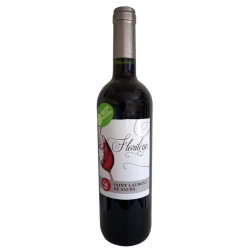


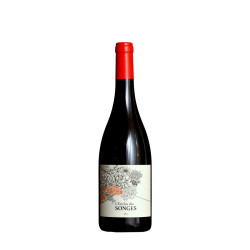


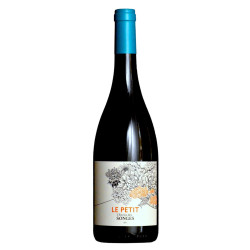


Côtes du Tarn: Country Wine from 115 Communes
Côtes du Tarn has been a vin de pays, or country wine, since a decree of November 16, 1981, following a simple designation of origin of the same name defined in 1969. The grapes are harvested in 115 communes across the western half of the Tarn department.
History of the IGP Côtes du Tarn Appellation
The Protected Geographical Indication (IGP) Côtes du Tarn has its roots in the Southwest of France, specifically in the Tarn department. This wine region is rich in traditions and boasts a long history of producing quality wines. The IGP was created to allow winemakers to produce accessible wines while offering a diversity of styles thanks to more flexible regulations than those of the AOC.
Climate and Terroir of the IGP Côtes du Tarn
Climate: The climate is oceanic with Mediterranean influences. Winters are mild, summers are hot and dry, and precipitation is moderate, mostly occurring in winter and spring.
Soils: The terroir consists of clay-limestone soils and pebbles, which retain moisture well while draining excess water.
Grape Varieties of the IGP Côtes du Tarn
The IGP Côtes du Tarn allows for the cultivation of a wide variety of grape varieties. For red and rosé wines, the main grape varieties used are Gamay, Cabernet Franc, Cabernet Sauvignon, Merlot, and Syrah. White wines are mainly produced from grapes like Sauvignon Blanc, Chardonnay, Mauzac, and Muscadelle.
Wine Styles of the IGP Côtes du Tarn
Red Wine: Ruby red color with violet hues. The nose reveals aromas of fresh red fruits like strawberry and cherry, accompanied by spicier notes. On the palate, they are generally medium-bodied, with a smooth texture and silky tannins.
Rosé Wine: These rosés are light, with shades ranging from pale pink to salmon. They reveal aromas of small red fruits, flowers, and citrus, with a lively, light, and refreshing palate.
White Wine: The whites from IGP Côtes du Tarn display a pale yellow color with golden highlights. The nose is fresh, with aromas of white flowers, white-fleshed fruits like pear, and citrus notes. These wines are balanced and vibrant with a delightful freshness on the palate.
Best Food Pairings with IGP Côtes du Tarn Wines
Here are some recipe ideas for the best food and wine pairings with a bottle of red, white, or rosé wine from a domaine or château in IGP Côtes du Tarn:
White Wine: Fried gudgeons, zucchini flan, goat cheese
Rosé Wine: Salad with confit gizzards, stuffed piquillos
Red Wine: Sautéed cep mushrooms with parsley, Tarbais beans with bacon, duck confit
Overripe-Grape Wines and Terms Allowed on the Label
Besides still reds, rosés and whites, IGP Côtes du Tarn provides for wines from overripe grapes, in white only. Picked very ripe, these grapes give wines with more developed aromas of ripe fruit. Their yield is capped at 70 hectoliters per hectare, versus 120 for the IGP's other wines.
On a still wine, the label may add the term "primeur" or "nouveau." Only reds must have finished malolactic fermentation by the time they are released, and reds carrying the term are exempt.
The label may also name one or more grape varieties, or a smaller geographical unit. Cunac covers ten communes at the eastern tip of the area, matching a former simple designation of origin of the same name. Cabanès covers three communes between the Agout and Dadou rivers, where a sizable vineyard has survived.
Finally, the label may add the larger unit "Sud-Ouest" (Southwest France), in lettering no bigger than that of "Côtes du Tarn."
Côtes du Tarn IGP in Four Questions
How does IGP Côtes du Tarn differ from AOC Gaillac?
IGP Côtes du Tarn, a protected geographical indication, covers 115 Tarn communes, including all 72 of AOC Gaillac, a controlled designation of origin. Its rules are broader: it allows over thirty grape varieties, among them Chardonnay and Marselan, neither permitted in the AOC, and a maximum yield of 120 hectoliters per hectare, versus 66 for Gaillac reds and rosés.
Why does Montans matter in the history of Côtes du Tarn wine?
Montans, a village on the left bank of the Tarn within the Côtes du Tarn area, was a major center for making amphorae and wine vessels in the 2nd century. Traces of its amphorae have been found from southern Spain to northern Scotland: the wine already traveled by the Tarn and the Garonne.
What are the wild vines of the Grésigne forest?
The wild vines of the Grésigne forest, next to the Côtes du Tarn area, are Vitis vinifera subsp. sylvestris, the closest relative of the cultivated grapevine. Their presence is a sign that the area naturally suits vines.
Where can you buy Côtes du Tarn wine direct from the winemaker?
You can buy Côtes du Tarn wine direct from the winemaker on Avenue des Vins. Your order ships straight from the producer, with no middleman.
See also: Rosé wines from Southwest - IGP Côtes de Gascogne - AOC Fronton