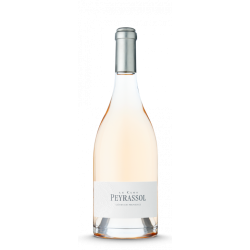
A rosé cuvée is judged by its journey more than by its color. It starts in the vineyard, with the choice of plots and how much they yield, moves through the press and the winery, and ends with what the bottle itself tells you. At every stage, the appellation sets a framework, and the producer makes choices within it.
Cru Classé Estates and Yields: What Happens in the Vineyard
In Côtes de Provence, the cru classé title goes back to two ministerial orders, dated August 7, 1953, and July 20, 1955. They recognized 23 estates as “crus classés.” The classification singles out estates, and it predates the appellation itself, which became an AOC in 1977.
In the vineyard, the appellation caps the grape load at an average of 9,500 kg per hectare (about 4.2 tons per acre) per plot, and 8,500 kg for the additional geographic names such as Fréjus or Pierrefeu. The yield is set at 55 hectoliters per hectare (about 590 gallons per acre). These are ceilings; producers may harvest less.
Every AOC sets a yield too: compare that figure from one appellation to the next to place a rosé.
From Press to Winery: Approved Methods and Oak Aging
The Côtes de Provence appellation allows four methods for making rosé: saignée (bleeding off juice), skin maceration, draining and direct pressing. It also requires the winery to have a system for controlling the temperature of its fermentation tanks.
After fermentation, the producer decides where the wine rests: in tank, or in wood, in barrels or large casks. A rosé that goes through oak aging then joins the family of oaked wines. When you taste it, check whether the wood supports the fruit rather than hiding it.
Magnums and Vintage: Reading the Bottle Before You Give It
For a celebration, think about size: a magnum holds 1.5 liters, and large formats go beyond that. As a gift for two, a standard 750 ml bottle often does the job; magnums make more of an occasion.
When giving a rosé, note what sets it apart: its plot, its aging, its vintage. You will have something to talk about as you pour.
The vintage is worth reading too: under EU Delegated Regulation 2019/33, a year can appear on the label only if at least 85% of the grapes were harvested that year.
Finally, every wine’s page lists a recommended storage time. Rely on it, rather than on a label’s reputation, to decide when to open the bottle.
Your Questions About How Exceptional Rosé Is Made
Can Rosé Be Aged in Oak Barrels?
An exceptional rosé can be aged in oak barrels: in Côtes de Provence, nothing forbids or requires it. No minimum aging period is set for rosé, and oak barrels, for at least six months, are required only for red wines labeled Fréjus.
How Many Grapes Go Into a Côtes de Provence Rosé?
A Côtes de Provence rosé blends at least two grape varieties, including at least one principal variety. The principal varieties, Cinsault, Grenache, Mourvèdre, Syrah and Tibouren, must together make up at least half of the blend.
What Does the Press Do for a Côtes de Provence Rosé?
For a Côtes de Provence rosé, the press extracts the juice from the grapes, and the equipment is regulated: continuous presses are banned, and so are screw drainers under 750 mm (about 30 inches) across, so pressing is done in batches.
Where Can You Buy Exceptional Rosé Wines Direct from the Winemaker?
You can buy exceptional rosé wines direct from the producer on Avenue des Vins. Every wine’s page shows its appellation and region.
See also: Our rosés from Provence - Magnum Wine Selection - Rosé Champagnes