Delivery from €16,90 per winemaker in Europe (excluding the United Kingdom)


Exceptional champagnes and sparkling wines
A grower Champagne is an estate's own bottle, not a big house's. Our sommeliers have carefully selected our finest bubbles and Champagnes. Depending on your budget, (re)discover top-quality crémants as well as our finest grower Champagnes. Opt for the elegance of a blanc de blancs (100% white grapes, most often Chardonnay), the character of a brut nature (no added sugar), the delicacy of a blanc de noirs (100% black grapes, Pinot noir or Meunier) or a rosé! Can't decide? Contact our sommelier consultant on live chat or ask for a call back!
Filtrer


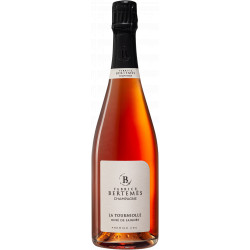


Blanc de blancs, extra brut, rosé: choosing your bubbles
An exceptional Champagne is not recognised by its label but by three things: where the grapes come from, how long the wine spent in the cellar, and whose hands made it. This selection brings together grower Champagnes, made by the estate that farms its own vines, from pruning to disgorgement. Brut tradition, blanc de blancs, extra brut, rosé, down to the half-bottle: every cuvée is here because it earns its place, not because it carries a famous name.
What makes an exceptional Champagne?
Three factors, all of them verifiable. Where the grapes come from: the finest cuvées are drawn from identified plots, often in villages classified premier or grand cru. Time: the Champagne appellation requires 15 months' ageing for a non-vintage brut and 36 months for a vintage, but it is beyond those minimums that the wine builds its brioche, hazelnut and dried fruit. Dosage: the less sugar added after disgorgement, the more nakedly the terroir shows — which takes a harvest ripe enough to do without it. At a Champagne grower, one set of hands runs the vineyard, the harvest and the winemaking: the wine carries the signature of a place, not a blend of volumes.
Criteria for selecting the best Champagnes
- Terroir and grape varieties: the growers we select farm grapes from the finest terroirs in Champagne, chiefly Chardonnay, Pinot noir and Meunier.
- Traditional method: The Champagne method, which includes a second fermentation in the bottle, is essential for producing fine and persistent bubbles.
- Ageing: a minimum of 15 months for a non-vintage brut, of which at least 12 on the lees, and 36 months for a vintage. Many growers go well past those figures, and that is where the aromas build.
How to serve a Champagne
- Serving temperature: serve Champagnes between 8 and 10 °C (46–50 °F) and other sparkling wines between 6 and 8 °C (43–46 °F).
- Glass: choose a white wine glass or a fairly wide tulip. A flute shows off the bubbles but closes down the aromas, and a coupe lets them escape within minutes.
- Aeration: some vintage Champagnes may benefit from slight aeration before tasting.
Frequently asked questions about this selection
What sets a grower Champagne apart from a big brand?
A grower harvests its own grapes and makes its own wine; a house buys all or part of its harvest from hundreds of growers and blends large volumes. The difference is printed on the label, in small type beside the registration number: RM for Récoltant-Manipulant is a grower Champagne. NM for Négociant-Manipulant is a house. CM is a co-operative, RC a grower member of one. This mention is compulsory, it is the surest way to know who you are buying from.
Which Champagne should you give as a gift?
A blanc de blancs for someone who likes freshness and tension, a rosé for a red fruit dessert, a vintage when the date matters. A grower Champagne has one advantage over a big brand as a gift: it tells a story. The estate's name, the plot, the person who made it.
Which one for an aperitif, which one for a whole meal?
For an aperitif, a brut tradition or a blanc de blancs served cool: the tension sharpens the appetite. To carry a whole meal, choose something more vinous, an extra brut or a rosé de saignée, which will hold up to fish in sauce, roast poultry or a hard cheese. Keep a brut nature for oysters and shellfish.
Should Champagne be served in a flute?
A flute shows off the bubbles but closes down the aromas. For a grower Champagne, where the aromatics are the whole point, a white wine glass or a fairly wide tulip gives you far more to smell. The coupe is for decoration: its open surface lets the bubbles escape within minutes.
How much should you allow per person?
A 75 cl bottle pours six 12 cl flutes. Allow one flute per person for a toast, two or three for a longer aperitif, and half a bottle per person if the Champagne runs through the whole meal. For two, a 37.5 cl half-bottle saves opening a 75 cl you will not finish.
What if you prefer an alternative to Champagne?
Crémants are made by the same method, in Alsace, the Loire or Burgundy, from local grape varieties and with at least nine months' ageing. For comparable care in the making, the value is outstanding.