Delivery from €16,90 per winemaker in Europe (excluding the United Kingdom)


Cave du Mois de Janvier
January is Saint-Vincent, the winemakers' feast day, celebrated every 22nd of January in France's wine villages. It is also the month when the vines rest and wine lovers venture into lesser-known territories. Our January cave du mois puts Savoie in the spotlight, with its confidential alpine grape varieties, Mondeuse, Altesse, Roussette alongside an Alsace Gewurztraminer, a Burgundy Aligoté and an exceptional Jurançon. Wines shipped directly from each partner estate's cellar, with no middleman.
Filtrer


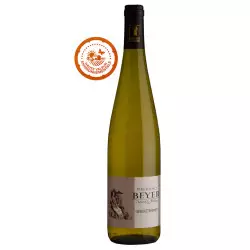


Cave du mois January: Savoie wines, Alsace Gewurztraminer & Saint-Vincent direct from the winemaker
January, the month of Saint-Vincent and mountain wines
Every 22nd of January, France's winemakers celebrate Saint-Vincent, their patron saint's feast day. In the wine villages of Burgundy, Alsace and Savoie, tradition calls for the finest bottles of the cellar to be opened in honour of the vine and the work completed. It is in this spirit that our team composed the January cave du mois: a selection of cuvées celebrating the diversity of French terroirs in winter, from mountain vineyards to the most confidential appellations of the French countryside.
This month, Savoie takes centre stage. The Savoyard vineyard, established between 200 and 600 metres above sea level on moraine soils of glacial origin, produces wines of rare freshness and minerality. Roussette de Savoie, vinified from the Altesse grape, a variety native to the region, offers elegant dry whites with aromas of white flowers, apricot and honey. Mondeuse Noire from Bugey, a confidential red grape variety of Savoie, develops firm tannins and notes of black pepper, forest fruits and violet. Wines of character, built for long winter evenings.
Gewurztraminer, Aligoté, Jurançon: the unexpected gems of January
The January cave du mois also holds a few surprises. Gewurztraminer from Alsace is one of the most expressive grape varieties in the French vineyard: its intense aromas of rose, lychee and spice make it instantly recognisable, ideal alongside Alsatian choucroute, Munster cheese or mildly spiced dishes. Burgundy Aligoté, a white grape variety often overshadowed by Chardonnay, reveals a taut, lively and mineral profile here, the traditional base of the kir, but far more interesting on its own alongside oysters or seafood at the start of the year.
And for those seeking a bottle of exception, the Folie de Janvier from Domaine Cauhapé, an extraordinary Jurançon moelleux, born from grapes left on the vine and harvested in the depths of winter, is one of the most confidential and sought-after cuvées of the South-West. On Avenue des Vins, all these cuvées are available through direct producer sales: each estate ships its bottles personally, with full vintage traceability and the producer's fair price.
FAQ: Cave du mois de janvier
What is Saint-Vincent and why does it matter to winemakers ?
Saint-Vincent is celebrated every 22nd of January. It is the feast day of the patron saint of French winemakers. The tradition dates back to the Middle Ages: in wine-producing villages, residents gather around a statue of Saint Vincent to bless the vineyard and celebrate the new viticultural year. In Burgundy, the Saint-Vincent Tournante is a major event that moves each year to a different village in the region.
What is Roussette de Savoie and what makes it distinctive ?
Roussette de Savoie is an AOC producing dry white wines from the Altesse grape, a variety native to the Savoyard vineyard. It is distinguished by a golden robe and aromas of apricot, white flowers and honey, with fresh acidity and a characteristic slight bitterness on the finish. It is a gastronomic wine, excellent alongside lake fish, cream-based poultry dishes or Savoie cheeses.
What is Mondeuse Noire and why is it so rare ?
Mondeuse Noire is a native red grape variety from Savoie, grown primarily in Bugey and the Côtes de Savoie. It produces wines with firm tannins and a deep colour, with notes of black pepper, forest fruits and violet, a profile that sometimes recalls the Syrah of the northern Rhône. Its rarity comes from its limited diffusion outside of Savoie and its naturally restricted yields at high altitude.
What is Aligoté and what is its place in Burgundy ?
Aligoté is Burgundy's second white grape variety, after Chardonnay. It produces lighter, livelier and more acidic wines with aromas of citrus, green apple and white flowers. It is the traditional base of the kir, a blend of Aligoté and blackcurrant liqueur invented by Canon Kir, mayor of Dijon. However, the finest Aligoté cuvées, particularly from the soils of Bouzeron (the only AOC dedicated to this grape), can develop remarkable complexity and minerality.
What is the Folie de Janvier and why is it so special ?
The Folie de Janvier is an iconic cuvée from Domaine Cauhapé in Jurançon (Béarn, South-West France). It is produced from Petit Manseng grapes left on the vine until January, long after the regular harvest, concentrated by overnight frosts and Pyrenean winds. This process, known as late passerillage, yields a sweet wine of exceptional concentration and complexity, with aromas of candied citrus, pineapple and spice. A collector's cuvée, available through direct producer sales on Avenue des Vins.