Delivery from €16,90 per winemaker in Europe (excluding the United Kingdom)


AOC Pommard
Burgundy, in east-central France, is one of France's oldest wine-growing regions, renowned for its great vintages. The AOC Pommard is located in the center of the Côte de Beaune, on slopes of marl and limestone. Pinot noir vines are planted in this appellation, which produces only red wines (including a few Premiers Crus). These wines are best enjoyed after 4-5 years in the cellar (up to 10 years), after which they are soft and can express their power and richness, as well as the fruity notes (blackberry, blueberry, cherry, redcurrant) typical of pinot noir.
Filtrer


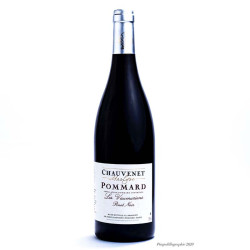
Pommard: Marked Tannins That Soften with Age
As early as the 15th century, when the so-called "wines of Beaune" were traveling all over Europe, Pommard stood out among them for its firmer tannins and deeper color, and it was prized abroad, especially in England. In 1816, the French wine merchant and author André Jullien still credited Pommard with "more color and body" than the neighboring crus.
A Name Defended in Court, 1922 to 1936
By the time Pommard's growers formed a syndicate in 1922, the village name was appearing on wines from vines far beyond its limits. Defending the boundaries of the name was the syndicate's main job.
A court ruling in 1926 defined the Pommard appellation of origin and restricted its production area to the commune of Pommard alone. A 1932 appeals judgment went further, limiting the right to the name to plots of "pinot" within a precisely delimited area, in line with local custom.
Pommard was recognized as an AOC in 1936, on the basis of these two rulings. Its grapes still come from the commune of Pommard alone, in the Côte-d'Or department.
History of the AOC Pommard Appellation
Anchored in Burgundian history, Pommard is a name that resonates strongly in the world of great red wines from Burgundy. Its viticultural origins date back to the Middle Ages, when monks and dukes of Burgundy discovered the exceptional potential of this terroir. The vineyards of Pommard are the flagship of the great red wines of the Côte de Beaune.
Climate and Terroir of the AOC Pommard Appellation
Climate: Burgundy and the Côte de Beaune benefit from a cool oceanic climate with continental influences, with hot summers and cold winters, which promotes optimal ripening of the grapes.
Soils: The soils of Pommard, rich in clay and limestone, offer the ideal structure for the cultivation of Pinot Noir, giving rise to wines of great intensity.
Pinot Noir: the Emblematic Grape Variety of the AOC Pommard
The AOC Pommard is dedicated to Pinot Noir, the indispensable red grape of Burgundy, where it is cultivated with know-how passed down through the generations. Indeed, Pinot Noir, when cultivated on the terroir of Pommard, expresses a structured and intense profile that sets it apart from other appellations in Burgundy and France.
Style of AOC Pommard Wines
Eye: The red wines of Pommard have an intense and deep color, ranging from ruby to dark garnet with age.
Nose: The bouquet is rich and complex, with notes of small black fruits such as blackberry, cherry, and blackcurrant, plum, and pepper enhanced by nuances of leather, chocolate, and undergrowth after a few years of aging.
Palate: The palate is powerful and full-bodied, with marked tannic structure that softens over time. Flavors of black fruits mingle with notes of damp earth, truffle, and oak, supported by a beautiful length in the mouth.
Serving Temperature: 16°C to 18°C
Aging Potential: Recognized for their aging potential, Pommard wines can evolve over several decades, offering a fascinating evolution over 5 to 10 years (or more depending on the estate or vintage).
Best Food Pairings with AOC Pommard Wine
Follow our guide to create the best food and wine pairings with a bottle of red Burgundy wine from a domaine or château in the AOC Pommard:
- Beef Bourguignon
- Saddle of hare in civet
- Haunch of venison
- Beef sirloin with wine sauce
- Cheeses (munster, livarot)
Pommard FAQ: Two Hills, Premiers Crus and Le Village
How Do Pommards from the North and South of the Village Differ?
Pommards differ depending on which side of the village their grapes come from: a valley splits the vineyard into two hills. Grapes from the south give a firm attack and real breadth on the palate. Those from the north bring power with length and elegance, and wines that are generally more expressive when young.
When Were Pommard's Premier Cru Climats First Listed?
Pommard's premier cru climats were first listed in 1943. The list matches the most reputed crus identified in an 1860 ranking by the Beaune district's viticulture committee, and it was updated in 1982.
What Does "Le Village" Mean on a Pommard Premier Cru Label?
On a Pommard Premier Cru label, "Le Village" is the name of a climat classified premier cru, despite a name that sounds like a village-level wine. Like every premier cru climat, it follows the appellation name on the label, in letters no larger than those of the word Pommard.
Where Can You Buy Pommard Direct from the Winemaker?
You can buy Pommard direct from the winemaker on Avenue des Vins. Every wine's page gives the name of its producer.
See also: AOC Beaune 1er Cru - AOC Bourgogne Hautes Côtes de Beaune - AOC Monthélie