Delivery from €16,90 per winemaker in Europe (excluding the United Kingdom)


AOP Fitou
Located in the south of France, the Languedoc-Roussillon wine region covers more than 240,000 hectares, making it one of the largest wine regions in the world. Among its major appellations, the AOC Fitou covers approximately 2,600 hectares between Narbonne and Perpignan, on clay, limestone, and schist soils. Grown in the Mediterranean climate, the Carignan, Grenache, and Mourvèdre grape varieties produce powerful red wines with good aging potential. Fitou wines, with their pronounced tannins and ripe fruit aromas, are among the Languedoc's most iconic red wines.
Filtrer


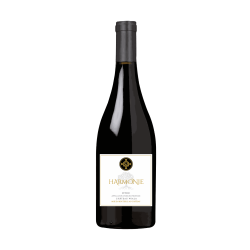
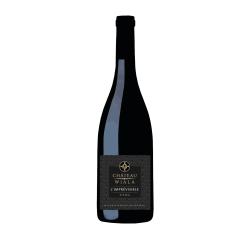

Carignan's Power, Grenache's Smooth Texture
Carignan and Grenache are the two main grape varieties in Fitou. Every wine blends at least two varieties, including at least one main grape, and the main grapes hold the majority; no variety may exceed 80%. Carignan brings power, softened by the generosity and smooth texture of Grenache. Mourvèdre and Syrah cover at least 10% of each estate's vineyard.
From the Leucate Coast to the Foot of Mont Tauch
The Fitou area lies entirely in the Aude and splits into two zones separated by a limestone plateau, about 15 km (9 miles) apart. To the east, five villages sit in the foothills of the coastal Corbières, along lagoons and the Mediterranean: Caves, Fitou, La Palme, Leucate and Treilles.
To the west, four higher villages lie at the foot of Mont Tauch, which peaks at 917 m (3,009 ft): Cascastel-des-Corbières, Paziols, Tuchan and Villeneuve-les-Corbières. Here, small basins form around narrow valleys hemmed in by steep slopes.
Soils differ from one zone to the other: clay-limestone on the coast, schist, limestone or sandstone in the hills. Most are stony, shallow and warm. The often windy coast gets about 600 mm (24 in) of rain a year; the cooler, less windy backcountry gets close to 700 mm (28 in).
From Greek Settlers in Leucate to the 1948 Decree
About 2,700 years ago, Greeks settled in Leucate, whose name comes from the Greek "leukos," white, like its cliffs. They planted vines along the coast, near the ports. The Romans then turned wine into a trade good, shipped along the Via Domitia.
In the Middle Ages, monks, including the Cistercians of Fontfroide Abbey, expanded the vineyards. In the 13th century, the poet d'Andely named the wines of "Palme," today's La Palme, among those fit for King Philip Augustus.
After the winegrowers' revolt of 1907, cooperative wineries opened in Cascastel, then in Fitou. In 1935, growers in the five coastal villages applied for an appellation for their red wines. World War II halted the process; resumed afterward with Tuchan, Paziols, Villeneuve and Cascastel, it led to the decree of April 28, 1948, thirty-seven years before AOC Corbières was recognized.
From Youthful Pepper to Notes of Truffle
Rich in tannins, Fitou makes powerful, full-bodied reds. Young, they show red fruit and spice such as pepper; with age, they move toward black fruit, truffle, toast, and sometimes leather or game. The appellation requires aging until at least April 15 of the year after the harvest, to refine those tannins.
You can open a Fitou young or let it age. Serve a young, spicy bottle with meats grilled over garrigue herbs; save an older one for game or aged cheeses.
Fitou: Color, Muscat de Rivesaltes and Producers
What color is AOC Fitou wine?
AOC Fitou is red wine only: the appellation covers still red wines exclusively. Whites and rosés from its nine villages are sold under other names, such as AOC Corbières, whose area includes those villages.
Which sweet wine can also be made in the Fitou villages?
Muscat de Rivesaltes, a vin doux naturel (a naturally sweet fortified wine), can be made in all nine Fitou villages, which lie within its area. That area also takes in 89 villages in the Pyrénées-Orientales.
How many producers make Fitou?
In 2010, Fitou counted 3 cooperative wineries and 37 private wineries, on 2,600 hectares (about 6,400 acres). Together, they produced about 85,000 hectoliters a year on average, roughly 11 million bottles.
Where can you buy Fitou direct from the winemaker?
You can buy Fitou direct from the winemaker on Avenue des Vins. Your order ships straight from the producer, with no middleman.
See also: AOC Corbières Wine - AOC Côtes du Roussillon - AOC Maury