Delivery from €16,90 per winemaker in Europe (excluding the United Kingdom)


AOC Cahors Wine
As its name suggests, this vineyard is located in the Southwest of France, between the Massif Central and the Pyrénées, and spreads over 11 departments (Aveyron, Dordogne, Gers, Haute-Garonne, Hautes-Pyrénées, Lot, Lot-et-Garonne, Tarn, Tarn-et-Garonne, Pyrénées-Atlantiques, Landes). There is, among others, the AOC Cahors. This designation’s area spreads between Cahors and Soturac in the Lot department over about 21,700 hectares of soils essentially composed of limestone, sand and gravel. Vines of Malbec, Merlot and Tannat, subject to the oceanic climate of this geographical area, are planted there and enable the production of red wines that can be kept in a cellar for 4 to 8 years before being enjoyed (it goes up to 10 years for certain vintages). These wines are structured, powerful and tannic. They are long in the mouth and offer violet and roasting aromas as well as a rich and complex aromatic bouquet (blackberry, blackcurrant, prune, jam, cinnamon, pepper, cocoa, truffle and undergrowth).
Filtrer


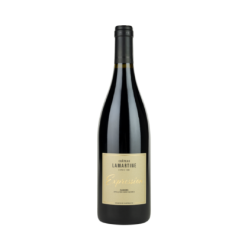




Cahors: Auxerrois, a Grape on Record in the 16th Century
The wines of the Southwest of France have often been overshadowed by their Bordeaux counterparts, but one vineyard has stood out since the Middle Ages: Cahors. Cahors is one of the oldest vineyards in France, long renowned for its "black wine." However, don't worry, today's Cahors wines are no longer as robust as they used to be and can be enjoyed in their youth. Discover through this guide everything you need to know about the history, terroir, and grape variety of the AOC Cahors wines. Follow our advice to achieve the best food pairings with a bottle of red AOC Cahors wine.
History of the Cahors Vineyard
The Cahors appellation is an emblematic appellation of the Southwestern vineyard. Indeed, in Cahors, the cultivation of vines and wine trade began in antiquity under the Roman Empire. In the Middle Ages, the "black wine," as it was called, graced the finest tables in Europe, even being served at the wedding of Eleanor of Aquitaine and Henry II, King of England. This allowed Cahors wines to thrive in England despite stiff competition and privileges granted to Bordeaux wines. Highly appreciated by King Francis I during the Renaissance, Cahors wine developed alongside its iconic grape variety: Malbec. This popularized Malbec in other vineyards, notably in the Loire Valley and up to the Château de Fontainebleau! Subsequently, after suffering from the phylloxera crisis and the harsh winter of 1956 (which wiped out nearly all the vines), the vineyard experienced a slow resurrection. Today, driven by talented winemakers and benefiting from the trend of Argentine Malbecs, the AOC Cahors has finally regained its deserved place.
Climate and Terroir of the AOC Cahors Appellation
Climate: The Cahors appellation benefits from a triple influence conducive to vine cultivation. Located equidistant from the Atlantic Ocean, the Mediterranean Sea, and the Pyrenees, the Cahors vineyard experiences a climate that is a mix of oceanic, temperate, and mountainous influences.
Soils: The AOC Cahors terroir is divided into two distinct areas: the Lot Valley (primarily composed of sandy-loamy alluvium) and the Causses (mainly composed of limestone soils).
Principal Grape Varieties of the AOC Cahors
The AOC Cahors produces only red wine, dominated by Malbec, also known as Côt or Auxerrois (at least 70% of the grape composition). When Malbec is not vinified as a single-varietal wine, Merlot and Tannat can also be part of the blend.
Malbec (Côt): The flagship red grape variety of the Cahors vineyard, originating from the region. It is characterized by complex aromas of prunes, blueberries, and blackcurrants, evolving into notes of undergrowth and truffles after a few years of aging. While Malbec can produce soft and fruity wines, in the AOC Cahors wines, it results in more structured wines suitable for aging. Today, Malbec is one of the most renowned red grape varieties in Latin America, primarily in the Mendoza region of Argentina.
Style of Cahors Wines
Appearance: In its youth, a Cahors wine is characterized by a violet hue with very dark, almost black, reflections. After a few years in the cellar, the color turns garnet with brown highlights.
Aroma: A red AOC Cahors wine reveals a complex aromatic palette of red and black fruits (prunes, blackberries, blackcurrants), spices (cinnamon, pepper), and roasted notes (cocoa, coffee, wood). Over time, the bouquet becomes more complex, developing jammy, undergrowth, and truffle notes.
Taste: Traditionally, red AOC Cahors wines are known for being powerful and tannic, ideally aged for 3 to 5 years to appreciate them fully. However, many winemakers today also offer softer and more approachable cuvées for early enjoyment.
Serving Temperature: 15°-17°C
Aging Potential: 5 to 10 years (or more for a good château and vintage)
Best Food Pairings with Cahors Wines
Here are some dish ideas to accompany a red AOC Cahors wine from a beautiful château:
- Cassoulet
- Duck confit with sautéed mushrooms
- Thrush pâté
- Grilled duck breast
- Rib of beef with Périgueux sauce and truffle
- Lamb confit with beans
- Duck Parmentier
- Cheeses (Bleu d’Auvergne or Roquefort)
This guide has made you want to form your own opinion by tasting a red wine from a Cahors AOP château at the best quality-price ratio? On Avenue des vins, each domaine is selected with the utmost care, and our wines are available for delivery to your home, directly from the domaine or château of your choice. Enjoy a red AOC Cahors wine, a red, white, or rosé wine from the Southwest, or from any other region of France, by ordering our bottles at the best price directly from the château.
One Grape Under Several Names, Rules That Reach the Winery
In Quercy, Cahors's main grape goes by a local name: Auxerrois. According to the Cahors wine trade association (UIVC), a 16th-century treatise, the Discours sur la vigne by François Roaldès, a professor at the city's university, shows that it was already grown in the vineyard.
It has also been called Noir de Pressac, Œil de Perdrix and Caours. Its international name, Malbec, comes from an 18th-century Médoc estate owner, Mr. Malbeck, who spread the grape, the same source says.
These wines are all red and must meet, among other things, two requirements at the winery. The grapes must be destemmed. The wine is then aged until at least March 1 of the year after the harvest.
Destemming, Key Dates, Quercy Blanc: Cahors Essentials
Why must Cahors grapes be destemmed?
Destemming is mandatory for AOC Cahors in order to extract the finest aromas. It separates the berries from the stem, the branching stalk that holds them, before the grapes go into the vat.
Since when has Cahors been a controlled designation of origin?
Cahors has been an AOC, or controlled designation of origin, since a decree of April 15, 1971. Its name was protected long before that: on July 31, 1930, the Lot court of first instance recognized the designation of origin "Vins de Cahors."
What is the Quercy Blanc, south of the Cahors area?
The Quercy Blanc is the plateau of marl and lake-formed limestone, dating from the Oligocene and Miocene, that covers the southern part of the Cahors area. Its clay soils are grayish white. The appellation describes it separately, while the trade association groups it with the limestone causses.
Where can you buy Cahors wine direct from the winemaker?
You can buy Cahors wine direct from the winemaker on Avenue des Vins. Every wine's page lists its grape varieties.
See also: AOC Madiran - AOC Fronton - AOC Gaillac Wine