Delivery from €16,90 per winemaker in Europe (excluding the United Kingdom)

Vignobles Denis Barraud
Vignobles Denis Barraud: Saint-Émilion Grand Cru direct from the estate, châteaux Les Gravières & Lynsolence...
Lire plus


Discover Vignobles Denis Barraud in photos


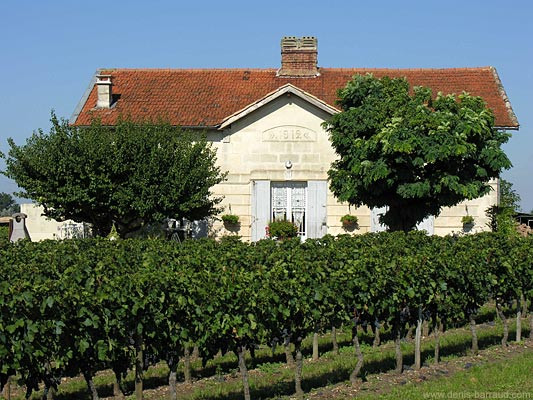
Vignobles Denis Barraud, Saint-Émilion Grand Cru and Bordeaux, a family story
Vignobles Denis Barraud
A 36-hectare family estate in Saint-Sulpice-de-Faleyrens, near Saint-Emilion, on the Bordeaux right bank. Certified HVE, it produces Saint-Emilion Grand Cru (Chateau Les Gravieres, Lynsolence) and a Bordeaux Superieur (Chateau de la Cour d'Argent). One same family demand since the late 19th century.
A stone's throw from Saint-Emilion, one same family has cultivated the vine since the late 19th century. From dense, silky Saint-Emilion Grand Cru to Bordeaux full of finesse, the Vignobles Denis Barraud carry on one same family demand, to discover direct from the winegrower. Established in the late 19th century, the estate has remained a family property, expanded by Pierre-Henri Descrambe, Denis Barraud's grandfather, who passed on his love of the vine.
A family estate since the late 19th century
Established in the late 19th century, the estate has remained a family property. It was expanded by Denis Barraud's grandfather, Pierre-Henri Descrambe, who passed on his love of the vine. Denis Barraud then ran the property from 1971 to early 2023. Since his passing, at the start of 2023, his nephew and partner of over thirty years, Franck Canal-Descude, has carried on the work at the head of the estate. In 1998 the Lynsolence cuvee was born, embodying the search for depth and finesse common to all the house's wines.
The estate's philosophy
A conviction rooted in the family: a great wine is prepared first in the vineyard, before being made in the cellar. Here, the focus is on the ripeness of the grape, its perfect health and fidelity to the terroir, rather than on effects of style. This demand, the same from one generation to the next, runs from Saint-Emilion Grand Cru to Bordeaux. The estate is certified HVE (High Environmental Value).
|
||
|
||
|
||
|
Saint-Émilion and Bordeaux, a right-bank terroir
The estate lies in Saint-Sulpice-de-Faleyrens, at the gates of Saint-Emilion, on the right bank of the Dordogne. Seven hectares are classified in the Saint-Emilion Grand Cru appellation: the combination of low yields and a fine terroir gives dense, complex wines with very silky tannins. The remaining twenty-nine hectares are planted in Bordeaux Superieur, on a privileged terroir close to Saint-Emilion, which brings the wines a fine elegance. Two complementary appellations: the silky power of Saint-Emilion Grand Cru, the accessible finesse of Bordeaux.
In the vineyard and the cellar: demand above all
Here, everything begins in the vineyard: without healthy, ripe grapes, no great wine. The growing methods aim for complete ripeness, harvest after harvest. In the cellar, winemaking only seeks to reveal this matter, without ever betraying it, so that each cuvee faithfully expresses its terroir. This approach comes with an HVE certification (High Environmental Value), a mark of environmentally respectful viticulture, from Saint-Emilion Grand Cru to Bordeaux Superieur.
The estate's range
The estate offers its wines in Saint-Emilion Grand Cru and in Bordeaux. Chateau Les Gravieres is the flagship wine in Saint-Emilion Grand Cru: dense, complex, with very silky tannins. Lynsolence, born in 1998, embodies the search for depth and finesse dear to the house. Chateau de la Cour d'Argent, in Bordeaux Superieur, charms with its finesse and accessibility. The Saint-Emilion Grand Cru are offered in several vintages, to follow the evolution of one same terroir.
Château Les Gravières
Saint-Émilion Grand Cru - the flagship wine
The estate's flagship wine in Saint-Emilion Grand Cru: dense and complex, with very silky tannins, born of low yields on a fine right-bank terroir. Available in several vintages (2015, 2021, 2022, 2023).
Lynsolence
Saint-Émilion Grand Cru - depth & finesse
Born in 1998, this cuvee embodies the search for depth and finesse dear to the house. An exceptional Saint-Emilion Grand Cru, available in several vintages (2015, 2018, 2019, 2021).
Château de la Cour d'Argent
Bordeaux Supérieur - finesse & accessibility
From a privileged terroir close to Saint-Emilion, this Bordeaux Superieur charms with its finesse and accessibility. The estate's everyday wine, supple and faithful to its terroir.
A right-bank terroir
Saint-Sulpice-de-Faleyrens, at the gates of Saint-Émilion
36 hectares on the right bank of the Dordogne: 7 hectares classified in Saint-Emilion Grand Cru (low yields, dense wines with silky tannins) and 29 hectares in Bordeaux Superieur, on a privileged terroir close to Saint-Emilion that brings finesse.
In the vineyard and the cellar, demand above all
Certified HVE (High Environmental Value)
A great wine is prepared first in the vineyard: without healthy, ripe grapes, no great wine. The growing methods aim for complete ripeness, harvest after harvest; in the cellar, winemaking only seeks to reveal this matter. The estate is certified HVE.
Five generations, one same style
From Pierre-Henri Descrambe to Franck Canal-Descudé
Established in the late 19th century, expanded by Pierre-Henri Descrambe (Denis Barraud's grandfather), the estate was run by Denis Barraud from 1971 to early 2023. Since then, his nephew and partner of over thirty years, Franck Canal-Descude, has carried on the work with the same demand.
Saint-Émilion Grand Cru & Bordeaux Supérieur, direct from the winegrower
Why choose the Vignobles Denis Barraud?
The prestige of Saint-Émilion Grand Cru. Seven hectares at low yields, dense wines with silky tannins.
A family estate. A family property since the late 19th century, run by Franck Canal-Descude.
Two appellations, one demand. From Saint-Emilion Grand Cru to Bordeaux Superieur, one same search for finesse.
Certified HVE. An environmentally respectful viticulture, demand in the vineyard.
Frequently asked questions about the Vignobles Denis Barraud
Where are the Vignobles Denis Barraud located?
The Vignobles Denis Barraud are located in Saint-Sulpice-de-Faleyrens (33330), in the Gironde, at the gates of Saint-Emilion, on the Bordeaux right bank. The family estate covers 36 hectares, including 7 in the Saint-Emilion Grand Cru appellation and 29 in Bordeaux Superieur. The historic address is that of Chateau Les Gravieres.
Who runs the Vignobles Denis Barraud today?
Since early 2023, the estate has been run by Franck Canal-Descude, nephew and partner of Denis Barraud for over thirty years. He took over from Denis Barraud, who had run the property since 1971. The estate had been expanded, a generation earlier, by Denis Barraud's grandfather, Pierre-Henri Descrambe.
What wines does the Denis Barraud estate produce?
The estate produces two families of wines. In Saint-Emilion Grand Cru, Chateau Les Gravieres and the Lynsolence cuvee, dense and silky. In Bordeaux Superieur, Chateau de la Cour d'Argent, all finesse. The 36 hectares are split between 7 hectares in Saint-Emilion Grand Cru and 29 hectares in Bordeaux Superieur.
Are the Denis Barraud wines organic?
The estate is certified HVE (High Environmental Value), a mark of environmentally respectful viticulture. The estate is not certified organic. The house conviction: a great wine is prepared first in the vineyard, on the ripeness and health of the grape, respecting the terroir.
What is a Saint-Émilion Grand Cru?
Saint-Emilion Grand Cru is a controlled designation of origin on the Bordeaux right bank. It imposes stricter rules than the simple Saint-Emilion appellation: lower yields, longer ageing. The wines, often Merlot-dominant, are renowned for their roundness and depth. Chateau Les Gravieres and Lynsolence are two examples.
What is the difference between Saint-Émilion and Bordeaux Supérieur?
Saint-Emilion is a prestigious communal appellation of the right bank; Bordeaux Superieur is a regional appellation, with slightly stricter rules than simple Bordeaux (lower yields, minimum ageing). At the estate, the two sit side by side: the Saint-Emilion Grand Cru offers density and silky tannins, the Bordeaux Superieur plays on finesse and accessibility.
What is the Lynsolence cuvee?
Lynsolence is a Saint-Emilion Grand Cru cuvee of the Denis Barraud estate, born in 1998. Its name and its style embody the search for depth and finesse common to all the house's wines. It is the estate's flagship cuvee, alongside Chateau Les Gravieres.
Which grape for Saint-Émilion wines?
On the Bordeaux right bank, of which Saint-Emilion is part, Merlot is the king grape. It gives round, supple and generous wines, often completed by Cabernet Franc, sometimes Cabernet Sauvignon, which bring structure and freshness. For the precise blend of each cuvee, refer to the wine's page.
How long can a Saint-Émilion Grand Cru be kept?
A Saint-Emilion Grand Cru generally keeps for five to fifteen years, sometimes more on the great vintages. Its Merlot dominance makes it enjoyable fairly young, on the fruit, but its structure allows it to age. A Bordeaux Superieur like Chateau de la Cour d'Argent is best enjoyed in its early years. Keep the bottles lying down, away from light, at around 12 to 14 C.
At what temperature to serve these wines and should they be decanted?
Serve a Saint-Emilion Grand Cru at around 16 to 17 C, and a Bordeaux Superieur at around 16 C. Decanting is recommended on young wines: thirty minutes to an hour in a decanter aerates the wine and softens the tannins. On an older vintage, prefer a short decanting, just before serving, to separate the wine from its deposit. A fairly ample glass helps the aromas express themselves.
What dishes to enjoy with the Denis Barraud wines?
The estate's Saint-Emilion Grand Cru go with red meats, lamb, duck and game, as well as mushroom or truffle dishes; their silky tannins also suit a rib steak or a duck breast. The Bordeaux Superieur Chateau de la Cour d'Argent, more supple, suits poultry, charcuterie and pressed cheeses. Serve these wines at around 16 to 17 C.
Can the Denis Barraud wines be bought directly?
Yes: the wines of the Vignobles Denis Barraud are available here, direct from the estate, with no middleman and at the direct property price. You will find the Saint-Emilion Grand Cru Chateau Les Gravieres and Lynsolence, as well as the Bordeaux Superieur Chateau de la Cour d'Argent, shipped with care across France and Europe.
Direct from the estate, Saint-Émilion Grand Cru & Bordeaux
Vignobles Denis Barraud: a 36-hectare family estate in Saint-Sulpice-de-Faleyrens (33330), near Saint-Emilion, on the Bordeaux right bank. Established in the late 19th century, expanded by Pierre-Henri Descrambe (Denis Barraud's grandfather), run by Denis Barraud from 1971 to early 2023, then by his nephew Franck Canal-Descude. 7 hectares in Saint-Emilion Grand Cru and 29 hectares in Bordeaux Superieur. Certified HVE (High Environmental Value). Merlot-dominant, completed by Cabernet Franc.
Cuvees: Chateau Les Gravieres and Lynsolence (Saint-Emilion Grand Cru), Chateau de la Cour d'Argent (Bordeaux Superieur)