Delivery from €16,90 per winemaker in Europe (excluding the United Kingdom)

Domaine Le Chai de la Louve
Le Chai de la Louve in Azé: Mâconnais Burgundy wines, Chardonnay and Pinot Noir, amphora-aged, direct from the estate...
Lire plus
Discover Domaine Le Chai de la Louve in photos


Domaine Le Chai de la Louve - Mâconnais wines direct from Azé
Le Chai de la Louve - Mâcon-Villages, Mâcon-Péronne and Bourgogne (Azé, Saône-et-Loire)
Le Chai de la Louve is an independent eleven-hectare estate based in Azé, in the Mâconnais, in the south of Burgundy. Florian Beau vinifies chardonnay, gamay and pinot noir there under High Environmental Value level 3, with an Anfora range aged in terracotta amphorae from Tuscany.
He was twenty-one, with an hectare and a half of vines and no one in the family to show him how it is done. Sixteen years later, Florian Beau left the cooperative to open his own cellar in Azé and finally sign his wines. Two vineyards, Azé and Péronne, clay-limestone soils on the hillside, chardonnays that have passed the half-century mark, and this slightly against-the-grain idea of ageing part of the harvest in Tuscan amphorae rather than in barrels. The Guide Hachette awarded a star to two of these cuvées back to back. Grower's Mâcon and Bourgogne, to discover direct on Avenue des Vins.
Florian Beau, from the vine row to the Azé cellar
The story begins in 2003. Florian is twenty-one, with no wine-growing training behind him, no family estate to take over, and an hectare and a half of vines to tend around Azé. He learns on the job, expands plot after plot, and ends up farming some thirty hectares by 2015, whose harvest then goes to the village cooperative cellar. His brother Bastien joins him officially in 2014.
2019 marks the turning point. The supply contracts come to an end and the two brothers decide to keep their grapes. Le Chai de la Louve is born that year, with five hectares vinified in-house to begin with. It is no longer just tending a vine: you have to press, age, bottle, label and sell. Bastien has since moved towards the social sector; Florian leads the estate today.
The estate now vinifies eleven hectares spread over two distinct vineyards, Azé and Péronne, a few kilometres apart. The cellar is on the route de Vaux-sur-Aine, in Azé, where the vine has been grown since Roman times — nearly two thousand years of continuity on the same hillsides. Five years after the first signed cuvée, the Guide Hachette des Vins brought the estate into its pages.
|
||
|
||
|
||
|
||
|
Azé and Péronne: two vineyards, one same limestone
The estate works two Mâconnais terroirs that do not give the same wines. In Azé, the chardonnays are planted at three hundred metres of altitude, facing south-east on clay-limestone soils: altitude, cool mornings, straight and floral wines. In Péronne, a handful of kilometres to the north, the plots occupy the mid-slope, still on clay-limestone, with vines of fifty years on average that give denser, longer juices.
Péronne has the distinction of being one of the communes whose name may complete the Mâcon appellation: this is then called Mâcon-Péronne, a more precise geographical mention than plain Mâcon-Villages. The reds come from due-south plots for the gamay and south-east for the pinot noir, on the same limestone. None of these plots is large: thirty ares here, forty ares there, which explains the rarity of certain cuvées.
Mâcon-Villages, Mâcon-Péronne and Bourgogne - Azé (71)
Clay-limestone - mid-slope south and south-east - High Environmental Value level 3
The Mâconnais forms the southern tip of wine-growing Burgundy, between Tournus and Mâcon. Chardonnay occupies most of the surface here, gamay and pinot noir share the reds. The wines of Le Chai de la Louve all come from this sector, around Azé and Péronne, and are vinified then bottled at the estate.
Vine growing certified High Environmental Value
The estate is certified High Environmental Value level 3. This French public certification, the highest of the three existing levels, looks at the whole farm and not only the plot: biodiversity present on the farm, plant-protection strategy, fertilisation and water management. It is not equivalent to organic-farming certification, which follows a different set of rules, but it commits the estate to measured and audited results.
On the ground, this means a great deal of manual work and the minimum of inputs. The red cuvées arrive at the cellar in whole bunches, which requires healthy grapes picked at the right moment. The rest comes down to the age of the vines: stocks of forty to fifty years self-regulate, produce little and go looking for water deep down, which avoids many interventions.
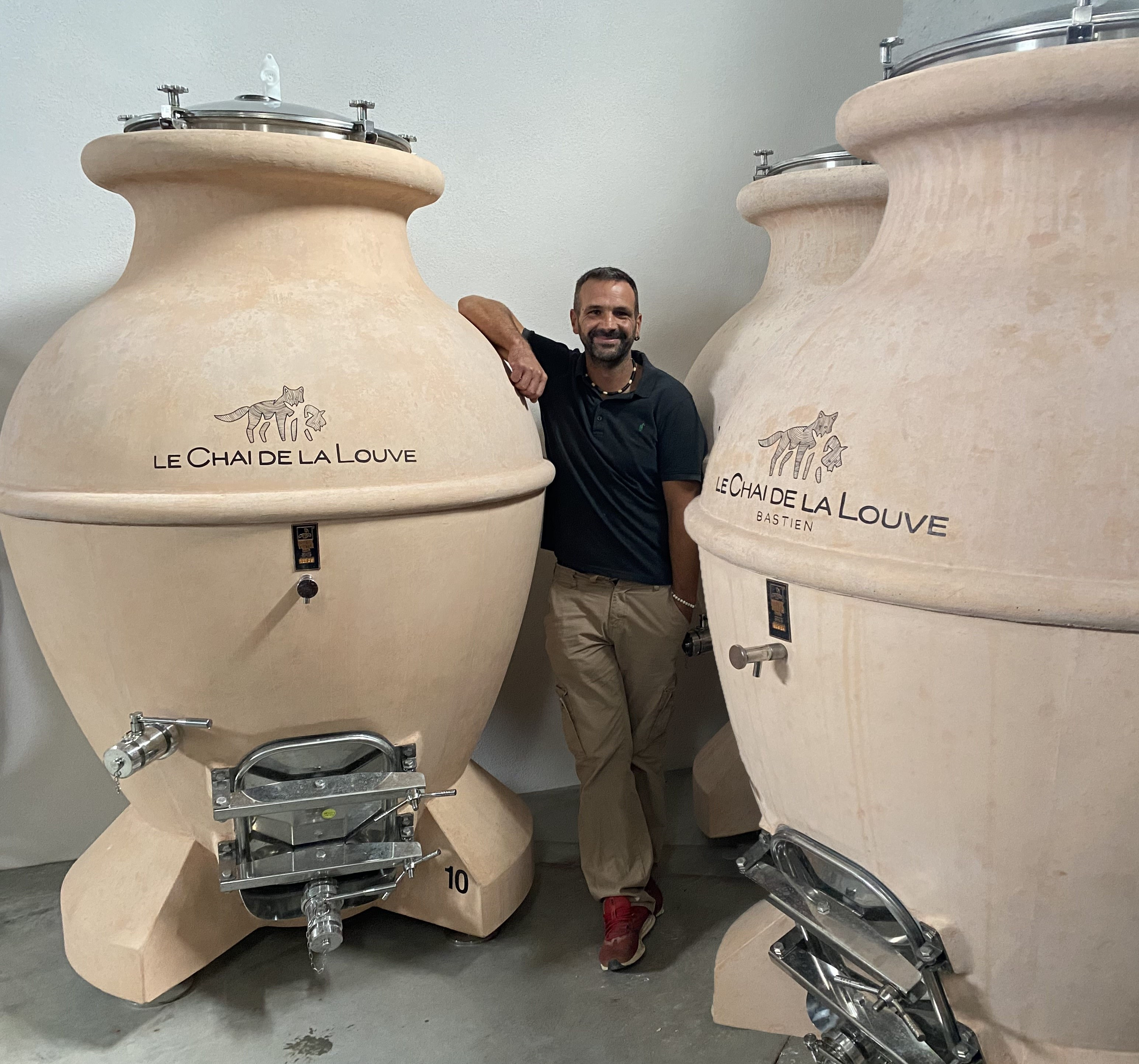
Tuscan amphorae, stainless-steel tanks and whole bunches
The cellar's signature holds in one word: Anfora. Part of the harvest, white as well as red, is aged ten months in terracotta amphorae from Tuscany. Terracotta lets a little oxygen through, like a barrel, but without bringing any taste of wood: the wine rounds out, gains texture, and keeps its fruit and its terroir without make-up. It is a rare choice in the Mâconnais, and it is precisely this cuvée that earned the estate its first star in the Guide Hachette.
The rest of the range follows more classic but equally careful paths. The Azé and Péronne chardonnays spend eight months in stainless-steel tanks on fine lees, a method that preserves the freshness of the citrus and gives roundness without wood. The reds go through a pre-fermentation maceration in whole bunches, fifteen days for the gamay, three weeks for the pinot noir — before an ageing that combines, for the Bourgogne red, sixty per cent barrels for ten months and the remainder in stainless steel on fine lees.
The cuvées of Le Chai de la Louve
Five cuvées, three grapes, two vineyards. The whites make up the bulk of production, with two Mâcon aged in stainless steel and one Mâcon-Péronne in amphora. The reds hold in two wines from small plots, a gamay and a pinot noir, both destemmed in whole bunches. The vintages on offer change with the harvests: find those available on the estate's page.
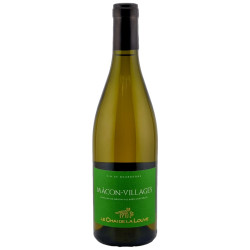
Mâcon-Villages Blanc
100% Chardonnay - 1.5 ha in Azé, 300 m altitude, vines over 30 years - 13% vol.
The way into the estate, and the easiest to love. Lemon-yellow robe with golden glints, a nose of citrus and white flowers, a dry, fresh palate that eight months in stainless steel on fine lees have rounded out. It drinks as an aperitif, with crudités, grilled fish or a seafood platter, served between 10 and 12 °C. To enjoy within two to three years. Also available in magnum.
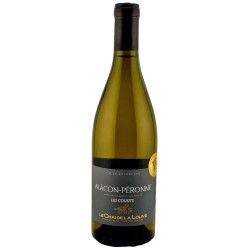
Mâcon-Péronne Blanc
100% Chardonnay - 1.5 ha in Péronne, south-east mid-slope, vines of 50 years - 13% vol.
Same grape, another village, another wine: the fifty-year average age of the Péronne vines is felt at once. Pale, bright robe, a delicate nose where the floral vies with the mineral with a hint of citrus, a frank and elegant palate after eight months on fine lees. This is the wine for shellfish, oysters, a composed salad from the South or a fresh goat's cheese. Serve between 10 and 12 °C, keeps up to five years.
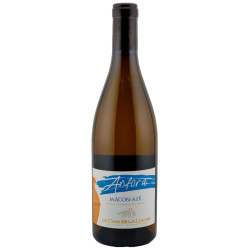
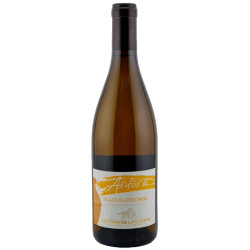
Mâcon-Péronne Anfora Blanc
100% Chardonnay - 0.30 ha, vines of 50 years - aged 10 months in Tuscan amphora - 13% vol.
Thirty ares of old chardonnay, aged ten months in terracotta: the estate's most singular cuvée. The robe is bright and intense, the nose plays on box tree, blackcurrant buds and hawthorn before giving way to white fruits and a mineral sensation. The palate is ample, carried by these same white fruits and a discreet minerality. To serve with a matured goat's cheese, a fish in sauce or an Asian cuisine without added sugar, between 10 and 12 °C. Keeps five to ten years.
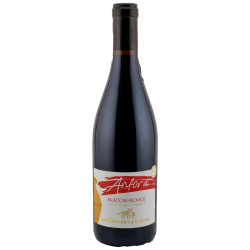
Mâcon Rouge Anfora
100% Gamay - 0.40 ha due south, vines of 40 years - whole bunch, 10 months in amphora - 14% vol.
The cuvée that brought the estate into the Guide Hachette des Vins. Fifteen days of pre-fermentation maceration in whole bunches, then ten months of amphora: the robe is deep garnet, the nose powerful and charming, the palate generous on red and black fruits, violet and spices. A gastronomic gamay, to bring out with a grilled andouillette, a coq au vin, a rabbit, a Morteau sausage or a cheese platter. Serve between 15 and 16 °C, keeps five to ten years.
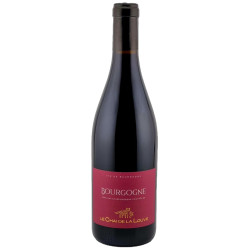
Bourgogne Rouge
100% Pinot noir - 0.30 ha south-east facing, vines of 40 years - 60% barrel 10 months - 13% vol.
The estate's pinot noir, starred in the Guide Hachette in its 2022 vintage. Three weeks of pre-fermentation maceration in whole bunches, then an ageing shared between sixty per cent barrels for ten months and stainless steel on fine lees. Intense red robe with dark glints, a fruity nose of cherry and kirsch, a palate structured by present tannins and a fine peppery note on the finish. With a veal roast or a poultry fillet, between 15 and 16 °C. Keeps five to ten years, also in magnum.
Good to know: the Mâcon-Villages white and the Bourgogne red exist in 75 cl bottles and in 150 cl magnums, a format that slows the ageing of the wine and makes its effect at the table. The Anfora cuvées, from plots of thirty to forty ares, are produced in very small volumes: the Mâcon red Anfora 2020 had been drawn to 2,500 bottles.
What the critics say
The estate entered the Guide Hachette des Vins with the 2024 edition, which awarded one star, a very successful wine, to the Mâcon red Anfora 2020, a cuvée vinified and aged in amphora, drawn to 2,500 bottles and given at its peak between 2025 and 2028. The 2025 edition confirmed this by starring the Bourgogne red 2022, praised for its register of red fruits, raspberry and cherry. Two starred cuvées in two consecutive editions, for an estate that then had only five vintages to its name.
Ordered directly from the estate in Azé - Delivery France and Europe
Why choose the wines of Le Chai de la Louve
A Mâconnais at a grower's price. Old-vine chardonnay, pinot noir and gamay from small plots: southern Burgundy still offers the value-for-money that the Côte d'Or has lost.
Two cuvées starred in the Guide Hachette. The Mâcon red Anfora 2020 in the 2024 edition, the Bourgogne red 2022 in the 2025 edition: recognition came quickly, and twice in a row.
The amphora, a rare signature in the Mâconnais. Ten months of Tuscan terracotta give ample, textured wines, without an ounce of wood taste. Few estates in the appellation take this path.
High Environmental Value level 3. The most demanding tier of the French scheme, obtained across the whole farm, with largely manual work and the minimum of inputs.
Direct from the grower. You order Florian Beau's bottles without an intermediary, shipped from France, with delivery in France and throughout Europe.
Frequently asked questions about Le Chai de la Louve
Where is the Le Chai de la Louve estate located?
Le Chai de la Louve is in Azé, in Saône-et-Loire (71260), at the heart of the Mâconnais vineyard, in the south of Burgundy. The cellar is on the route de Vaux-sur-Aine. The estate farms two distinct vineyards, one around Azé, the other in the neighbouring commune of Péronne, about twenty kilometres north of Mâcon.
Who is the winegrower of Le Chai de la Louve?
The estate is run by Florian Beau, who set up in 2003 at twenty-one with an hectare and a half of vines, with no wine-growing training or family estate behind him. His brother Bastien joined him in 2014 before moving towards the social sector. The two brothers created the independent estate in 2019, leaving the cooperative cellar.
What does the name Le Chai de la Louve mean?
A chai, in wine vocabulary, is the building where the wine is vinified, aged and stored, as opposed to the underground cellar. Le Chai de la Louve is the name Florian Beau gave to the cellar he opened in Azé in 2019 to vinify his own grapes. The estate does not publicly document the precise origin of the she-wolf (la louve).
Which wines does Le Chai de la Louve produce?
The estate produces five cuvées: three whites and two reds. On the white side, a Mâcon-Villages, a Mâcon-Péronne and a Mâcon-Péronne Anfora aged in amphora. On the red side, a Mâcon red Anfora in gamay and a Bourgogne red in pinot noir. All are vinified and bottled at the estate, in Azé.
Which grapes does the estate grow?
Three grapes, the three pillars of the Mâconnais. Chardonnay signs all the whites, on clay-limestone plots in Azé and Péronne whose oldest are close to fifty years. Gamay gives the Mâcon red Anfora, pinot noir the Bourgogne red, both on vines of around forty years.
Are the wines of Le Chai de la Louve organic?
The estate is not certified organic: it is certified High Environmental Value level 3. This French public certification, the most demanding of the three levels, assesses the farm as a whole on biodiversity, plant-protection strategy, fertilisation and water management. Work in the vine is largely manual, with the minimum of inputs.
What is a wine aged in amphora?
Ageing a wine in amphora means letting it mature in a terracotta vessel rather than in an oak barrel or a stainless-steel tank. Terracotta is slightly porous: it lets a little oxygen through, which softens the wine and gives it texture, but without passing on any taste of wood. At Le Chai de la Louve, the Anfora cuvées spend ten months in terracotta amphorae from Tuscany.
Has Le Chai de la Louve received any awards?
Yes, two cuvées have been starred in the Guide Hachette des Vins. The Mâcon red Anfora 2020 earned one star in the 2024 edition and the Bourgogne red 2022 one star in the 2025 edition. A star signals, in this guide, a very successful wine.
How long can the estate's wines be kept?
It depends on the cuvée. The Mâcon-Villages white drinks within two to three years, on its freshness. The Mâcon-Péronne white holds up to five years. The three most structured cuvées, Mâcon-Péronne Anfora, Mâcon red Anfora and Bourgogne red, keep five to ten years. Store the bottles lying down, away from light, between 10 and 14 °C.
Which food and wine pairings with the wines of Le Chai de la Louve?
The whites go with seafood and goat's cheeses: oysters and shellfish with the Mâcon-Péronne, aperitif, crudités and fish with the Mâcon-Villages, matured goat's cheese or lightly sweet Asian cuisine with the Mâcon-Péronne Anfora. On the red side, the Mâcon red Anfora calls for grilled andouillette, coq au vin, rabbit or Morteau sausage; the Bourgogne red prefers white meats, veal roast or poultry fillet.
Which wine of Le Chai de la Louve to give as a gift?
To give as a gift, the Mâcon-Péronne Anfora white and the Mâcon red Anfora are the two cuvées to favour: ageing in Tuscan amphora, plots of thirty to forty ares, very limited runs, and a Guide Hachette star for the red. For a great table, the magnum of Bourgogne red or Mâcon-Villages makes its effect and extends the keeping.
Can you visit the estate and taste on site?
Yes. The estate welcomes visitors Monday to Friday from 9 a.m. to 6 p.m., and Saturday from 9 a.m. to noon by appointment, at 1675 route de Vaux-sur-Aine in Azé. Tasting and direct sales take place at the cellar. It is best to call ahead before dropping by: a winegrower is often out in the vines.
Where to buy the wines of Le Chai de la Louve direct?
The cuvées of Le Chai de la Louve are available on Avenue des Vins, in a short supply chain: the bottles come from the estate, with no additional intermediary, and are shipped to France as well as to the European countries eligible for delivery. On the estate's page you will find the vintages currently on offer and the available formats, bottle and magnum.
Chardonnay, gamay and pinot noir from Azé and Péronne, shipped from France
Le Chai de la Louve, an independent eleven-hectare estate in Azé, in Saône-et-Loire, certified High Environmental Value level 3.
Mâcon-Villages, Mâcon-Péronne, Mâcon red and Bourgogne red - chardonnay, gamay and pinot noir - direct from the grower on Avenue des Vins.