Delivery from €16,90 per winemaker in Europe (excluding the United Kingdom)

Domaine Cauhapé
Domaine Cauhapé: Jurançon dry and sweet wines from manseng, direct from the estate in Monein since 1980...
Lire plus


Discover Domaine Cauhapé in photos


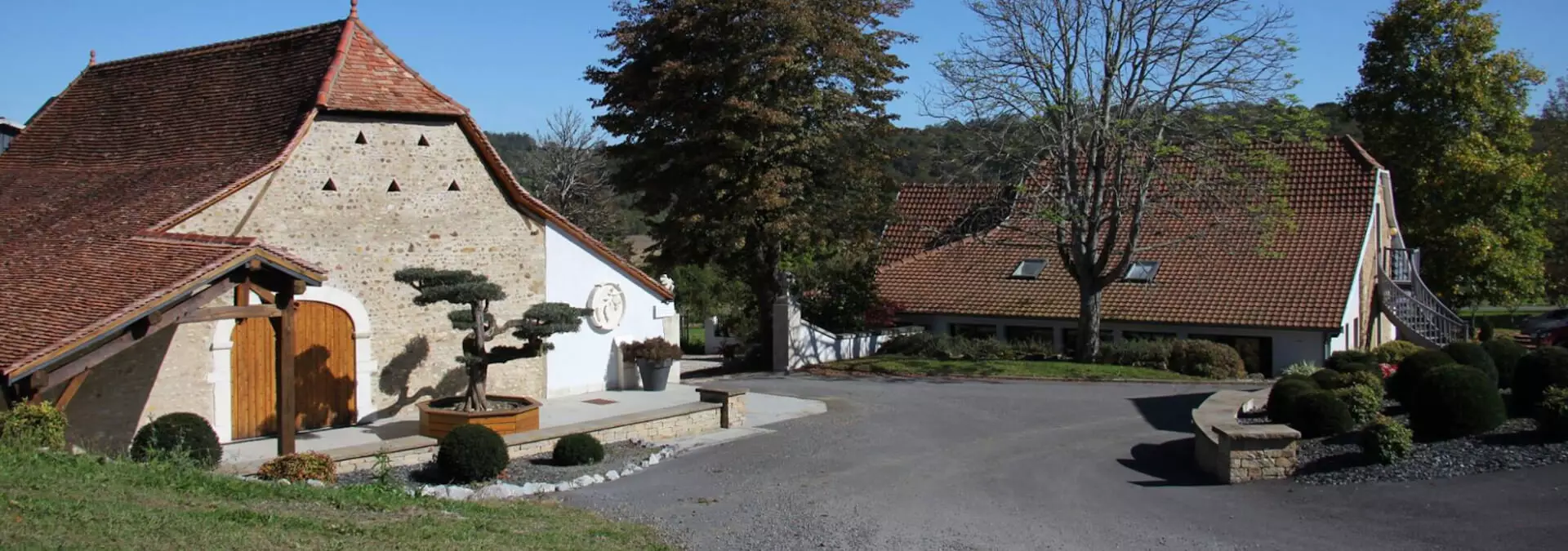
Domaine Cauhapé, a benchmark of Jurançon between refinement and aromatic intensity
Domaine Cauhapé
An emblematic Jurançon estate in Monein, near Pau, founded in 1980 by Henri Ramonteu. Clay-siliceous hillsides facing the Pyrenees, native grapes (Petit and Gros Manseng, Courbu, Camaralet, Lauzet). Dry and sweet Jurançons, late harvests. A reasoned approach.
In Monein, very close to Pau, Domaine Cauhapé has established itself as one of the most emblematic names of Jurançon. Since 1980, Henri Ramonteu, an independent winegrower, has shaped here dry and sweet wines driven by a common obsession: the right taste. Not the showy taste. The precise, luminous taste that stays in the memory. His signature rests on wines where refinement and aromatic expression are not marketing promises, but a true code of conduct.
A terroir facing the Pyrenees, shaped for freshness and depth
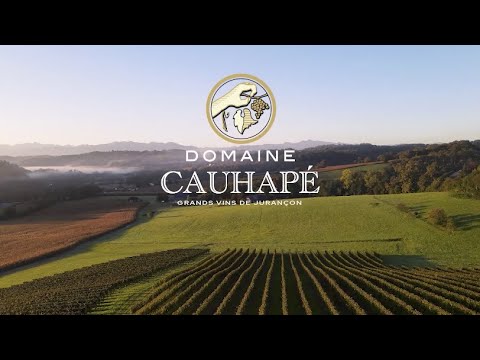
The vines cling to clay-siliceous hillsides facing the Pyrenees. This singular geography offers the estate a natural tension made of light, thermal amplitudes and relief, giving the wines this sensation of freshness that makes all the difference in the glass. The management of the vineyard follows a reasoned approach, with constant attention to the balance of the vine, the ripeness of the grapes and the identity of the place. The soils are seen as a living land, integrated into a natural ecosystem of woods, oaks and chestnut trees.
The rare grapes of the South-West, the beating heart of Cauhapé
Domaine Cauhapé speaks the language of the great native grapes of the South-West, worked with precision and respect: Petit Manseng, a true virtuoso with thick skins, long ripenings and exceptional aromatic potential; Gros Manseng, more immediate, gourmet and fruity; Courbu, fine and subtle; Camaralet and Lauzet, old grapes brought back to light to enrich the dry Jurançons with a rare complexity. The aim: to rediscover forgotten flavours and fully inscribe them in the present.
|
||
|
||
|
||
|
The late harvests, the magic of time, Jurançon style
Domaine Cauhapé is also renowned for its late harvests and its very extreme picking. The grapes can be harvested late, sometimes into December, when the natural concentration of the berries reaches its peak. The autumn sun, the cold and time then shape grapes with a dense matter and deep, precise and complex aromas. This richness never crushes the wine, always held by a remarkable thread of freshness. Long associated with sweet wines, Jurançon has also, for more than fifteen years, asserted the path of dry wines, taut and deeply gastronomic.
The cuvees of Domaine Cauhapé
From the dry Jurançons (Chant des Vignes, Geyser, Quatre Temps, La Canopée, C de Cauhapé, Escapade, Sève d'Automne) to the sweet wines (Ballet d'Octobre, Boléro, Symphonie de Novembre, Noblesse du Temps, Quatuor, Belle des Vignes) and the prestige cuvees (Quintessence du Petit Manseng, Folie de Janvier), all the richness of Jurançon, direct from the property.
The dry Jurançons: Chant des Vignes, Geyser, Quatre Temps
AOC Jurançon sec - taut, aromatic, gastronomic
The dry range: Chant des Vignes and Geyser, the entry into the Cauhapé world; Escapade and Quatre Temps; La Canopée (Decanter 2023 gold) and C de Cauhapé, the dry wines for ageing; Sève d'Automne. Taut, precise and luminous dry Jurançons.
The sweet Jurançons & late harvests
AOC Jurançon - the magic of time, into December
Ballet d'Octobre, Boléro, Symphonie de Novembre, Noblesse du Temps (Decanter 2023 gold), Quatuor and Belle des Vignes: sweet wines from late harvests, sometimes into December. A dense matter and deep aromas, always held by freshness.
The prestige cuvees: Quintessence, Folie de Janvier
AOC Jurançon - the peak of concentration
Quintessence du Petit Manseng and Folie de Janvier: the estate's prestige cuvees, from the most extreme harvests, when the natural concentration of the berries reaches its peak. The quintessence of sweet Jurançon, rich and refined.
A terroir facing the Pyrenees
Monein - clay-siliceous, freshness and depth
The vines cling to clay-siliceous hillsides facing the Pyrenees. Light, thermal amplitudes and relief give the wines this natural tension and this sensation of freshness that make all the difference in the glass. A reasoned approach, attuned to the living.
The rare grapes of the South-West
Petit & Gros Manseng, Courbu, Camaralet, Lauzet
The estate speaks the language of the great native grapes: Petit Manseng, a virtuoso with long ripenings; Gros Manseng, gourmet and fruity; Courbu, fine and subtle; Camaralet and Lauzet, old grapes brought back to enrich the dry wines with a rare complexity.
Henri Ramonteu, the obsession with the right taste
Since 1980 - a benchmark of Jurançon
Since 1980, Henri Ramonteu, an independent winegrower, has shaped in Monein dry and sweet wines driven by one obsession: the right taste, precise and luminous. A signature where refinement and aromatic expression are a code of conduct. The wines were served at the G7 in Biarritz.
The dry, sweet and late-harvest Jurançons, direct
Why choose Domaine Cauhapé?
A benchmark of Jurançon since 1980. Henri Ramonteu, an independent winegrower in Monein, near Pau.
Rare grapes of the South-West. Petit and Gros Manseng, Courbu, Camaralet and Lauzet, native varieties.
Dry, sweet & late harvests. The full palette of Jurançon, from taut dry to exceptional sweet.
Distinguished wines. Served at the G7 in Biarritz, medals at Decanter 2023.
Frequently asked questions about Domaine Cauhapé
Which Domaine Cauhapé wine to choose?
To discover dry Jurançon, Chant des Vignes or Geyser; for a dry wine to age, La Canopée or C de Cauhapé; for a sweet wine, Ballet d'Octobre or Symphonie de Novembre; for a prestige cuvee, Noblesse du Temps or Quintessence du Petit Manseng.
Where is Domaine Cauhapé located?
In Monein, very close to Pau, at the heart of the Jurançon appellation (South-West, Pyrenean foothills). The vines cling to clay-siliceous hillsides facing the Pyrenees, a guarantee of freshness and depth.
Is Domaine Cauhapé organic?
The management of the vineyard follows a reasoned approach, with constant attention to the balance of the vine, the ripeness of the grapes and the identity of the place. Henri Ramonteu defends a sensitive approach to the plant, attuned to natural rhythms, with no organic label announced to date.
Since when has Domaine Cauhapé existed?
Since 1980: Henri Ramonteu, an independent winegrower, shapes here dry and sweet Jurançons driven by an obsession with the right taste. In more than forty years, the estate has become one of the most emblematic names of Jurançon.
Which grapes does Domaine Cauhapé grow?
The great native grapes of the South-West: Petit Manseng (long ripenings, exceptional aromatic potential), Gros Manseng (gourmet and fruity), Courbu (fine and subtle), as well as Camaralet and Lauzet, old grapes brought back to light.
What are the cuvees of Domaine Cauhapé?
Dry Jurançon: Chant des Vignes, Geyser, Escapade, Quatre Temps, La Canopée, C de Cauhapé, Sève d'Automne; sweet: Ballet d'Octobre, Boléro, Symphonie de Novembre, Noblesse du Temps, Quatuor, Belle des Vignes; prestige: Quintessence du Petit Manseng and Folie de Janvier.
What is the difference between dry and sweet Jurançon?
Dry Jurançon is taut, aromatic and gastronomic; sweet Jurançon, from late harvests, offers a dense matter and deep aromas, always held by freshness. The estate excels in both styles, with the same concern for balance.
What are the late harvests at Cauhapé?
The grapes can be harvested late, sometimes into December, when the natural concentration of the berries reaches its peak. The autumn sun, the cold and time shape grapes with a dense matter and deep, precise and complex aromas.
Has Domaine Cauhapé received distinctions?
Yes. The estate's wines were served at the G7 in Biarritz and appear in great palaces. At Decanter 2023, La Canopée and Noblesse du Temps won gold (95 points), Quatre Temps and Quintessence silver (92 points).
What is the dry Jurançon of Cauhapé?
For more than fifteen years, Jurançon has asserted the path of dry wines, taut, aromatic and gastronomic, able to rival very great whites. Thanks to the power of Petit Manseng, Gros Manseng, Courbu, Camaralet and Lauzet, Cauhapé is a benchmark for it.
What to pair with Domaine Cauhapé wines?
The dry Jurançons with fish, seafood, poultry and gastronomic cuisine; the sweet wines with foie gras, blue cheeses, desserts and spicy dishes. A sweet Jurançon can also be enjoyed on its own, as an aperitif or at the end of a meal.
Can you buy Domaine Cauhapé wines directly?
Yes: the estate's dry and sweet Jurançons are available here, direct from the property, shipped with care, across France and Europe.
Direct from the estate, the Jurançons of Monein
Domaine Cauhapé: an emblematic Jurançon estate in Monein, very close to Pau (South-West, Pyrenean foothills), founded in 1980 by Henri Ramonteu, an independent winegrower. Clay-siliceous hillsides facing the Pyrenees, a guarantee of freshness and depth. Native grapes: Petit Manseng, Gros Manseng, Courbu, Camaralet and Lauzet. A reasoned approach, attuned to the living. Dry and sweet Jurançons, late harvests (sometimes picked into December). Wines served at the G7 in Biarritz; Decanter 2023 medals (gold for La Canopée and Noblesse du Temps, silver for Quatre Temps and Quintessence).
Cuvees: dry (Chant des Vignes, Geyser, Escapade, Quatre Temps, La Canopée, C de Cauhapé, Sève d'Automne), sweet (Ballet d'Octobre, Boléro, Symphonie de Novembre, Noblesse du Temps, Quatuor, Belle des Vignes), prestige (Quintessence du Petit Manseng, Folie de Janvier)
Discover our wines in video