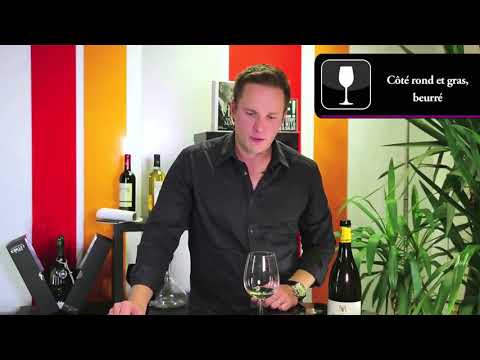
Cuvée Limoux Blanc Vieilles Vignes
Château de Martinolles - Domaines Paul Mas Languedoc Roussillon
€13.90

Cuvée Limoux Blanc Vieilles Vignes
Château de Martinolles - Domaines Paul Mas Languedoc Roussillon
Domaine Martinolles Pinot Noir
Château de Martinolles - Domaines Paul Mas Languedoc Roussillon
Domaine Martinolles Chardonnay
Château de Martinolles - Domaines Paul Mas Languedoc Roussillon
Chateau Martinolles Grande Réserve
Château de Martinolles - Domaines Paul Mas Languedoc Roussillon
Paul Mas "Prima Perla" Crémant Brut
Château de Martinolles - Domaines Paul Mas Languedoc Roussillon
Château Martinolles Limoux Rouge "Le Garriguet"
Château de Martinolles - Domaines Paul Mas Languedoc Roussillon


Château Martinolles
An estate of Domaines Paul Mas in Saint-Hilaire (Aude), near the abbey where the monks discovered sparkling wine in 1531. Created in 1898, taken over by Jean-Claude Mas in 2011. Nearly 100 hectares of which 30+ of nature, vines at 190-300 m. Sustainable farming Terra Vitis and HVE3. Crémants of Limoux, whites and reds.
You have to leave the main road, follow a discreet path lined with garrigue, vines and olive trees, run along the Martinollet stream, and time seems to slow down. It is here that Château Martinolles reveals itself, an estate deeply rooted in the winemaking history of the Languedoc, where sparkling wine was born long before becoming famous elsewhere.
Château Martinolles is located in Saint-Hilaire, right next to the mythical abbey of the same name. It was within these walls that in 1531 the monks discovered the principle of making sparkling wines, well before Dom Pérignon. This land also bears the imprint of the Cathars, whose turbulent history shaped the landscapes as much as the mentalities. Created in 1898 by Antoine Vergnes, the estate became in 2011 one of the properties of Jean-Claude Mas, who immediately saw in it a heritage jewel to reveal without distorting it.
|
||
|
||
|
||
|
The estate covers nearly 100 hectares, of which a large part is deliberately left to nature. Pine woods, oaks and olive groves (more than 30 hectares) coexist with the vines, in a former hunting reserve that has kept a rare biodiversity. This exceptional natural setting contributes directly to the balance of the soils and the freshness of the wines.
The vines are planted between 190 and 300 metres of altitude, mostly on north-facing slopes. The clay-limestone to sandy-clay-limestone soils, combined with a singular climate, create a microclimate perfectly suited to the making of great sparkling wines. While the Mediterranean influence is clearly present, it is tempered by oceanic and Pyrenean inputs. This natural freshness allows a slow ripening of the grapes, essential to the making of balanced, fine and elegant wines.
Chardonnay, Mauzac and Pinot Noir find here a remarkable ground for expression. The grapes gain in aromatic finesse, tension and complexity, giving rise to wines true to their origin, without artifice. The cuvees of Château Martinolles reflect this contrasted terroir: precision, freshness and real personality, both for the still wines and for the sparklings. To discover direct from the estate.
Château Martinolles Grande Réserve
Crémant - AOC Crémant de Limoux
The estate's prestige sparkling, at the heart of the historic cradle of Languedoc bubbles: a fine, elegant bubble, on freshness, tension and fine complexity. The accomplished expression of the Saint-Hilaire terroir.
Paul Mas "Prima Perla" Crémant Brut
Crémant - AOC Crémant de Limoux
A festive, accessible brut crémant, fine and thirst-quenching: the generosity of Limoux bubbles in a straight, convivial style, ideal as an aperitif or to celebrate great moments.
Château Martinolles Limoux Blanc Vieilles Vignes
White - AOP Limoux (Chardonnay, Mauzac)
A characterful still white, born of old Chardonnay and Mauzac vines: precise, taut and complex, on aromatic finesse and the natural freshness of the Saint-Hilaire microclimate.
Château Martinolles Limoux Rouge "Le Garriguet"
Red - AOP Limoux
A straight, fresh Limoux red, marked by altitude and the north orientation of the slopes: fruit, tension and real personality, true to a contrasted, luminous terroir.
Domaine Martinolles Pinot Noir
Red - IGP Pays d'Oc (Pinot Noir)
A Southern Pinot Noir all in finesse, on red fruits and a supple frame: the freshness of the Saint-Hilaire terroir in a generous, accessible reading of the grape.
Domaine Martinolles Chardonnay
White - IGP Pays d'Oc (Chardonnay)
A fresh, aromatic Chardonnay, on white flowers and citrus: balanced, supple and bright, a fine gateway to the estate's precise style.
Cradle of the Limoux bubbles, direct from the estate
The vineyard is conducted in sustainable farming, certified Terra Vitis and HVE level 3, with constant attention to sustainability and respect for the environment. Here, modernity accompanies history without ever erasing it. The wines of Château Martinolles charm with their straightness, their balance and their ability to tell of a unique place, the cradle of Languedoc bubbles.
At the sources of Languedoc bubbles
In Saint-Hilaire, where the monks discovered sparkling wine as early as 1531, Château Martinolles (created in 1898, taken over by Jean-Claude Mas in 2011) reveals a high-altitude terroir, fresh and mineral. A setting of 100 hectares, Terra Vitis and HVE3, for crémants and still wines that are straight, fine and elegant.
The historic cradle of the bubbles. Saint-Hilaire, where sparkling wine was born as early as 1531, well before Dom Pérignon.
A terroir of altitude and freshness. 190-300 m, north-facing slopes, oceanic and Pyrenean influences: finesse and tension.
A responsible viticulture. Sustainable farming certified Terra Vitis and HVE level 3, a preserved natural setting.
Straight, fine cuvees. Grande Réserve and Prima Perla crémants, Limoux Blanc Vieilles Vignes, Le Garriguet, Pinot Noir.
How does the microclimate of Saint-Hilaire influence the sparkling wines of Limoux?
The microclimate of Saint-Hilaire, marked by altitude, oceanic and Pyrenean influences, as well as by the north orientation of the slopes, favours a slow, regular ripening of the grapes. Combined with the historic heritage of Château Martinolles, it gives the Limoux wines, and in particular the sparkling cuvees, great finesse, natural freshness and lasting elegance, the signatures of this unique terroir.
Where is Château Martinolles located?
In Saint-Hilaire, in the Aude, right next to the mythical abbey of the same name, at the heart of the Limoux vineyard. It is reached by a discreet path lined with garrigue, vines and olive trees, along the Martinollet stream. An estate deeply rooted in the winemaking history of the Languedoc.
Why is Saint-Hilaire the cradle of sparkling wines?
It was within the walls of the abbey of Saint-Hilaire that in 1531 the monks discovered the principle of making sparkling wines, well before Dom Pérignon. Château Martinolles, right nearby, is thus anchored in the historic sources of Languedoc bubbles.
What is the history of Château Martinolles?
Created in 1898 by Antoine Vergnes, the estate became in 2011 one of the properties of Jean-Claude Mas, who immediately saw in it a heritage jewel to reveal without distorting it. The land also bears the imprint of the Cathars, whose history shaped the landscapes as much as the mentalities.
Is Château Martinolles organic?
The vineyard is conducted in sustainable farming, certified Terra Vitis and HVE level 3, with constant attention to sustainability and respect for the environment. Here, modernity accompanies history without ever erasing it.
What is the terroir of Château Martinolles?
The vines are planted between 190 and 300 metres of altitude, mostly on north-facing slopes. The clay-limestone to sandy-clay-limestone soils, combined with a singular climate, create a microclimate perfectly suited to great sparkling wines. The Mediterranean influence is tempered here by oceanic and Pyrenean inputs.
Which grape varieties make up the vineyard?
Chardonnay, Mauzac and Pinot Noir find here a remarkable ground for expression. The grapes gain in aromatic finesse, tension and complexity, giving rise to wines true to their origin, without artifice, both for the still wines and for the sparklings.
What are the cuvees of Château Martinolles?
Sparklings in AOC Crémant de Limoux (Château Martinolles Grande Réserve, Paul Mas Prima Perla Crémant Brut), still wines in AOP Limoux (Blanc Vieilles Vignes in Chardonnay/Mauzac, Rouge Le Garriguet) and in IGP Pays d'Oc (Domaine Martinolles Pinot Noir and Chardonnay).
What sparkling wines does the estate produce?
Crémants in AOC Crémant de Limoux, at the heart of the historic cradle of bubbles: the prestige cuvee Château Martinolles Grande Réserve and the Paul Mas Prima Perla Crémant Brut, festive and accessible. Fine, elegant bubbles, on freshness and tension.
What is the Limoux Blanc Vieilles Vignes?
A characterful still wine in AOP Limoux, born of old Chardonnay and Mauzac vines: precise, taut and complex, it fully expresses the aromatic finesse and natural freshness of the Saint-Hilaire microclimate.
Does the estate preserve nature?
Yes: the estate covers nearly 100 hectares, of which a large part is deliberately left to nature. Pine woods, oaks and olive groves (more than 30 hectares) coexist with the vines, in a former hunting reserve that has kept a rare biodiversity, contributing to the balance of the soils and the freshness of the wines.
Can you buy the Château Martinolles wines directly?
Yes: the cuvees are available here, direct from the estate, carefully shipped across France and Europe.
Direct from the estate, cradle of the Limoux bubbles
Château Martinolles - an estate of Domaines Paul Mas in Saint-Hilaire (Aude), at the historic sources of the wines of Limoux (bubbles discovered in 1531): created in 1898, taken over by Jean-Claude Mas in 2011, nearly 100 hectares, sustainable farming Terra Vitis and HVE level 3.
Crémants of Limoux (Grande Réserve, Prima Perla Crémant Brut), AOP Limoux Blanc Vieilles Vignes and Rouge Le Garriguet, IGP Pays d'Oc Pinot Noir and Chardonnay