Delivery from €16,90 per winemaker in Europe (excluding the United Kingdom)

Portraits of winemakers
Château Malherbe: a little corner of Provençal paradise
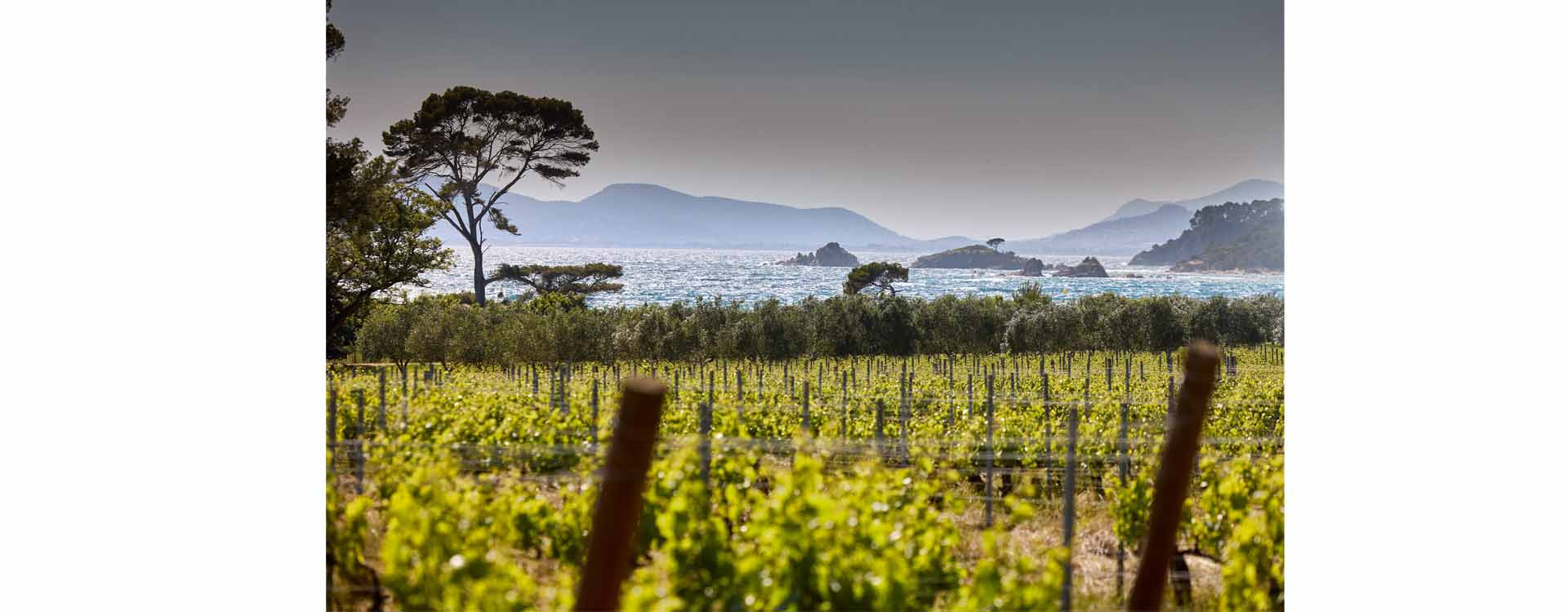
Take the road to the End of the World and stop at the first address, Château Malherbe. Located on the Mediterranean coast, not far from Fort Brégançon, Château Malherbe has been managed by Sébastien Ferrari since 2007.
What is the story behind the estate?
A legacy of transformation
In the 1960s, Sébastien’s parents, Mireille and Serge, transformed the agricultural land of Château Malherbe into true vineyard grounds.
The first cuvées were released in 1964,
notes Sébastien. Today, Château Malherbe operates as a small-scale company under Sébastien’s leadership, with a team that includes Arnaud Ferrier, technical director of the estate; Thomas Henk, sales manager; and Patricia Petit-Cruciani, administrative sales manager.
What makes the two terroirs so different?
Two distinct terroirs
A true historical monument, Château Malherbe stands out not only for its exceptional setting but also for its two distinct wine ranges: “Malherbe” and “Pointe du Diable.”
These two names correspond to two well-defined terroirs,
explains Arnaud Ferrier.
On one side, we have the massif with soils composed of sandy alluvium, schist, and quartz fragments: Malherbe. It produces complex and intense wines. On the other side, we have Pointe du Diable, a seaside terroir with vines strongly exposed to the wind. It yields very different wines, characterized by iodized and mineral flavors.
How would you describe the wines?
The style of the wines
Covering 25 hectares in the heart of Bormes-Les-Mimosas, Château Malherbe’s vineyard produces 65,000 bottles annually, including red and rosé wines that Arnaud Tessier describes as “bitter-mineral wines.”
These wines are long on the palate with excellent aging potential. Their tannins are well-integrated and their mouthfeel is not very astringent. Generally, our wines embody the three criteria that matter to us: pleasure, immediacy, and freshness,
adds Thomas Henk.
What can visitors experience at the estate?
Bucolic vineyard walks
Leveraging the oenotourism potential of Château Malherbe, Sébastien and his team use this idyllic setting to enhance the visitor experience. The highlight of the estate? The “Walk at Château Malherbe,” a 45-minute tour through the vineyards offering stunning views of the island of Porquerolles and Fort Brégançon.
Visitors come to the estate and receive a parchment. Like a treasure map, this parchment guides them through the tour. With it, they will find the first marker and then navigate independently. The parchment also contains information about our terroirs, adding an educational dimension to the experience,
describes Thomas.
Frequently asked questions about Château Malherbe
Where is Château Malherbe located?
The estate sits in Bormes-les-Mimosas, on the Provence coast, a short distance from the Mediterranean and Fort Brégançon. Its 25 hectares of vines look out toward the island of Porquerolles.
Who runs Château Malherbe?
Sébastien Ferrari has led the estate since 2007. His parents, Mireille and Serge, turned this farmland into a vineyard back in the 1960s, releasing a first cuvée in 1964. A small, close-knit team supports him today.
What do the Malherbe and Pointe du Diable ranges mean?
The two names point to two contrasting terroirs. Malherbe, on a massif of sandy, schist and quartz-laced soils, yields structured, deep wines. Pointe du Diable, wind-swept and facing the sea, gives cuvées with a saline, mineral edge.
What style of wine does Château Malherbe make?
The estate makes around 65,000 bottles a year, mostly reds and rosés. Expect length on the palate, supple tannins and genuine aging potential, built around three ideas the team values: pleasure, freshness and the present moment.
Can you visit Château Malherbe?
Yes. The estate offers a roughly 45-minute walk through the vines, guided by a parchment styled like a treasure hunt. The route opens onto views of Porquerolles and Fort Brégançon while explaining the estate's terroirs.