Delivery from €16,90 per winemaker in Europe (excluding the United Kingdom)

Portraits of winemakers
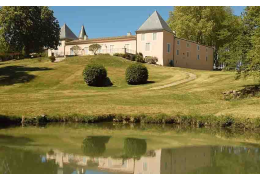
Château Lerville de Plaisance: a history of passion
Stéphane grew up at Château Lerville de Plaisance, a family-owned vineyard for seven generations. In 1992, his parents entrusted him with the management of the estate.
How did Séverine come to wine?
From wholesaler to winemaker
Séverine, on the other hand, was not born into a winemaking family but developed a passion for wine from a young age. Like Stéphane, she decided to turn her passion into a profession, starting with studies in business and oenology. She then embarked on a career as a wholesaler, specializing in winery equipment sales.
How do the two of you work together?
Meeting of Minds and Hearts
One day, their paths crossed. In 2000, they married, and six years later, Séverine decided to join her husband in the Château La Fleur Plaisance adventure. With the help of Stéphane's parents, Séverine and her husband work together seamlessly.
Stéphane and I are versatile, which allows us to handle everything together without dividing tasks individually. It’s true that I focus more on the commercial side, but when there's a need to help with winemaking, I'm more than happy to pitch in!
explains Séverine.
What makes the terroir special?
Not Far from Grand Cru Saint-Émilion!
Nestled in the heart of Bordeaux, just north of the village of Saint-Émilion, Château La Fleur Plaisance spans 12 hectares of 55-year-old vines. This prestigious location imparts to the Château La Fleur Plaisance cuvées, primarily made from Merlot (the flagship grape of the Montagne Saint-Émilion appellation), a quality close to that of a Grand Cru Saint-Émilion, but at an attractive price-quality ratio.
What is your vision for the estate?
A Drive to Expand Internationally
These are the very values Séverine and Stéphane aim to share with their clients. Their strategy is twofold: first, to promote the Montagne Saint-Émilion appellation throughout France, and second, to increase the international export of the estate’s vintages, which are already experiencing strong sales in China and New York.
But beyond the commercial aspect, the couple also strives to convey their deep passion for wine, the very passion that brought them together.
We believe it's important to talk about the men and women of the vines, of which we are a part, to raise awareness about this wonderful work,
Séverine confides.
The winemaking couple also knows how to enjoy wine outside of work.
We attend tastings every Friday. And whenever our schedule allows, we travel through various regions of France in search of new wines or new estates.
Frequently asked questions about Château Lerville de Plaisance
Where is Château Lerville de Plaisance located?
The estate lies in the Bordeaux vineyards, just north of the town of Saint-Émilion. That setting places it among the terroirs that built the reputation of the right bank.
Which appellation do these wines belong to?
The wines come under the Montagne Saint-Émilion appellation, one of the satellites sitting north of Saint-Émilion itself. This Bordeaux AOC is known for merlot-led reds built for keeping.
Which grape leads the blends?
Merlot forms the backbone of the wines, as is common across this part of the right bank. It brings roundness and red fruit, with the structure expected from a Bordeaux red.
How many generations has the family run the property?
Seven generations have followed one another at the head of the domain. Stéphane took over its management in 1992, later joined by his wife Séverine.
Why are these wines compared to a Saint-Émilion Grand Cru?
The vineyard covers twelve hectares planted with vines nearing fifty years of age, a resource that feeds the depth of the cuvées. That maturity brings the style close to the neighbouring grands crus, at a more approachable quality-to-price ratio.