Delivery from €16,90 per winemaker in Europe (excluding the United Kingdom)

Portraits of winemakers
Château de Rochefort
The story of Château de Rochefort dates back to the 18th century, during the reign of Louis XV. It was founded by Charles de Goyon-Rochefort, brother of the governor of Nantes, who discovered land south of Nantes on rocky hillsides perfect for viticulture. After planting a vineyard with Melon de Bourgogne, an emblematic grape of the region (despite its name suggesting otherwise), and setting up presses and cellars, he built the Château de Rochefort, a magnificent Louis XV style residence. At that time, and until the French Revolution, Château de Rochefort was indeed the only example of an exclusively wine-producing estate in the region.
Available directly from the estate on Avenue des Vins.
How did the estate come into the de Rosnay family?
A family adventure
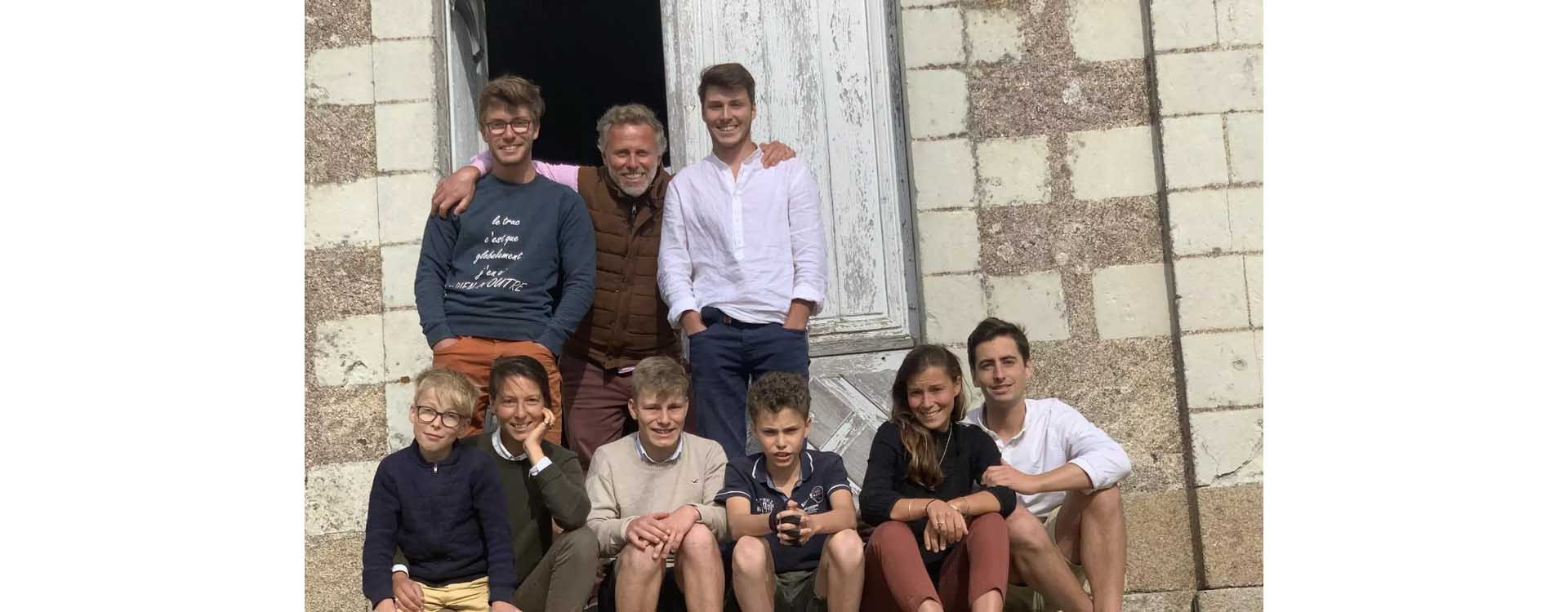
The cultivation of the vine has never ceased at Château de Rochefort for nearly 300 years! Built in the village of La Haye Fouassière and minimally altered over time, the château is primarily a historical estate and part of the daily life of locals due to numerous events held there. In 2018, following the unexpected death of their uncle, Guillaume and Marine de Rosnay, along with their six children, embarked on an adventure at Château de Rochefort.
For the de Rosnay family, new to the world of wine and viticulture at the time, the decision to take over the estate was the result of much reflection, but unanimously so. It seemed unthinkable to abandon a project started 250 years earlier by their ancestors. What could be a greater challenge than continuing this family legacy, both viticultural and architectural? Once committed to revitalizing Château de Rochefort, each family member rolled up their sleeves to contribute. Responsibilities were divided according to each person's skills (label design, wine marketing, website creation, social media promotion, order fulfillment, etc.), and the adventure began!
What has this shared adventure meant for the family?
Memories and local solidarity
Although the future seemed uncertain and full of challenges at first, today, the estate is filled with family memories, reunions, hard work, and laughter. This would likely not have been possible without the kindness and solidarity of the people of La Haye Fouassière. Even though few knew the family well, the locals naturally offered their help to restore the estate. This invaluable assistance is something Château de Rochefort will never forget. Living this adventure as a family and sharing special moments, such as summer evenings with the whole tribe gathering after a hard day's work for an aperitif with oysters, goat cheese, and, of course, the estate's white wine, is one of the most cherished aspects of the domain.
How does the estate work its vines today?
Expressing terroir with precision
Since taking over the estate in 2018, numerous changes have introduced a fresh approach to vineyard management. To ensure each plot, known as a "Climat," expresses its unique personality, Château de Rochefort has isolated and delineated each one. This allows each cuvée to be unique with its distinct taste characteristics, reflecting its specific terroir.
Moreover, at Château de Rochefort, every effort is made to minimize phytosanitary treatments. To produce the most natural wines possible, soil management is systematically prioritized over treatments. Various natural methods are employed (plowing, disc harrowing, sprayers, mowers, and inter-row work, etc.) to prevent vine diseases. Additionally, 3 hectares of land within the estate's park (completely enclosed by walls) are being converted to organic farming. The "Clos de la Marine" cuvée, made from these parcels, is a meticulously crafted wine aged in oak barrels, and, like its owners, it deserves to be waited for to be appreciated fully!
Why buy directly from the winemaker? The wines of Château de Rochefort are shipped straight from the estate: estate price with no middleman, full vintage traceability, and your support for an independent winegrowing family.
Discover the wines of Château de Rochefort directly from the estate, at the estate price, in a short supply chain on Avenue des Vins.
Frequently asked questions about Château de Rochefort
Where is Château de Rochefort located?
The estate sits in La Haye Fouassière, south of Nantes, on rocky hillsides suited to the vine. This Muscadet vineyard has grown grapes without a break for almost three centuries.
Which grape does the estate grow?
It grows Melon de Bourgogne. Despite its name, this white grape belongs to the Nantes vineyards rather than Burgundy, and it makes dry white wines marked by freshness and a mineral edge.
Is the estate farmed organically?
A three-hectare walled plot in the park is converting to organic. Elsewhere, soil work and natural methods keep treatments to a strict minimum, for wines closer to their terroir.
What is the Clos de la Marine cuvée?
It is the estate's flagship white, made from the converting plots and aged in oak barrels. This wine rewards a few years of patience in the bottle before it shows its full character.
What does "Climat" mean at the estate?
It is the name given to each isolated plot. Vinified on its own, every plot yields a cuvée that reflects the precise character of its terroir.