Delivery from €16,90 per winemaker in Europe (excluding the United Kingdom)

Portraits of winemakers
Château Chatain: excellence in a bottle!
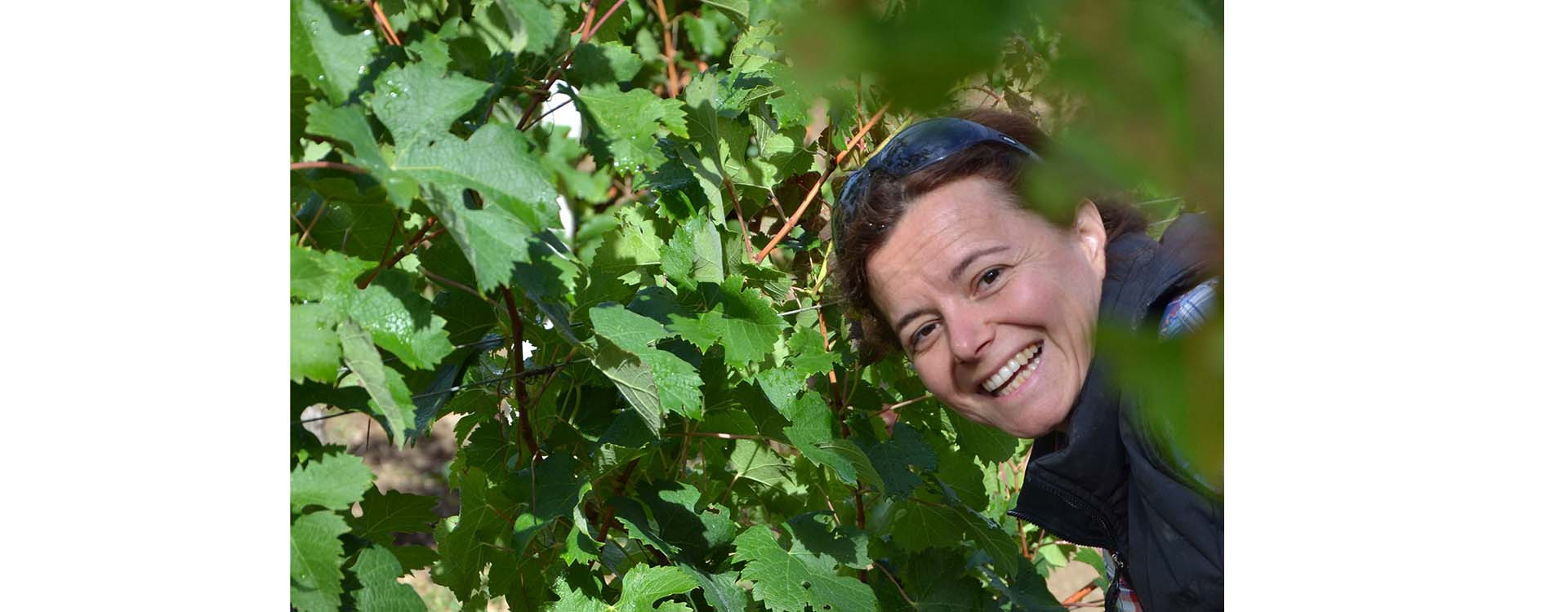
Representing the fourth generation to care for the estate, Christine de la Guéronnière has committed to producing excellent wines while respecting the environment.
Available directly from the estate on Avenue des Vins.
What is the story behind the estate?
Tradition Driven by Dynamism
The story begins in 1928 when Count de la Guéronnière, Christine’s great-grandfather, acquired Château Chatain for his eldest daughter. The vineyard was planted in the early 1960s by the eldest brother of Christine’s father to invigorate the family estate. At that time, Christine's father, a master craftsman in cabinetry, traveled the world from Australia to Guyana for nearly 10 years. He then returned to France, where his siblings offered him the management of the estate. He established his cabinetry workshop there and cared for the vineyard until he was 77 years old. In late 2015, Christine took over the property following her father, a decision unanimously agreed upon by the 25 cousins associated with the estate. Together, they revived direct sales to private customers through their extensive network, somewhat like Tupperware parties. For this industrial purchasing specialist, the challenge was significant. The priority was to streamline the estate’s management control and then take care of the vineyard, while maintaining her father’s methods, who was gradually forgetting his winemaking processes.
I’ve been in charge of the estate for 4 years now, and I’m glad I took the time to train myself later in life. My natural curiosity and questioning have greatly helped me tackle this challenge, from the vineyard to the cellars,
says Christine, who is preparing for an oenology course in the fall of 2019.
What makes the estate's approach distinctive?
Blend, Old Vines and Timeless Equipment
An interesting feature of Château Chatain is that the grape composition in the vineyard is reflected in the bottle blend, specifically 15% Cabernet Franc, 15% Cabernet Sauvignon, and 70% Merlot. This blend is somewhat of a hallmark of Château Chatain, aiming to preserve a historical expertise. Additionally, the vineyard is 50 years old, which is rare today.
While many winemakers pull out Cabernet Sauvignon, which can give a ‘green’ edge to the wine, to produce wines that can be quickly enjoyed, we keep this variety to create wines meant for aging,
explains Christine. The tradition also continues with timeless equipment, including a press from 1900 to produce high-quality, rich press wine, and a manual bottling machine from the 1950s with original cast-iron bases.
This gives us a sense of continuity, even though each generation contributes to the legacy. Our duty is to pass on this historical expertise as we engage in transgenerational work,
Christine explains. Respecting traditions doesn’t prevent her from thinking outside the box. In addition to creating the estate’s online store, Christine, who is very environmentally conscious and close to the biodynamic philosophy, is considering a circular economy project for her packaging. Stay tuned! In the meantime, the vineyard is managed under sustainable viticulture, with native yeast fermentations, mechanical weeding under the vines, and natural vine treatments, without pesticides.
What do the wines taste like?
Authentic Wines
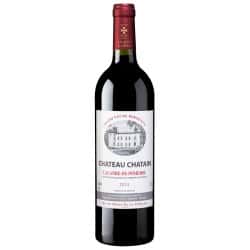
The wines of Château Chatain, produced in the Lalande de Pomerol AOC, are authentic, age-worthy wines, the result of meticulous work that begins in the vineyard. For nearly a century, the de la Guéronnière family has strived to produce exceptional wines each year. This is true of Château Chatain 2012, a vintage vinified by Christine’s father at the age of 75. This “grandpa winemaker” wine is at its peak with superb, well-integrated tannins and ripe fruit on the palate. This complex cuvée remains smooth and indulgent, making it a classic reference for the estate. With its aromas of cherry, raspberry, blackcurrant, and slightly woody notes, this wine pairs perfectly with grilled beef steak, small game, or stuffed mushrooms Bordelaise style. Château Chatain 2014, the last vintage vinified by the “grandpa winemaker,” has a beautiful ruby color with a certain brilliance. Its intense red fruit notes and smoothness make this wine the ideal companion for grilled dishes or desserts with red fruits or chocolate. Finally, “Château Chatain 2015, an exceptional vintage due to abundant sunshine, will reach its perfect balance by the end of this year,” Christine explains. The Merlot brings roundness and suppleness, while the Cabernet Franc offers a characteristic spice bouquet. This elegant cuvée can stand alone or accompany a veal stew with chorizo or an almond and fig tart.
In short, the wines of Château Chatain are authentic, complex, smooth, and refined, produced with respect for tradition and driven by incredible dynamism. If you find yourself in Néac, you now know where to stop!
Why buy directly from the winemaker? The wines of Château Chatain are shipped straight from the estate: estate price with no middleman, full vintage traceability, and your support for an independent winegrowing family.
Discover the wines of Château Chatain directly from the estate, at the estate price, in a short supply chain on Avenue des Vins.
Frequently asked questions about Château Chatain
Who runs Château Chatain today?
Christine de la Guéronnière represents the fourth family generation and took over the property in late 2015, succeeding her father. A former industrial-purchasing specialist, she trained in viticulture and then oenology to lead the domaine.
Where is the estate and which appellation covers its wines?
The vineyard sits in the village of Néac, right beside Pomerol, in the Libournais part of Bordeaux. Its bottlings carry the Lalande de Pomerol AOC.
What grape blend does Château Chatain use?
The mix planted in the rows is mirrored in the bottle: 70% merlot, 15% cabernet franc and 15% cabernet sauvignon. This proportion has become a hallmark of the property and protects a long-held craft.
Why are Château Chatain wines suited to ageing?
Rather than uprooting cabernet sauvignon as many growers do, the domaine keeps it for backbone and longevity. Roughly fifty-year-old vines and a demanding press add to that cellaring potential.
How is the vineyard farmed?
Growing is sustainable, using native-yeast fermentations, mechanical weeding under the rows and natural, pesticide-free treatments. Christine de la Guéronnière is also exploring a circular-economy plan for her packaging.