Delivery from €16,90 per winemaker in Europe (excluding the United Kingdom)

Portraits of winemakers
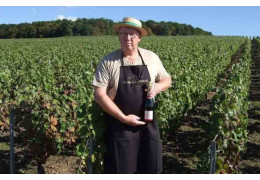
Champagne J.de Telmont, Bertrand Lhopital: ‘champagne is a sensory and taste experience’.
"When entering the professional world, some choices are imposed upon us," observes Bertrand Lhopital. For this winemaker, the "choice" was to return to the family estate in 1998 after studying agricultural engineering. He joined his sister Pascale and his father Serge, who is now retired but still accompanies him daily in the vineyards. Together, Pascale and Bertrand represent the 4th generation of winemakers in their family.
How does the family spirit shape the champagne here?
A family estate across four generations
Deeply rooted in a familial spirit, Champagne J. De Telmont defies the concept of "unique champagne":
As my grandfather used to say, universal champagne does not exist. There is a champagne for every event, a champagne for every type of person, and so on. That’s why we are committed to meeting the taste preferences of all our customers,
the winemaker explains. Designed with this philosophy, the Champagne J. De Telmont range presents a broad spectrum of champagnes, from classic brut cuvées to more assertive vintage champagnes, including rosés and 100% Chardonnay.
What defines the house style of your champagnes?
House style
Some of Champagne J. De Telmont’s wines result from long aging in the cellar. For instance, the L.D Extra Brut 2005 cuvée was aged for six years before bottling. Beyond this aging effect, which is one of the house’s characteristics, Bertrand aims to impart a "house style" to his champagnes.
We strive to produce three different champagnes from the same house, like a trio of siblings each with their own character while still showing a family resemblance. This house style is something we maintain year after year. Our long-time customers confirm this,
notes Bertrand.
Why do you place so much importance on welcoming visitors?
Welcome at the estate
Bertrand places great importance on his customers' experiences because he gives special attention to the welcome at the estate itself.
My grandfather established this practice from the beginning. I am entirely in agreement with this concept: I find it very important to prioritize interaction with the consumer. This is truly the DNA of our house. Besides, the word 'hôpital' (hospital) comes from 'hôte' (host). With a family name like ours, it's clear we were destined for wine tourism!
Bertrand highlights with amusement.
Beyond cellar tours and tastings, Bertrand aims to offer a "full experience" to his visitors.
We have created a whole range of varied workshops, from the 'harvest' workshop with an introduction to picking, to the 'oenology' workshop where clients can create their own cuvée, which they will collect two years later. The goal of these workshops is to immerse them in the world of champagne…our world, in essence!
What does the future hold for the vineyard?
Towards biodynamic cultivation
While Bertrand acknowledges having "a multitude of projects" for the future, one particularly dear to him is the transition of one-third of his 30 hectares of vineyards to biodynamic cultivation.
It is high time for Champagne to focus on environmental preservation and to change its way of viewing and producing things,
says the winemaker. However, Bertrand does not see the point in chasing after certifications:
Certification is not an end in itself. We are primarily engaged in a human approach that involves treating our land as something we will pass on to our children. Even though I have no doubt that the Champagne J. De Telmont vineyard will eventually transition to organic cultivation,
he adds.
Frequently asked questions about Champagne J. de Telmont
Where is the Champagne J. de Telmont estate located?
The family house sits in Damery, in the heart of the Champagne vineyards. It farms around thirty hectares and has been passed down through four generations of winemakers.
What is the J. de Telmont "house style"?
It is the taste signature Bertrand Lhopital works to find in every cuvée, year after year. The estate can craft several champagnes with their own character that regular customers still recognise as related.
What kinds of champagne does J. de Telmont make?
The range brings together classic bruts, more assertive vintage bottlings, rosés and 100% Chardonnay cuvées. Some wines go through a long ageing period before being bottled.
Is the J. de Telmont estate moving to biodynamics?
Bertrand Lhopital is converting part of his vines to biodynamics and sees organic growing as a natural next step. His priority is passing on healthy soil rather than chasing certifications.
Can you visit the Champagne J. de Telmont estate?
Welcoming guests at the estate is part of the house identity, with tours, tastings and workshops built around champagne. Visitors can try their hand at the harvest or blend their own cuvée.