Delivery from €16,90 per winemaker in Europe (excluding the United Kingdom)

Unbeatable !
All you need to know about vin de paille
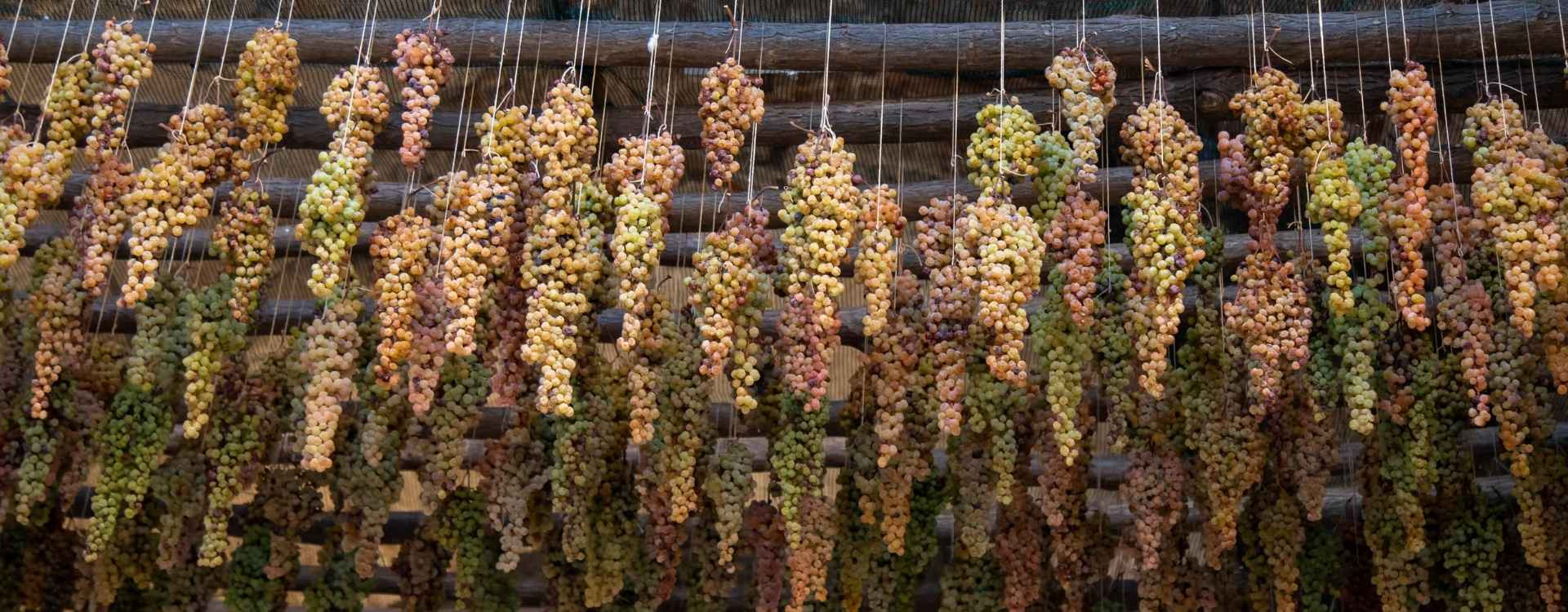
If this is your first time hearing about straw wine, don’t worry, it’s not some strange beverage made from fermented straw!
In fact, straw wine is a sweet wine, rich in aromas from various grape varieties such as Savagnin, Poulsard, or Chardonnay. So why is it called straw wine? In which vineyards is it made, and how is it produced? Follow our guide to learn everything you need to know about straw wine, and discover all our tips for pairing it with food.
What is Straw Wine?
Straw wine is a sweet wine (more than 45 g of residual sugar per liter) that can be either white or red. Although in France, straw wine is primarily produced in the Jura vineyards (under the AOC Arbois, AOC Côtes du Jura, and AOC l’Étoile), there are also straw wines produced in other regions (notably in the Rhône Valley under AOC Hermitage) and countries. The residual sugar in straw wine comes from the drying of the grapes on wooden racks or beds of straw, hence the name! Want to know more about drying and the production of straw wine? We’ll cover that in the rest of this article…
How is Straw Wine Made?
Drying is the process of dehydrating grape clusters to concentrate their sugar. While for some wines, drying can occur directly on the vines (as in AOC Jurançon, for example), for straw wines from Jura, the grape clusters are dried for a minimum of six weeks on beds of straw (or racks) in a well-ventilated environment. The grapes are selected from the best clusters of the harvest and eventually shrivel through dehydration, similar to Corinthian raisins. The grapes are then pressed, fermented, and aged for a long time in wooden barrels before being bottled (traditionally in half-bottles of 37.5 cl). The straw wine is now ready for tasting!
What Does Straw Wine Taste Like?
Appearance: Rich and intense color ranging from golden yellow to clear amber.
Nose: It offers aromas of fig, candied fruits (candied orange), and dried fruits (almond, walnut, hazelnut, raisin). The secondary nose reveals delicate notes of white flowers and honey. After a few years of aging, straw wine develops scents of mocha, cocoa, and roasted notes.
Palate: On tasting, it is very rich and creamy. Straw wine is characterized by its length and aromatic intensity, which balance the sweetness of this dessert wine. It is a wine that continues to evolve and improve with age, sometimes for decades.
Serving Temperature: Very chilled, 7° to 8°C
Aging Potential: 15 to over 50 years (depending on the vintage and estate).
The Best Food Pairings with Straw Wine
Due to its unique style combining sweetness, richness, and concentration, it is recommended to pair a bottle of straw wine with a dessert or a flavorful dish for a sweet-savory match. Here are some dish ideas to accompany a bottle from a Jura AOC estate, white straw wine:
- Spiced roasted pineapple
- Duck foie gras
- Pigeon with prunes and raisins
- Roquefort or Fourme d’Ambert cheese
- Cake with candied fruits and orange peel
- 80% dark chocolate
Does this guide make you want to try straw wine? At Avenue des Vins, our bottles come directly from the château and estate of your choice. Discover our range of straw wine and other French appellations and vineyards. Treat yourself to our red, white, rosé wines, and champagne with the best value for money delivered to your home.
Our Jura Selection : Our Jura wines, chosen straight from the growers and delivered at estate-direct prices. See the selection →
FAQ - Straw wine
Why is it called straw wine?
The name comes from the drying process: the grape clusters are laid to dry for at least six weeks on beds of straw or wooden racks. This drying concentrates the sugar, and the grapes shrivel before being pressed.
Which grape varieties go into Jura straw wine?
Jura straw wine is made from varieties such as Savagnin, Poulsard and Chardonnay. It is a sweet wine with more than 45 g of residual sugar per litre, under the AOC Arbois, AOC Côtes du Jura or AOC l'Étoile.
How long can straw wine be kept?
Its ageing potential ranges from 15 to more than 50 years depending on the vintage and the estate. It keeps evolving over several decades, developing notes of mocha, cocoa and roasted aromas.
At what temperature should straw wine be served?
Serve it very chilled, between 7 and 8 °C. This freshness balances the sweetness and brings out its aromas of fig, candied fruit and dried fruit.
What are the best food pairings with straw wine?
Its richness calls for full-flavoured dishes or desserts in a sweet-savoury spirit. Duck foie gras, Roquefort, a candied-fruit cake or an intense dark chocolate all pair beautifully with it.


