Delivery from €16,90 per winemaker in Europe (excluding the United Kingdom)

Portraits of winemakers
Champagne Pascal Lejeune: champagnes from the terroir
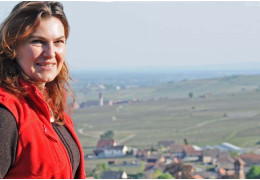
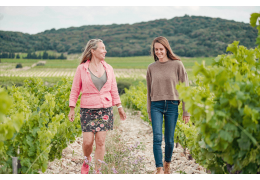
Originating from Champagne and coming from a family of winemakers, Sandrine has been immersed in the world of wine since her earliest childhood.
How did Sandrine come to the world of wine?
From childhood in Champagne to a banking career
When I was little, I didn’t realize there were other worlds beyond champagne !
recalls the winemaker.
Later on, her thirst for discovery and desire to explore other realms led Sandrine to embark on a career in banking. However, the young woman never forgot her roots:
Whenever I could, I took advantage of my vacations to participate in the grape harvest at the family estate.
What brought her back to the family estate?
A terroir with many facets
Sandrine’s attachment to the family estate is strengthened by the fact that her father and husband worked together for years.
Pascal had started a career in the military, but my father managed to pass on the wine virus to him.
In 2002, Sandrine began to feel the need to reconnect with nature.
When her father decided to retire, it was the turning point for Sandrine, who eventually left her banking career to "settle" into the vineyards. It was an opportunity for Sandrine to rediscover the vines from a professional perspective.
I completed a diploma in vine pruning to update my skills, both practically and theoretically,
she explains.
How does the estate work its vines and its wines?
Sustainable vineyard practices
Located in the Vallée de la Marne near the city of Epernay, Champagne Pascal Lejeune boasts a wide diversity of terroirs. This is a significant advantage for the winemaking couple, who believe that the taste quality of champagne is primarily determined by the specifics of its terroir.
The south-facing hillside vineyards of the Côte de Blancs predominantly feature Pinot Meunier, although Chardonnay is also very present. Pinot Noir, on the other hand, is mainly used for producing rosé champagnes.
Regarding winemaking, Champagne Pascal Lejeune favors aging in the bottle, which ranges between 3 and 5 years depending on the bottle (noting that the appellation requirements mandate a minimum bottle aging of 15 months).
This allows our champagnes to open up and develop their aromas, especially for the Pinot Meunier variety,
Sandrine specifies.
What future does the family have in mind?
Leaving the healthiest land possible
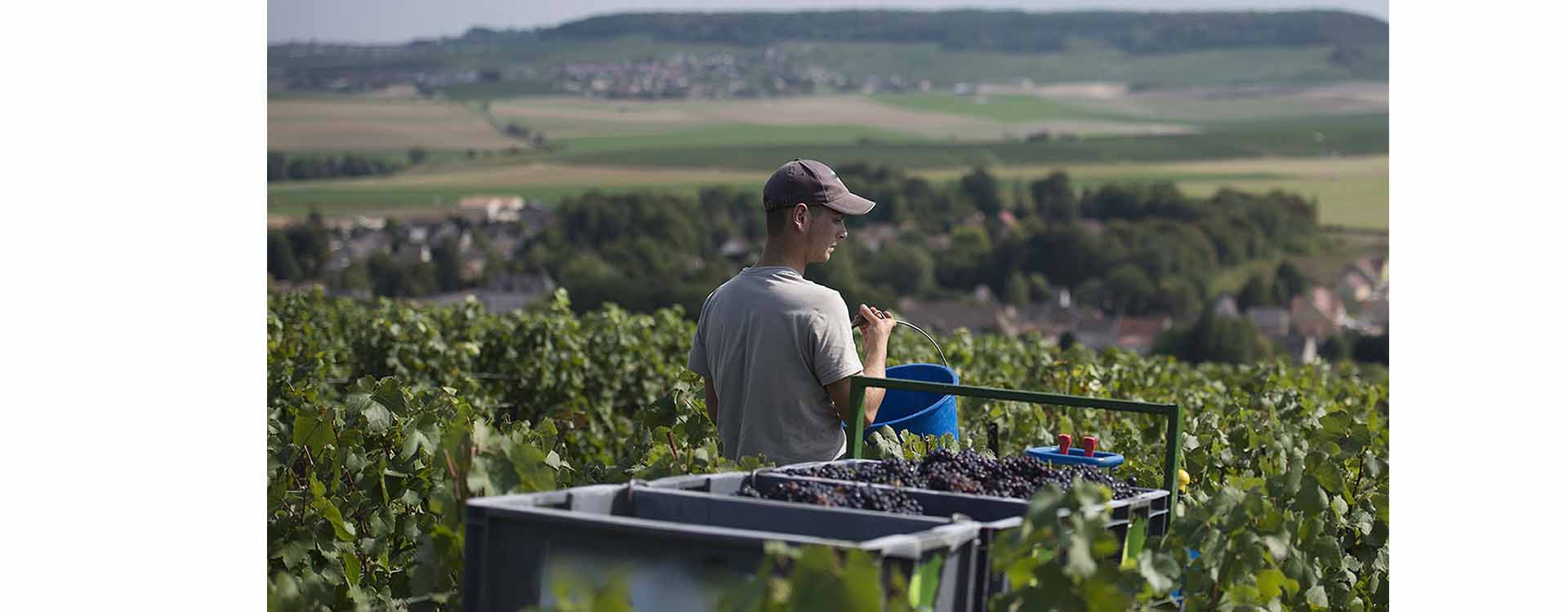
A year ago, Thibaut, Sandrine and Pascal’s son, joined his parents to work at the estate. A true vine enthusiast, the young winemaker is just 20 years old but has long known what he wants to do professionally: manage the family vineyard and ensure its preservation, particularly by developing sustainable viticulture.
Like his father, Thibaut quickly caught the wine virus. As a child, he would press his nose against the window to watch the tractor moving through the vineyards,
Sandrine recounts.
Family tradition is therefore central to the story of Champagne Pascal Lejeune. This is why Sandrine and Pascal feel entrusted with a mission: to pass on the best of the terroirs to their children. This mindset is reflected in the sustainable development practices implemented in the vineyard in recent years.
The vineyards of Champagne Pascal Lejeune notably benefit from the Haute Valeur Environnementale (HVE) label and the sustainable viticulture label in Champagne.
Our parents and grandparents fought to get us to this point. It is now our turn to preserve and enhance our terroir to leave the healthiest land possible to our children.
Frequently asked questions about Champagne Pascal Lejeune
Where is the Champagne Pascal Lejeune estate located?
The estate sits in Moussy, a village in the Marne Valley a short distance from Epernay. Its position gives the vineyard a wide range of soils.
Which grape varieties does the estate grow?
Pinot Meunier leads on the south-facing slopes, alongside Chardonnay. Pinot Noir mainly goes into the rosé cuvées.
Does the estate follow environmental practices?
Yes. The vines carry the High Environmental Value (HVE) label and the sustainable viticulture certification of Champagne, part of the family's aim to pass on healthy land.
How long are the champagnes aged?
Bottles rest for three to five years depending on the cuvée, well beyond the fifteen-month minimum set by the appellation. This extra time helps the Pinot Meunier aromas open up.
Who are the winemakers behind the estate?
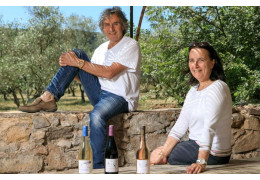
Sandrine, raised in a Champagne winegrowing family, runs the estate with her husband Pascal. Their son Thibaut joined them to continue the family tradition and sustainable farming.