Delivery from €16,90 per winemaker in Europe (excluding the United Kingdom)

Unbeatable !
4 tips for uncorking a bottle of wine like a pro
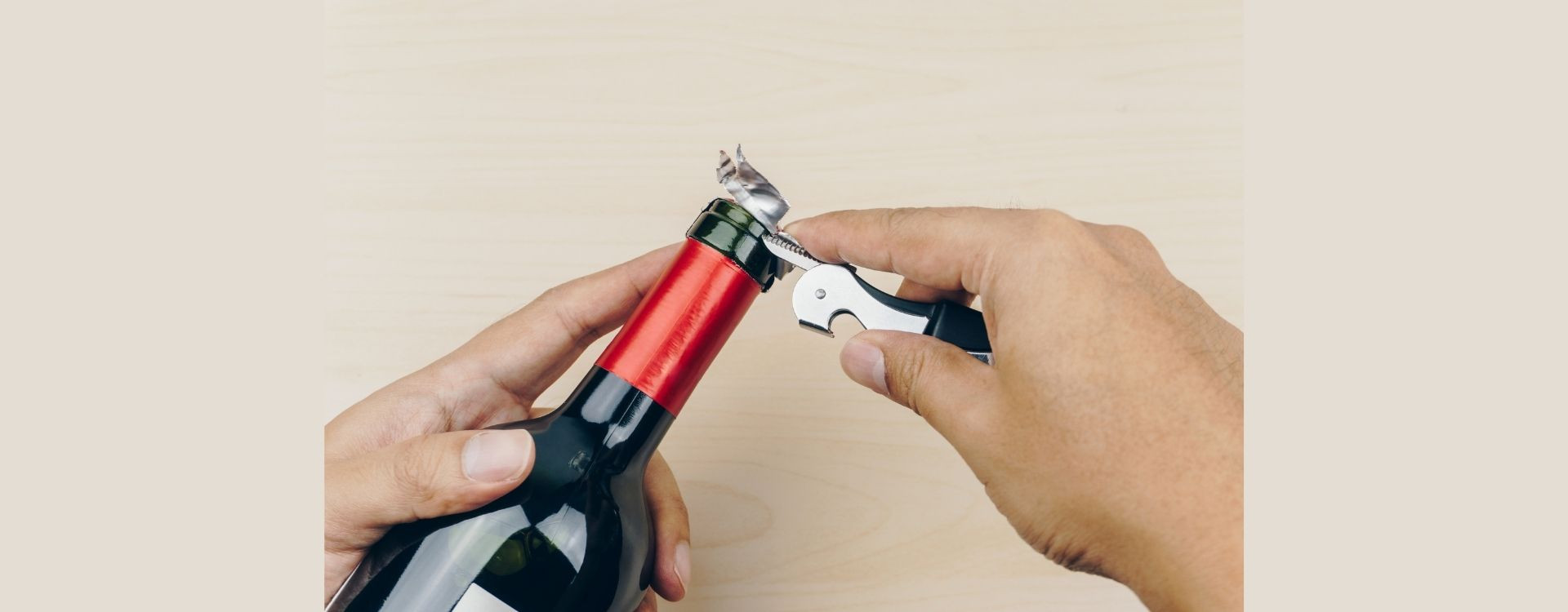
“Will I be able to open the wine properly?” Here are some tips to open a bottle of wine like a true professional!
Tip 1: Use a Waiter's Corkscrew
To operate under optimal conditions, you need to equip yourself properly. Swap your classic corkscrew for a waiter’s corkscrew! Once you’re properly equipped, start by removing the foil covering the bottle’s neck (the collar) using the small serrated knife at the top of your waiter’s corkscrew.
Tip 2: Insert the Corkscrew in the Center
Once the cork is visible, it’s time to use the corkscrew of your waiter’s corkscrew, the metal stem used to extract the cork. To succeed on the first try, insert it precisely in the center of the cork.
Tip 3: Twist… and Lift!
Once the tip of the corkscrew is properly inserted into the cork, twist it vigorously until it reaches the last notch. Once your corkscrew is firmly anchored in the cork, you can use the lever by placing it against the bottle’s neck, which will gradually lift the cork out.
Tip 4:
You’re almost there! At this point, you’ll notice that three-quarters of the cork is out of the bottle. If you feel slight resistance, don’t worry; it’s normal. Simply repeat the process by twisting the corkscrew a little and then using the second notch of the lever. If you sense that the cork might break, grasp it firmly and pull it gently. There you go! Your bottle is now open. You now have all the tools to uncork a bottle of wine like a pro!
And here’s a little video tutorial to help you perfect the art of opening a bottle. All that’s left is to enjoy… the wine, of course!
Find all our sommelier tips on our YouTube channel!
Our Favourites Wines Selection : A bottle to open tonight? Pick from our wines of the moment, straight from the winemaker at estate prices. See the selection →
FAQ - Uncorking a bottle
Why use a waiter's corkscrew instead of a classic corkscrew?
A waiter's corkscrew combines everything you need in one tool: a small serrated knife to remove the foil, a worm to extract the cork, and a lever that rests on the neck. You work in better conditions and reduce the risk of breaking the cork.
Where should you insert the worm into the cork?
Aim for the very centre of the cork. Inserting the worm right in the middle anchors it firmly in the cork so it lifts straight up, without crumbling or tilting to one side.
How do you remove the foil before opening the bottle?
Use the small serrated knife at the top of the waiter's corkscrew. It lets you cut cleanly through the foil covering the neck so the cork is exposed before you insert the worm.
When should you use the lever of the waiter's corkscrew?
Once the worm is twisted to the last notch and firmly anchored in the cork, rest the lever against the neck. The cork rises gradually; if needed, move the lever to the second notch to finish the extraction.
What should you do if the cork might break while opening?
Don't force it all at once. Repeat the process by twisting the worm a little more, then using the second notch of the lever. If you sense the cork is about to break, grasp it firmly by hand and pull gently to draw it all the way out.


